

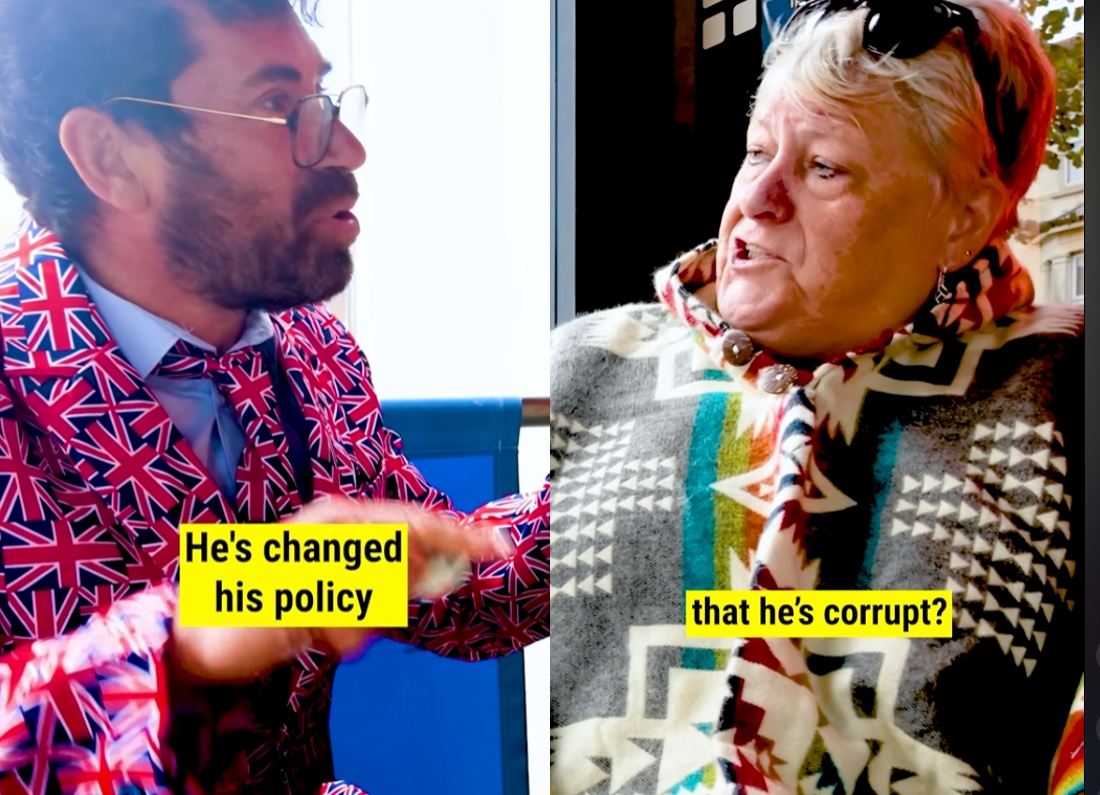
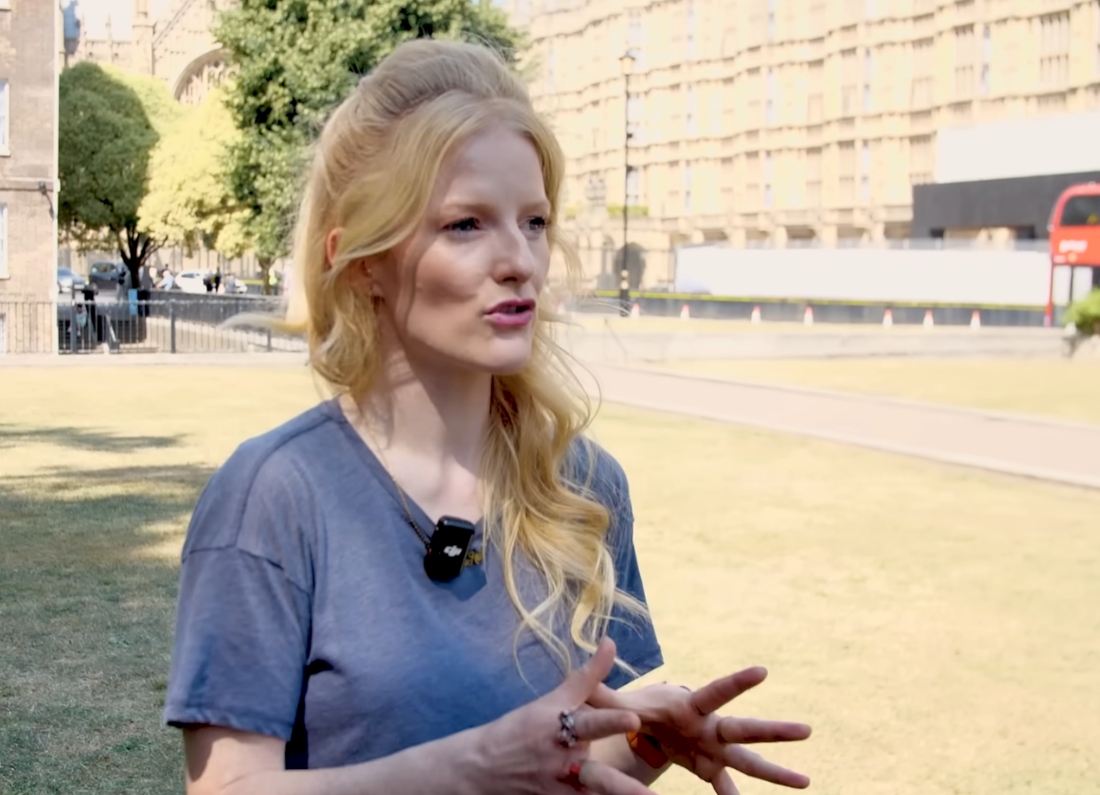
A street interview filmed in Clacton has gone viral after capturing a Reform-supporting voter apparently reconsidering her support for Nigel Farage in real time, as an interviewer walked her through the accumulating questions around his finances.
The video, titled “Penny Drops in Clacton,” was posted by filmmaker Adam Brichto, who specialises in socially driven video content.
How the exchange started
The interview opens with the woman offering a confident defence of Farage. “Nigel Farage has done the right thing because the man is a truthful man, and he will get this country back on its feet,” she says.
The interviewer then hands her a five-pound note, prompting a sharply suspicious reaction. “What’s that for? What’s the fiver for? You trying to pay me? No, no, no, no.” The interviewer uses the moment to draw a comparison: “Nigel Farage just received one million of these from a crypto billionaire.”
The £5m gift, explained
The reference is to the £5m gift Farage received from Thailand-based crypto billionaire Christopher Harborne, which remains under a paused Parliamentary Standards investigation into whether it should have been declared. A recent Guardian report claims Farage told senior Reform figures in March 2024 that he would need “£1 million a year” to replace his GB News earnings before entering politics, discussions reportedly centred on replacing lost income rather than funding security, as Farage has since claimed. He has separately said he could spend the gift on “Ferraris” if he wanted to, and a suspicious activity report was reportedly filed with the National Crime Agency over concerns about the ultimate source of the money.
Asked why people were calling Farage corrupt, the interviewer claimed: “He’s changed his policy to cut taxes on crypto billionaires, so when Reform gets into power, crypto billionaires will make a huge amount more money, and they don’t even live here.” That specific characterisation of Reform’s policy is the interviewer’s own framing rather than an established fact, though it echoes wider reporting on Farage’s advocacy for lighter-touch cryptocurrency regulation and his direct meeting with the Governor of the Bank of England on the topic, an area where both Harborne and George Cottrell hold direct financial interests.
The woman’s reaction
The woman’s response captured the moment the exchange turned. “So you’re actually saying that he’s actually corrupt?” she asked. When the interviewer confirmed that was the suggestion, she pushed back initially: “But he’s always told us he’s always been straight.” The interviewer’s reply, “So why, all of a sudden, has he gone from that one to that one?”, prompted a moment of genuine reflection: “Because you’re believing him.”
Zero-hours contracts and the NHS
The interviewer went on to raise Farage’s voting record on zero-hours contracts and his previous comments about moving the NHS toward an insurance-based funding model, both claims that have circulated in coverage of Farage’s record but which sit outside the scope of this specific viral clip to verify independently. The woman’s reaction to the NHS point was unambiguous: “No. We don’t want that in this country. That’s the only thing, I think, in this country we’ve got bloody left. Everything else is privatised. The government’s not listening to the people of this country.”
The Brexit and asylum claim
The exchange then turned to immigration, with the woman asking directly whether the government was “actually getting paid to have these immigrants in the country.” The interviewer’s response invoked the Dublin Regulation, the pre-Brexit EU framework establishing which member state was responsible for processing an asylum claim, telling her that “anyone that came into the UK and they didn’t have their papers could be sent back to France” before Brexit, and that this is no longer possible.
This is a simplified account of how the Dublin system actually worked. The regulation did not provide for automatic returns of undocumented arrivals to France specifically, since Dublin transfers depended on establishing which EU state a person had first entered or claimed asylum in, a process that was often slow, legally contested and did not typically apply to Channel crossings in the way the claim implies. The UK’s return rate under Dublin was historically low even before Brexit. The broader point that Brexit removed the UK from EU-wide returns arrangements is accurate, but the specific mechanism described in the clip overstates how straightforward those returns previously were.
The final line
Regardless of the precision of that particular claim, it was enough to prompt the woman’s closing verdict on the whole exchange: “So why wasn’t we told about all this then? What you’re actually saying, all that man’s done is completely lied from day one.” The interviewer’s reply: “That’s what I’m saying.”
Why the clip has resonated
The video has spread widely amid a broader run of viral moments connected to the Clacton byelection and the accumulating scrutiny of Farage’s finances. Whether it represents a genuinely representative shift in opinion among Reform’s base, or simply one memorable exchange with one voter, is impossible to determine from a single clip. But it captures something that has defined coverage of Farage’s finances throughout this saga: the gap between the loyalty he has built over three decades in public life and the specific, accumulating financial questions that keep testing it.
Be sure to subscribe to Adam Brichto on YouTube.



![Crypto Toll And Passcode? Iran's New Hormuz Status Quo [YouTube]](https://thedailybritain.co.uk/wp-content/uploads/2026/04/donaldtrumpstraitofhormuz.jpg)
Leave a Reply