

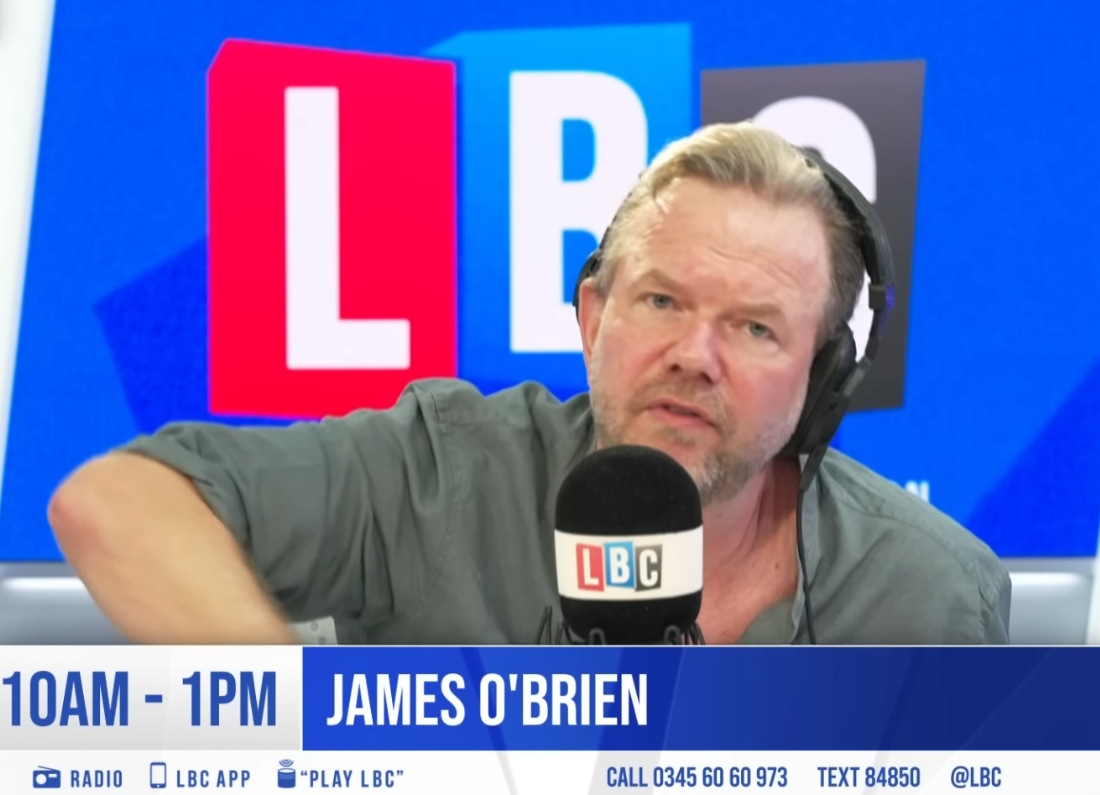
James O’Brien returned to LBC after a fortnight away and found Nigel Farage exactly where he so often is: at the centre of a storm, claiming to be the victim of one.
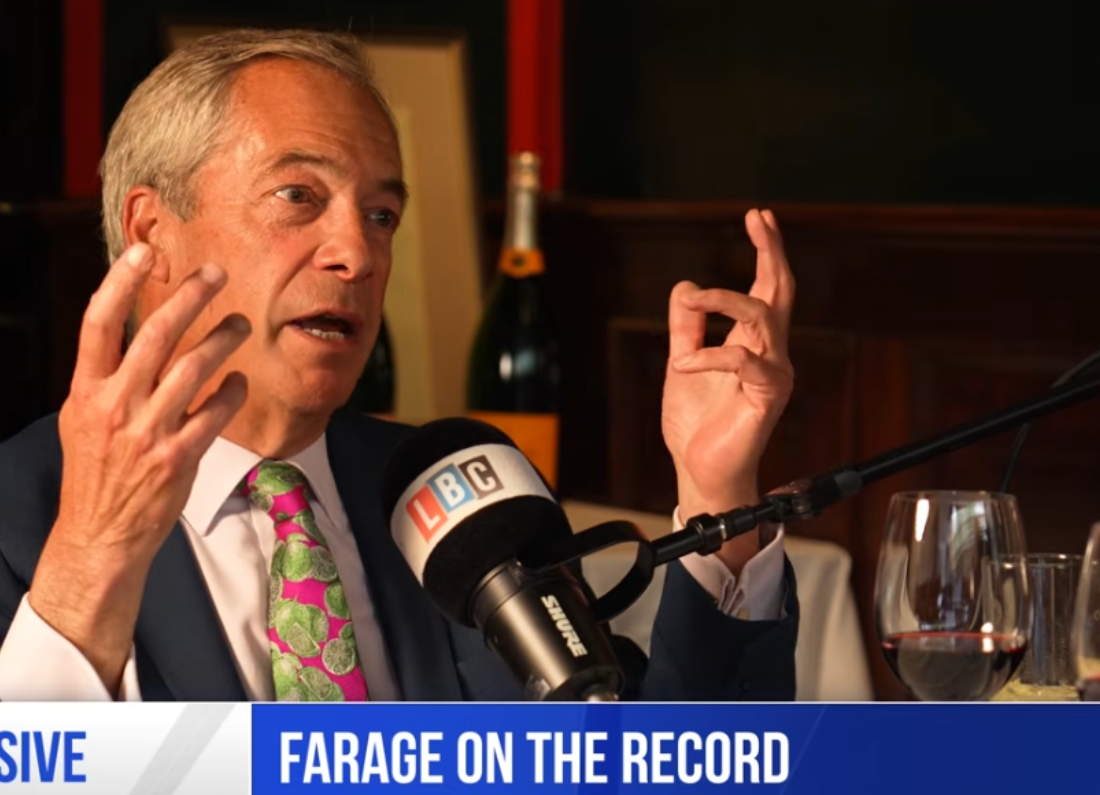
The Reform UK leader has triggered a by-election in Clacton after coming under pressure over a secret £5m gift from crypto billionaire Christopher Harborne. Farage says he has done nothing wrong and wants voters, rather than what he calls the “liberal establishment”, to judge him.
O’Brien was not convinced.
In a long opening monologue on Monday, the LBC presenter said he had seen too many Farage controversies come and go to assume this one would finally break through. But he also suggested there was something different about this row: the size of the money, the changing explanations, and what he described as the sheer contempt involved in asking ordinary voters to treat it as none of their business.
For O’Brien, the most revealing part of Farage’s defence was not just the money itself. It was the attempt to portray scrutiny of a £5m gift as an attack on someone who had simply “made money”.
“You haven’t made any money, mate,” O’Brien said. “You’ve been handed it by a very rich bloke based in Thailand.” He added: “You’re not exactly Alan Sugar, pal, are you?”
O’Brien says the ‘victimhood’ routine is familiar
O’Brien began by joking that he had almost escaped the curse of major political events happening while he is on holiday. Then Farage appeared with what O’Brien called a “narrative of bogus victimhood”.
That phrase set the tone.
The presenter said he had already written a column warning readers not to assume Farage was finished, because he had watched the same pattern for years. Claims are made. The media gives them oxygen. The story moves on. Farage emerges with the grievance machine intact.
O’Brien brought up previous Farage claims about security, including the story that wheel nuts on his car had allegedly been tampered with in France, and an earlier claim about his home being firebombed. His point was not subtle: Farage has long understood the political power of presenting himself as a hunted man.
The latest version, in O’Brien’s telling, is the idea that questions about a secret £5m gift amount to persecution.
He was particularly scathing about Farage’s suggestion that Britain has a problem with people who make money. “This country just hates people that make money,” O’Brien said, paraphrasing Farage’s defence before taking it apart. His reply was blunt. Farage had not built a company or created some great commercial success. He had received an enormous gift from a wealthy backer, and the public was entitled to know why.
The line that cuts through
The most damaging part of O’Brien’s argument was about Farage’s own supporters.
Farage has built much of his career on telling people that elites take them for fools. He has told them Westminster is bent, the media cannot be trusted, and powerful people are always looking after themselves behind closed doors.
Now, O’Brien suggested, Farage is relying on those same people to look away from a massive private gift and accept his explanation on trust.
That is why the row matters. It is not only about parliamentary rules or a standards process. It is about whether Farage’s supporters are being asked to apply one standard to everyone else and another to him.
Farage has spent years selling himself as the man who calls out corruption. Yet when the questions are about his money, he frames scrutiny as persecution.
O’Brien’s implication was clear: Farage is banking on loyalty beating curiosity.
‘You haven’t made any money, mate’
O’Brien returned repeatedly to the absurdity of Farage presenting the £5m row as if he were being attacked for honest graft.
He mocked the idea that paid promotional videos, political endorsements and wealthy backing amounted to the sort of work his supporters would recognise as earning a living.
The sharper line was about Harborne, the crypto billionaire whose gift has placed Farage under sustained scrutiny. “You’ve literally been handed money by somebody who hours, days, weeks later heard you announce policies that were going to make him even richer,” O’Brien said.
That is the political problem for Farage. The money story does not sit separately from policy. It raises the obvious question of whether a politician can receive a vast private gift from someone who may benefit from his political platform, then dismiss concern about that arrangement as media hysteria. This is the exact concern raised by Labour MP Phil Brickell, who asked the standards watchdog to investigate whether Farage’s advocacy on central bank digital currency and stablecoins could have benefited Harborne directly.
O’Brien said the explanations had changed too often and travelled too far to be put “back in the bottle”.
The media mood has shifted
O’Brien was also withering about Farage’s claim to be a victim of the media class.
The LBC host said that idea was laughable given the years of soft treatment Farage has received from broadcasters and newspapers. He mocked the tone of some past interviews as little more than presenters asking which toe Farage wanted tickled first.
It was one of the funnier lines in the monologue, but the underlying charge was serious.
Farage has enjoyed enormous media access while claiming to be excluded from the establishment. He has spent years on television, radio and newspaper pages while telling supporters the system is against him. O’Brien argued that some journalists are only now beginning to ask the questions they should have asked long ago.
“Some people who’ve spent the last 10 years tickling his toes have found, I don’t know whether it is temporarily or permanently, they’ve managed to find at least one vertebrae,” he said.
That shift matters because Farage’s political durability has always depended on the gap between his outsider image and his establishment access. If broadcasters begin treating him as a politician with serious questions to answer rather than as a colourful insurgent, the act becomes harder to maintain. This is exactly the pattern that played out when GB News’s Camilla Tominey refused to accept Robert Jenrick’s attempts to frame the Cottrell revelations as a media conspiracy, on a channel Reform figures usually consider friendly territory.
Is this finally different?
O’Brien did not claim Farage was finished. In fact, he sounded wary of that conclusion.
He said he had seen too many commentators declare the end of Farage before. One old LBC interview, in which Farage was hurried out of the studio by his own PR adviser after a difficult exchange, was once treated as a career-ending moment. It was not.
That history has made O’Brien cautious.
He asked listeners whether the £5m row really feels different, or whether the country will look back in six months and find Farage still standing, still complaining, still turning every question into another performance of grievance.
The answer, for now, is uncertain.
But O’Brien did identify why this scandal has the potential to hurt more than previous ones. It is not complicated. The story is about money. It is about secrecy. It is about a politician who has spent years attacking elites now asking voters to trust an elite arrangement that benefits him personally.
That is harder to spin as a culture war.
The Farage brand under pressure
Farage’s greatest political skill has always been his ability to turn criticism into proof that he is dangerous to the powerful. The more he is attacked, the more he tells supporters they are really attacking you.
O’Brien’s monologue challenged that directly.
He suggested the people being disrespected are not Farage’s enemies, but his supporters. They are the ones being asked to believe that a secret £5m gift is not a legitimate public concern. They are the ones being told to treat scrutiny as conspiracy. They are the ones being expected to cheer a by-election that may not settle the underlying questions at all.
That is the reason O’Brien’s attack landed.
He was not simply calling Farage dishonest, self-pitying or slippery. He has done that before. This time, he was pointing to the gap between Farage’s public pose and the private reality of the money behind him.
The man who tells voters they are being laughed at by elites is now asking them not to notice when the joke may be on them.
You can watch the clip below:
2 responses to “James O’Brien says Nigel Farage’s £5m defence shows he is laughing at his own supporters”
-
Re he took mps job so nothing to do wiThe 5 mllion was given before so just button it he’s already been up before mps same old record
-
It is different. He is arguing with a man with a bin on his head. He doesn’t even have to lose the by-election. Anything less than a decent increase in his majority will be hugely embarrassing. He won’t get that in a by-election where turn-out is lower. However he would try to spin the result the retort will come back – You were up against a man with a bin on his head. That image of being challenged by a bin will surely endure and haunt for the rest of any future political life he has.







Leave a Reply