

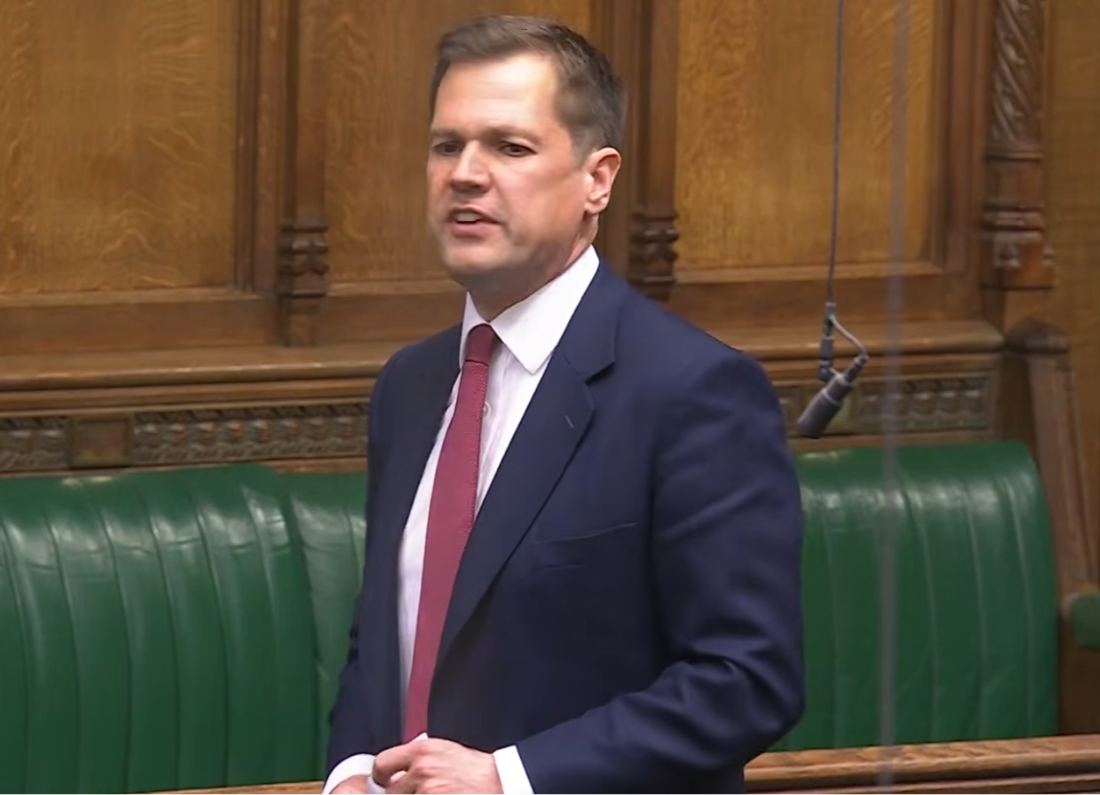
Robert Jenrick is on course to lose his Newark seat to the Conservatives, according to a new poll, in a twist of irony that has not gone unnoticed given the circumstances of his departure from the party earlier this year.
Jenrick defected to Reform UK in January, declaring the Tories were “over” and that Nigel Farage’s party was “uniting the right.” The former shadow justice secretary was swiftly appointed Treasury spokesperson for Reform. But UK Polling Report now predicts the Conservatives would win Newark with 36% of the vote at the next general election, with Jenrick and Reform coming in second on 27%, a significant reversal for a man who left his old party proclaiming its terminal decline.
How he got here
Jenrick was sacked from Kemi Badenoch’s shadow cabinet earlier this year after she discovered his plans to defect, a move that followed his defeat to Badenoch in the Conservative leadership contest just over a year earlier. Hours after his sacking became public, Farage announced Jenrick would be joining Reform’s ranks.
Since switching sides, Jenrick has faced regular mockery from his former Conservative colleagues. Shadow cabinet minister Claire Coutinho recently criticised his record as immigration minister, saying he “freelanced on policy and claimed credit for ideas that weren’t always his own.” MPs openly laughed at him in the Commons in May when he tried to call out what he described as a “shambles” in the current government.
The Atkins exchange
Perhaps the most striking measure of the personal cost of Jenrick’s defection came in May, during a tense on-air reunion with Conservative shadow environment secretary Victoria Atkins, when the two sat next to each other on a BBC panel. Atkins did not hold back.
“Rob has not spoken to me since he left the Conservative Party in the way that he did,” she said. “And I considered us to be very good friends. It’s been a great personal loss to me, as well as a professional one. The reason I raise this is because Rob is the economic spokesperson for Reform. And I think how one conducts themselves is important. I think that this is a message that will continue until the general election. If people are asking voters for trust, then it has to be genuine.”
Asked for his response, Jenrick offered only: “I don’t personalise things!”
A pattern of difficult moments
The Newark polling arrives as part of a broader run of uncomfortable weeks for Jenrick since his defection. Robert Peston confronted him directly over a misleading Reform attack ad targeting Badenoch, which Wes Streeting separately described as resembling “1930s propaganda.” Jenrick condemned the Belfast attack as “barbaric,” only for social media users to point out via community notes that he himself had granted the suspect leave to remain during his time as Immigration Minister. Net migration recently fell 48% to its lowest level since 2012, and Jenrick’s response was to complain that too many people were leaving the country, a position critics seized on as difficult to reconcile with his own party’s stated goals on migration.
He also more recently acknowledged, breaking with Farage’s own line, that questions about the Reform leader’s undisclosed £5m gift from crypto billionaire Christopher Harborne were “legitimate for the media to ask”, a rare moment of daylight between Jenrick and his new party leader on one of Reform’s most damaging ongoing stories.
What the Newark numbers actually mean
UK Polling Report’s constituency-level projections are estimates rather than a direct poll of Newark voters, built from national and regional swing models applied to the specific seat. They should be read as indicative of the direction of travel rather than a certainty, particularly this far from an actual election, which does not need to be called until 2029.
But the underlying dynamic they capture is real. Reform’s post-election polling bounce has ended nationally, and the party has struggled to consolidate the gains it made through 2024 and early 2025 into durable seat-level advantages, particularly in seats like Newark where the Conservative vote, while diminished, has not collapsed entirely. If the projection holds even roughly, Jenrick would be in the unusual position of having left the Conservative Party proclaiming its terminal decline, only to potentially lose his own seat back to it.
The bigger picture
Jenrick’s situation is illustrative of a broader problem facing high-profile defectors from established parties to insurgent ones: name recognition and a media platform do not automatically translate into a secure electoral base, particularly in a seat where a significant chunk of the electorate voted for the Conservative brand rather than for Jenrick personally. Other Reform defectors have had even rockier experiences, including one Tory councillor who quit Reform after eight months calling it “the biggest mistake of my life” and describing the party as “good at spin, but struggling with good governance.”
Whether Jenrick can turn the Newark numbers around before the next general election remains to be seen. For now, the polling suggests his declaration that the Conservative Party was “over” may prove to be premature, at least in the one constituency that matters most to his own political future.











Leave a Reply