

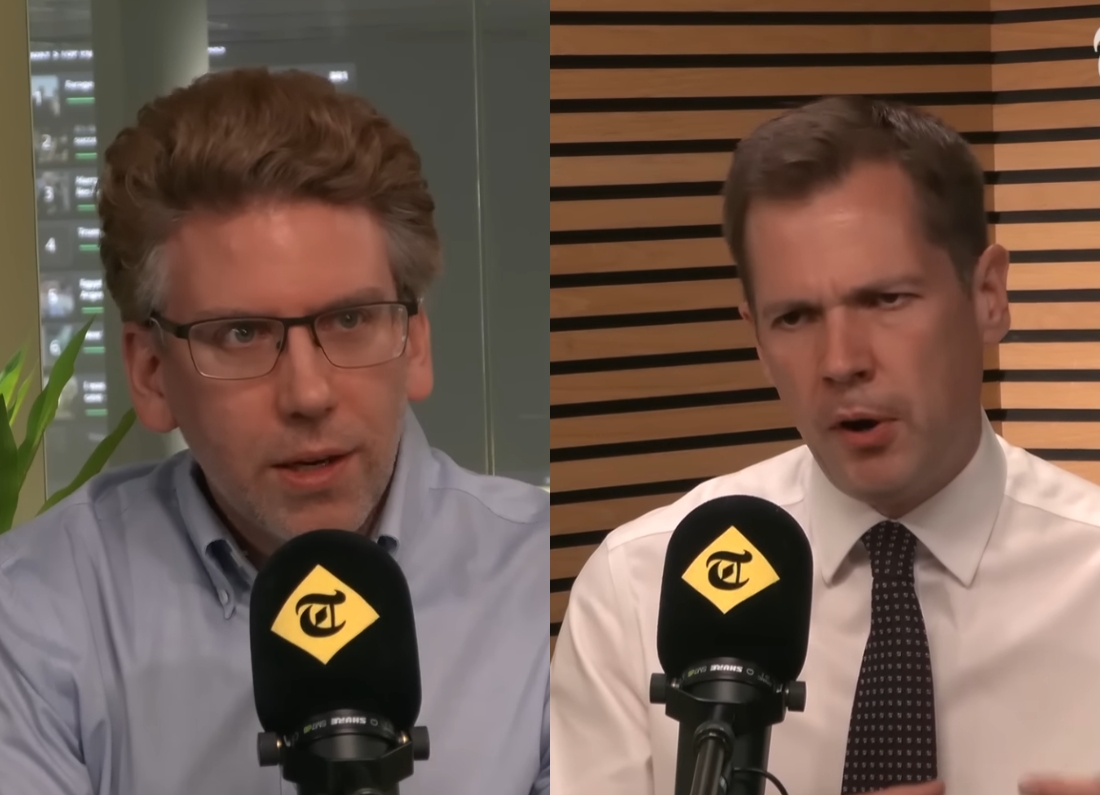
Nobody forced Robert Jenrick onto Telegraph Radio this week. That was entirely his own decision, made presumably somewhere between watching Nigel Farage take a beating across every other channel and concluding that what the story really needed was reinforcements.
The subject was the Clacton byelection, the contest Farage triggered by resigning his own seat and immediately standing again, in what Reform has been trying to sell as a heroic showdown between one man and a corrupt establishment. It has not been landing that way. If anything, the framing has become the story’s biggest liability, and Jenrick’s appearance did nothing to fix that.
The line
The presenter had opened with the obvious framing: “Has Nigel Farage just made the biggest political mistake of his career?” Jenrick spent the next several minutes building his case, arguing the byelection would “send a very powerful signal to the other parties that the stitch up has failed.” His interviewer, unconvinced, pointed out the obvious flaw immediately: “Well, it won’t show these games. It’ll show a signal that he can win a seat in which he’s already proven before that he’s very popular while running against no one. What is the message to the wider electorate? Nigel Farage can beat a field of one talking bin?”
Jenrick pressed on regardless, and eventually arrived at the line he’d clearly been building towards: “Nigel Farage had the courage to put himself up for a byelection, which very few people do in politics. Very few people do. I can’t imagine Keir Starmer or Kemi or Ed Davey doing it.”
Tim Stanley didn’t miss a beat: “Well, you didn’t.”
Four words. No follow-up needed. Jenrick, to his credit, tried to laugh it off: “Well, quite. This. Very few people do it. It takes great courage to do that.” But the moment had already landed exactly where it needed to.
Why it worked
The joke isn’t really a joke. It’s a fact. Jenrick was standing in a radio studio praising Nigel Farage’s supposed bravery for doing something that Jenrick himself, a sitting MP who defected from the Conservatives to Reform earlier this year, chose not to do. He crossed the floor, kept his seat, and has faced no byelection of his own. If resigning your seat to test your mandate with voters is genuinely “courage,” Stanley’s three words simply pointed out that the man delivering the tribute hadn’t shown any of it himself when he had the identical opportunity months earlier.
That is what made it such a clean piece of radio. Stanley didn’t need to argue, mock, or lecture. He just stated the obvious comparison and let Jenrick sit with it.
Everything else Jenrick said before that moment
The interview covered considerably more ground before it arrived at its sharpest exchange, and the rest of it is worth understanding because it shows exactly how much Jenrick was straining to build a coherent case for something that was, structurally, quite hard to defend.
Jenrick opened by cataloguing what he described as the grievances driving Farage’s anger: a comparison by a rival party leader to disgraced 1970s politician Jeremy Thorpe, Labour’s attempt to legislate against overseas donations to Reform, and, most pointedly, Sky News approaching Farage’s daughter’s door while he was known to be in the US meeting the vice president. “I think he felt enough is enough,” Jenrick said, framing the byelection as Farage refusing to let “the two kind of traditional old parties” act as “judge, jury and executioner.”
When pressed on why Farage seemed specifically furious about the £5m donation story rather than the other grievances, Jenrick pivoted to describing a “cozy consensus” between Labour and the Conservatives, quoting George Galloway’s line that the two parties are “two sides of the same ass.” He cited an incident in the Commons where he says he was heckled and called racist after raising “two-tier policing” in relation to a Birmingham assault case, arguing this treatment happens to Reform MPs “every single day.”
Asked whether the media itself was part of this alleged conspiracy, Jenrick singled out the Sunday Times journalist behind the Cottrell investigation, claiming the reporter had tweeted that they “despised Nigel.” He also returned to the Sky News door-knocking, though his host countered that Jeremy Hunt had previously defended door-knocking as a normal, if unpleasant, part of journalism, and pointed out Sky had similarly door-stepped Keir Starmer’s family over the Lord Alli flat questions during the last election. Jenrick’s response was that Reform’s own CCTV footage showed the reporter simply approaching and leaving, downplaying the incident while still calling it an attempt at “emotional pressure.”
‘What level of scrutiny is acceptable?’
The host pressed the central question directly: if Farage wants to be prime minister, what level of scrutiny does he consider legitimate, given the criticism extends well beyond door-knocking to the substance of the £5m donation itself? Jenrick’s answer leaned on Farage’s three decades in public life and the “dozens” of books written about him, arguing he is “probably the most scrutinised politician there is,” and comparing this unfavourably to what he characterised as the comparatively limited scrutiny currently facing Andy Burnham ahead of taking office, predicting journalists would be “sat here in a year’s time” lamenting a Burnham government that “didn’t have a clue what it was doing.”
The Count Binface admission
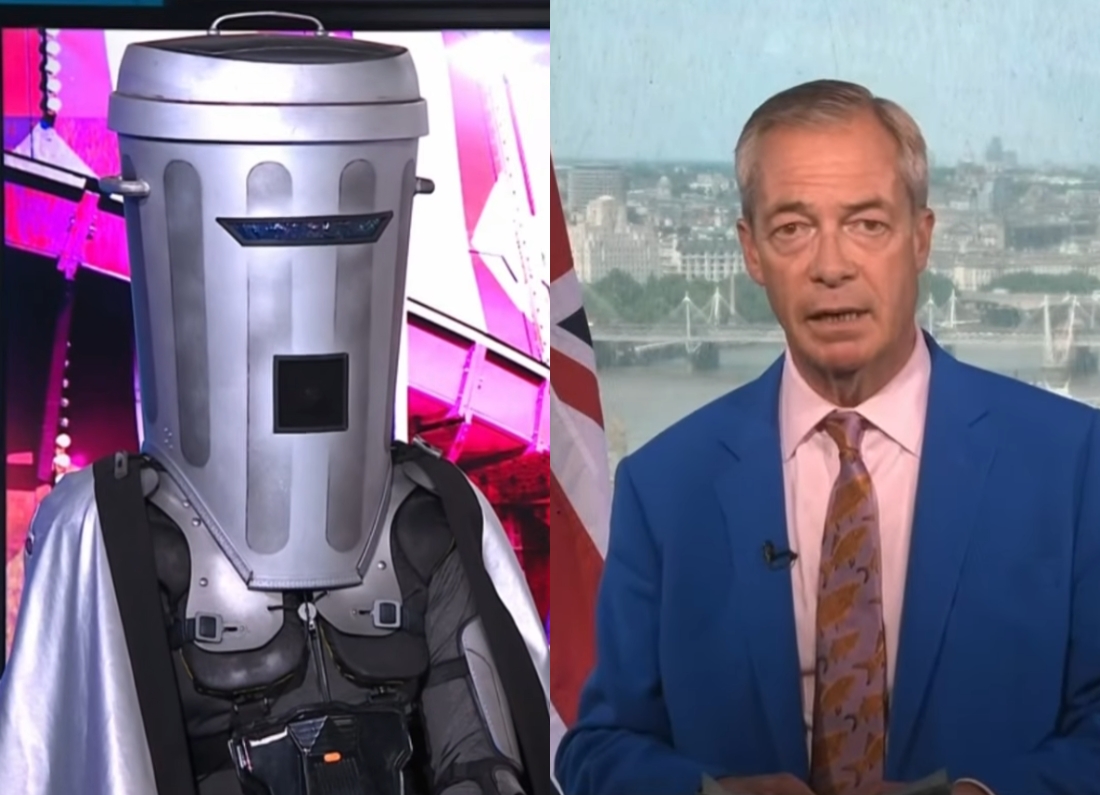
Asked directly whether Farage would debate Count Binface, Jenrick’s answer inadvertently undercut his own “courage” framing a second time. “I’ve no idea,” he said, before recalling his own previous encounter with the satirical candidate: “He did actually stand against me. He interrogated me at the count. There’s an embarrassing video of me trying to swat off questions from Count Binface. Everyone runs a mile when they see Count Binface.” This is, notably, the same candidate who has since polled ahead of Farage himself in a head-to-head Ipsos survey, and who has been running rings around interviewers across four separate broadcast appearances since the byelection was called, and whose own status as “the establishment” was seriously argued, and thoroughly mocked, by Laurence Fox just days earlier.
The NCA allegation, again
Asked about the Guardian’s report that the £5m donation had been flagged to the National Crime Agency over potential money laundering concerns, Jenrick said he understood it was “quite normal for banks and law firms to report unusual transactions,” and that the NCA appeared to have taken no further action. He then raised, unprompted, the separate allegation that the NCA itself had leaked bank details belonging to Farage and Richard Tice to the media, describing this as “a very disturbing allegation” that “should worry everyone in this country.” This closely mirrors Richard Tice’s own separate leak allegation against the same agency, part of a pattern in which Reform’s senior figures have repeatedly raised NCA impropriety as a counter-narrative to the underlying financial questions themselves.
Why the uncontested seat undercuts everything else Jenrick said
The deepest problem with Jenrick’s entire hour on air was that his own explanation for why other parties aren’t standing directly contradicted his “courage” framing. Asked why the Conservatives specifically had chosen not to field a candidate, Jenrick didn’t claim they were too frightened of Farage’s ideas or too complicit in some cross-party conspiracy. He said plainly: “They know that if they put up a candidate against Nigel Farage, they wouldn’t just lose, but they would lose their deposit and they would be humiliated.” Clacton was a safe Conservative seat before 2024, with a majority over 20,000, and Jenrick’s own explanation is simply that the party has done the electoral maths and doesn’t fancy losing badly on live television.
That is not the language of establishment conspiracy. That is the language of a party avoiding a contest it expects to lose comfortably. And it means the byelection Jenrick was praising Farage for “bravely” entering is one where the only real risk of embarrassment belongs to the parties too sensible to turn up, not to the man who scheduled the event himself, on his own terms, against a satirical candidate in a bin costume he has already admitted he’d rather avoid.
What it says about the whole interview
Jenrick spent much of the appearance arguing that Reform faces a coordinated conspiracy from a “uni-party” media and political establishment desperate to prevent change. But the single sharpest moment of the entire interview wasn’t a devastating counter-argument about donations, the National Crime Agency, or George Cottrell. It was four words pointing out that the man praising Farage’s bravery had personally chosen the safer, quieter option when faced with the exact same decision.
Sometimes the best rebuttal isn’t an argument at all. It’s just remembering what actually happened.




Leave a Reply