

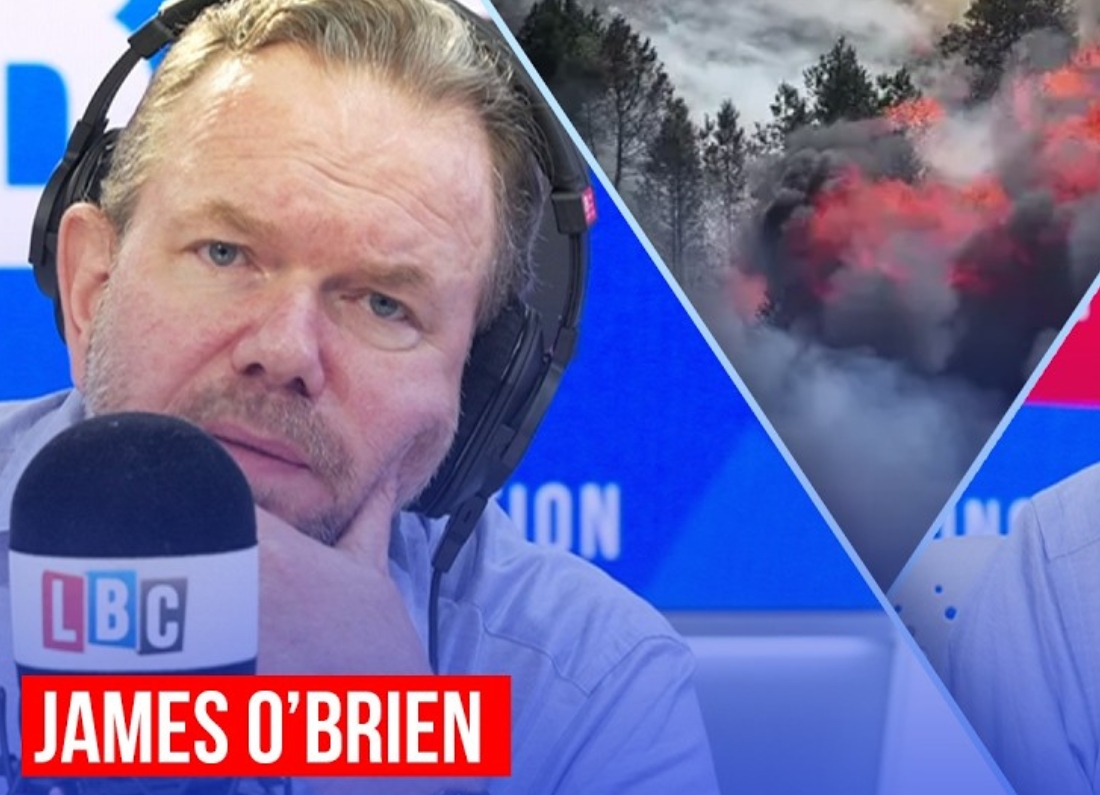
James O’Brien spent much of his Wednesday morning LBC show asking a question he has rarely felt optimistic enough to put: has the campaign to demonise net zero finally met something it cannot overcome? Not a scientific argument. Not a politician. A thermometer.
His starting point was the World Weather Attribution Consortium’s finding that Western Europe is experiencing the most severe and widespread heatwave ever recorded – one that is “only possible because of the climate crisis driven by fossil fuel burning.” Schools across England are managing classrooms exceeding 40C. Hospitals in England have declared critical incidents as radiotherapy machines, medical scanners, cooling units and IT systems fail simultaneously. Nearly half of Europe’s 850 largest cities are suffering their worst-ever heat stress. “This is the new normal,” O’Brien told his listeners. “This is not a one-off.”
The campaign against net zero
O’Brien has been watching the attempt to turn net zero into a culture war issue with the same pattern he saw with Brexit: well-funded lobby groups posing as think tanks, client journalists, fossil fuel company money flowing into political movements. “There is currently a conference unfolding in London with a sort of who’s who of the professionally ignorant opining about everything from two-tier policing right through to net zero. Demonising Ed Miliband, funded by Donald Trump donors, funded by fossil fuel companies. I mean it’s not even hiding. It’s literally published who funds them and here we are still reporting it in some corners of the media with a straight face.”
He noted the characteristic pattern of those who resist climate science – the movement from “I don’t believe in it” to attacking children for being too hot. “The people who you might once have expected to be pooh-poohing climate science have now decided to attack children instead for being too hot.” He called for anyone in media who opines about children’s resilience from an air-conditioned studio to conduct their next programme from the middle of Trafalgar Square with no shade, or from the 14th floor of a tower block with no lift, or from a school without air conditioning. “Let’s see how I’d be faring after three hours in the kind of heat I’ve endured in every other aspect of my life, but which I don’t have to endure while I’m actually at work.”
John Major has warned that scrapping net zero is telling the next generation “tough luck”, a position echoed this week in his broader intervention on Britain’s direction. Tony Blair called for net zero to be abandoned – a position O’Brien described as representing everything wrong with the political class’s response to the climate crisis.
The Farage angle
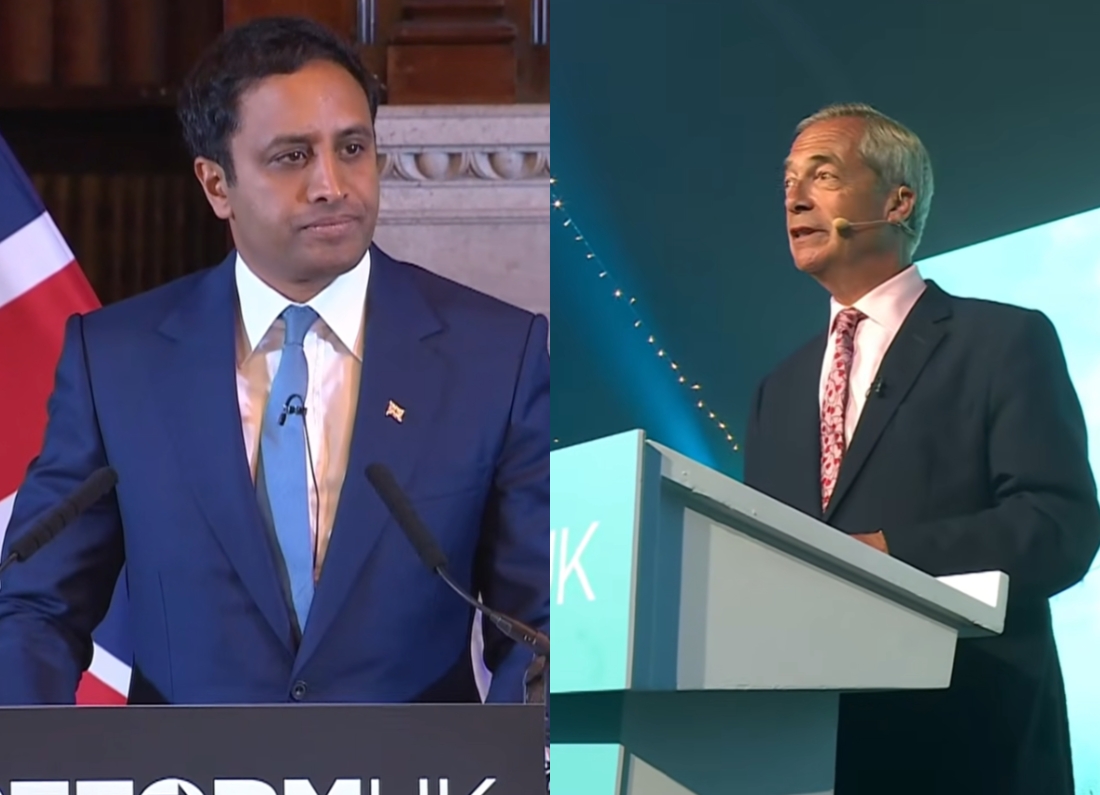
O’Brien couldn’t resist connecting the climate discussion to Farage’s week: “I don’t know whether Nigel Farage has been given £5 million by fossil fuel companies or by 10 fossil fuel companies. We’ll never know who else may have given him £5 million for undisclosed reasons because he won’t tell us about the money. We only know about the £5 million he took from a Thailand-based billionaire because of journalism. And he doesn’t think that’s any of your business. So you never know really with some characters how much money they’ve squirrelled away from vested interests. That’s why they squirrel it away, I suppose.”
Can the weather change everything?
The question O’Brien kept returning to was whether this heatwave – in particular, its status as the new normal rather than a freak event – might finally create the political appetite for meaningful change that the evidence alone has so far failed to generate. “Can we actually ignore the evidence of our own thermometers?” he asked. “The party’s final, most terrible command is that we ignore the evidence of our own eyes and ears.”
He acknowledged the record of the forces he was describing. “They normally win. Those tanks, those vested interests, those shills, those client journalists, those propagandists, those lobby groups masquerading as think tanks. They’ve won on immigration. They won on Brexit. They’ve won on tax issues. They’ve won on wealth distribution, poverty being the fault of the poor. They’ve won on almost every front.” But he found himself tentatively hopeful that this might be different. “I think today they might lose this one. They might lose this one.”
The reasoning is essentially that propaganda requires the audience to accept a claim about reality that contradicts their experience. You can persuade people that immigrants caused their economic misery even when the evidence points elsewhere – the causal chain is long and complex enough to obscure. But the logic that the weather today is not connected to what we have done to the atmosphere is considerably harder to sell when the weather today is unprecedented, hospitals are declaring critical incidents and your children cannot be taught in their classrooms.
141 countries have voted to make climate action a legal obligation, and the attribution science behind individual extreme weather events is now robust enough to make the connection between specific events and the accumulation of carbon in the atmosphere with high confidence. What O’Brien is asking is whether the gap between that science and public understanding – sustained by years of deliberate obfuscation – is finally closing. Not because of better communication, but because the evidence is now visible from everyone’s window.
“It is simply the case that you can’t really argue against this science anymore unless you are an obvious idiot,” he concluded. “The question is whether the current crisis right across Europe is going to provide the political appetite needed for profound, prolonged and meaningful change.”
You can watch the video below:









Leave a Reply