

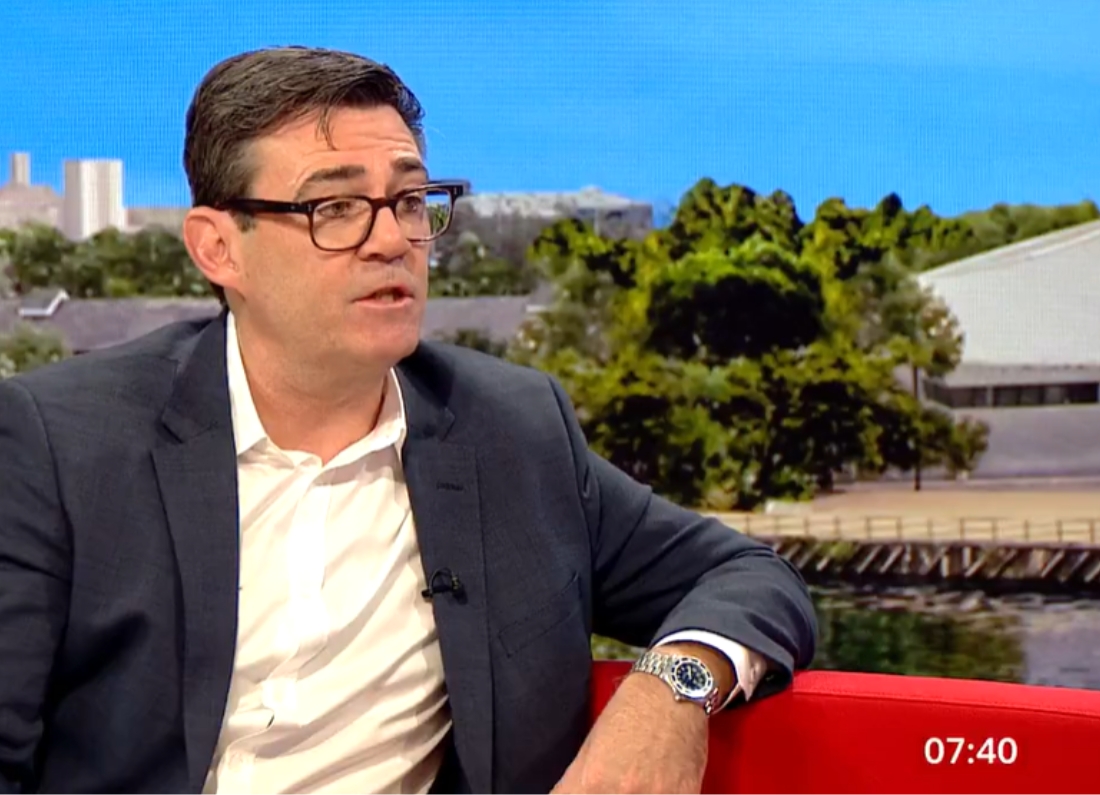
Andy Burnham is set to ditch Palantir from the NHS, the Telegraph has revealed, in what would be one of the most consequential early decisions of his incoming premiership.
Burnham did not grant the US tech company any contracts during his nine years as Greater Manchester mayor, and is minded to take the same approach in Downing Street. He is currently reviewing the government’s overall artificial intelligence strategy, with an aide saying he believes “unfettered tech boosterism” is turning off voters. In his first keynote speech since returning to Westminster, Burnham said he wanted social value to play a larger role in how government contracts are awarded.
The contract at stake
Burnham is expected to succeed Keir Starmer as early as 20 July, and will then have to decide whether to cut ties with Palantir two years into its seven-year, £330m NHS deal. The Federated Data Platform, built on Palantir’s technology, is used by more than half of NHS trusts in England and has been credited with faster cancer diagnoses, increased operating theatre use and fewer delays discharging patients.
The programme has also faced significant criticism over patient data access, with reports that Palantir contractors were granted “unlimited access” to medical data, a decision the NHS’s own officials warned risked “loss of public confidence” in the system.
Should Burnham choose to end the arrangement, he would need to inform Palantir of his decision in December, ahead of the contract’s automatic renewal in March. Starmer’s government had already opened the door to ending the deal when the break clause arrives, but had not committed to doing so.
Why Labour MPs and unions want it gone
Critics have focused heavily on Palantir’s work with the Israeli Defense Forces and US Immigration and Customs Enforcement. Peter Thiel, the company’s founder and chairman, was an early backer of Donald Trump in 2016 and has previously called for the NHS to be rebuilt using “market mechanisms.” Chief executive Alex Karp has also publicly supported Trump.
Technology Secretary Liz Kendall recently attacked what she described as Palantir’s “right-wing” leadership and declined, on five separate occasions when asked, to say whether she believed the firm should have a continuing role in the healthcare system. In February, 21 Labour MPs signed a parliamentary motion condemning the Ministry of Defence for signing a separate £240m contract with Palantir without competitive tender.
Burnham’s own record
Allies point to a specific, verifiable fact underpinning Burnham’s thinking: the Greater Manchester Combined Authority issued zero contracts to Palantir under his leadership between 2017 and last month. Greater Manchester Police separately confirmed earlier this year that it has held no Palantir contract in the past five years. Burnham has made no final decision on new or existing contracts, but that consistent record is said to inform his approach.
The issue was raised directly with Burnham and Labour activists during the Makerfield byelection campaign, suggesting Palantir’s role in public services has become a live doorstep issue rather than a purely Westminster-level debate.
The case against ditching it
Stuart Andrew, the shadow health secretary, argued patient welfare should come first. “If Andy Burnham tears up a programme that is improving patient care, he will have to explain why he chose politics over patients,” he said. “The NHS should use the best technology available to save lives, cut waiting lists and help staff deliver better care. If we want the NHS to embrace the very best technology, we must be willing to work with the world’s leading technology companies. Driving them away for political reasons risks undermining confidence in partnering with the NHS. Patients should never pay the price for Labour’s political posturing. Lives are too important to be sacrificed for Andy Burnham’s political beliefs.”
Former health chiefs have separately claimed a campaign by left-wing activists has made NHS staff too afraid to voice support for the company’s work with patients. Tom Bartlett, who led the NHS data engineering team that developed the Federated Data Platform, said his former colleagues were “afraid to speak out” for fear of a backlash.
Not the only Palantir contract under strain
The company’s position in British public life has become increasingly contested on multiple fronts simultaneously. Palantir has accused Sadiq Khan of “putting politics above public safety” after the London mayor blocked a separate £50m Metropolitan Police contract, a decision that has exposed a genuine split within Labour over how to handle the company. Khan’s office has since granted a smaller £2m contract for identifying suspected police misconduct and approved a one-year extension to another Palantir arrangement, a partial reversal that Palantir itself has responded to by launching a High Court challenge over the blocked £50m deal, arguing the decision amounts to stifling free speech.
The bigger picture
James Murray, the new Health Secretary, has described the review of the Federated Data Platform contract as “part of normal business” rather than signalling any predetermined outcome. But the direction of travel from Burnham’s camp fits a broader pattern of briefing against US tech giants more generally, consistent with the government’s evolving artificial intelligence strategy and Burnham’s wider devolution and reindustrialisation agenda.
One figure involved in developing Burnham’s new technology strategy told the Financial Times it would place a new focus on ensuring AI works for domestic companies and the public rather than US tech giants, describing Starmer’s courting of American firms as “a geopolitical failure that hasn’t delivered on its intended aims and has also put the Labour government at odds with its voters and the vast majority of the British public.”
Burnham’s Monday speech promised to unlock “good growth in every British postcode” and pledged to reindustrialise Britain, suggesting a broader preference for decisions on contracts and industry that favour British companies over international tech firms, of which the Palantir question would be an early and highly visible test case.
What happens next
No final decision has been made, and Burnham has not yet taken office. But the combination of his consistent nine-year record in Manchester, his public rhetoric against “tech boosterism,” and the mounting pressure from his own backbenchers and unions suggests the direction of travel is reasonably clear. Whether that translates into an actual termination of the £330m deal, with the operational disruption to NHS trusts that would follow, remains the key open question as December’s decision deadline approaches.
2 responses to “Burnham set to ditch Palantir from NHS data deal in major early test of premiership”
-
Do it Andy too much American influence.
-
This would be wonderful news… Could he also think of kicking Palantir out of HMRC, Policing, Parliament,MOD, Financial Conduct Authority (FCA),GCHQ, Department for Environment, Food & Rural Affairs (Defra), Home office,
Local Councils: Including Coventry City Council (social care) and Highways England and
Atomic Weapons Establishment (AWE)













Leave a Reply