

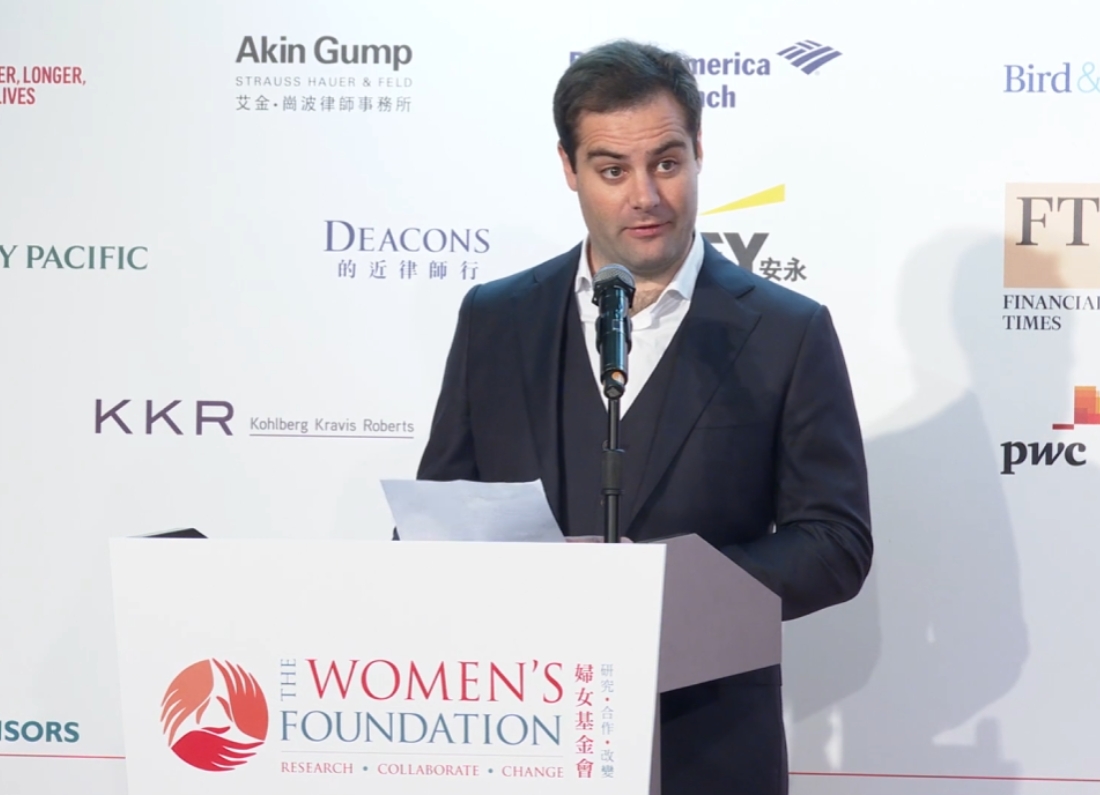
A crypto billionaire who pleaded guilty to financial crimes in the United States and was subsequently pardoned by Donald Trump is moving back to Britain with the explicit purpose of donating millions of pounds to Reform UK – as Nigel Farage‘s own personal investment in a Bitcoin company chaired by former Chancellor Kwasi Kwarteng raises increasingly serious questions about the relationship between his political ambitions and his financial interests.

Ben Delo, 42, who moved to Hong Kong in 2012 and made his fortune as co-founder of the cryptocurrency trading platform BitMEX, donated £4 million to Reform earlier this year. When the government introduced a £100,000 cap on donations from Brits living abroad, Delo took a decision that speaks to his commitment to Farage’s project: he announced he would move back to the UK specifically to circumvent the cap and donate millions more.
Writing in the Daily Telegraph, Delo said he was returning to Britain with the specific intention of helping Farage “build a war chest.” He has previously backed Rupert Lowe and, according to a Guardian investigation, has supported several people and projects advancing hardline positions on immigration, nationalism and abortion.
Who is Ben Delo?
Delo is described as Britain’s youngest self-made billionaire. His wealth came from BitMEX, the cryptocurrency trading platform he co-founded, which at its peak was one of the most significant crypto derivatives exchanges in the world.
In 2022, Delo pleaded guilty in the United States to violating the Bank Secrecy Act – specifically, wilfully failing to implement anti-money laundering controls at BitMEX. He received a 30-month probation sentence and a $10 million fine. Last year, Donald Trump pardoned him.
The pardon connects Delo to a broader pattern that has come to define the relationship between Trump’s political operation and the crypto industry – one that is now being replicated, in British form, through Reform UK.
Farage’s Bitcoin bet
The Delo story arrives alongside a separate but related development that has attracted significant scrutiny. Farage recently announced a personal investment of £215,000 in Stack BTC – a tiny Bitcoin treasury company chaired by none other than Kwasi Kwarteng, the former Chancellor whose mini-Budget in 2022 crashed the pound and triggered a crisis in the gilt market.
The investment is not straightforward. Stack BTC is what is known as a “Bitcoin treasury company” – a company that exists primarily to buy and hold cryptocurrency. Its business model is circular: if investors value shares above the Bitcoin the company holds, it issues new stock, uses the proceeds to buy more Bitcoin, and thereby justifies a higher valuation. The cycle feeds on itself.
When Farage announced his investment, the share price of Stack BTC jumped sharply – at one point quadrupling. On paper, Farage made more in a single day than many of his Clacton constituents earn in a decade. A bonus potentially worth millions more is triggered if Stack’s market valuation reaches £100 million.
The conflict of interest is obvious and unacknowledged. Farage is simultaneously a senior politician advocating for pro-crypto government policy – including a Bitcoin reserve at the Bank of England, cutting crypto capital gains tax from 24% to 10%, and a sovereign wealth fund comprised of crypto assets – and a direct financial beneficiary of those same policies being adopted. The more credible his path to power, the more valuable his investment. The more valuable his investment, the more incentive he has to make the promises that drive the price.
As one commentator put it: the investment is not just a bet on Bitcoin but on political power itself.
Kwarteng’s involvement adds a further layer of irony. Just two years ago, he was publicly dismissing Bitcoin as “a total crapshoot.” In his Stack BTC video address – his first public appearance since delivering Liz Truss’s calamitous mini-Budget – he spoke of the company’s “institutional credibility.” The word was simultaneously displayed on screen, misspelled as “credability.”
The man behind Reform’s funding: Christopher Harborne
The Delo story cannot be understood without the wider context of how Reform is funded – and who funds it. The dominant figure is Christopher Harborne, a Thailand-based aviation and cryptocurrency investor who goes by the name Chakrit Sakunkrit in Thailand.
Harborne has given Reform UK over £12 million – making him the single largest donor in the history of British politics and the source of roughly two-thirds of all money the party has ever received. He is a major stakeholder in Tether, the stablecoin that has become the closest thing to a global dollar of the crypto world. Tether generates profits that rival Goldman Sachs.
Harborne’s influence extends beyond donations. He has funded Farage’s private jet trips, his attendance at Trump’s inauguration, his failed Maldives stunt, and various other activities. The two Dassault Falcon jets linked to the Chagos Islands expedition are connected to his aviation network. He declines to comment on his ownership of those aircraft.
The combination of Harborne’s £12 million, Delo’s returning millions, Farage’s personal Bitcoin investment, and Reform’s explicit pledge to be the most crypto-friendly party in British politics creates what Fraser Nelson, in a forensic essay for the Sunday Times, describes as an “obvious conflict of interest that has never been formally acknowledged, let alone managed.”
The American template
To understand where Reform’s crypto strategy is heading, it helps to look at where Trump has already been.
Trump was calling Bitcoin “a scam” as recently as 2021. But he discovered that the crypto world was anti-government, anti-establishment, anti-regulation – and represented a massive source of political funding. During the 2024 election campaign, crypto money accounted for nearly half of all company donations to political campaigns. No other sector – pharma, oil, Wall Street – came close.
Once in the White House, Trump delivered. The US crypto investigations unit was disbanded. The government began hoarding Bitcoin as a national asset. The Trump family launched their own digital tokens – $TRUMP and Melania Coin – and established World Liberty Financial with Eric Trump, Donald Trump Jr and 19-year-old Barron Trump. The message to the industry was clear: enlist the leader, promise to make him rich, and wait for him to open the regulatory gates.
Farage has been explicit about replicating this model in Britain. “When it comes to your industry, then I am your champion,” he told a crypto conference. “What we’re going to need is a ‘Big Bang 2.'” He wants the Bank of England to hold Bitcoin, crypto taxes slashed, and a sovereign wealth fund built from digital assets.
Picking winners, punishing rebels
Nelson’s analysis identifies something darker in the underlying political model – what he calls the “illiberal Conservative” model, associated with figures like Viktor Orbán in Hungary and Silvio Berlusconi in Italy. It is a model in which politicians do not merely set the rules of the market but actively pick winners and punish those who resist.
The Trump administration has already demonstrated what this looks like in practice. When Anthropic refused to allow the Pentagon unrestricted use of its AI systems – objecting to automated weapons and mass surveillance – the company was officially designated an “unacceptable risk to national security,” a classification previously reserved for Chinese and Russian state-linked firms. The contract went to OpenAI, whose chief executive had donated $26 million to Trump’s political operation.
Farage’s approach follows the same logic. Banks that debanked him will face legislation. Crypto companies that back him will get favourable tax treatment. This is not, Nelson argues, a free market – it is a managed one where advantage flows through proximity to power. “When politicians hold stakes in the sectors they promote, promise regulatory favours to friends and openly threaten disfavoured companies,” he writes, “the boundary between public policy and private gain begins to dissolve. What emerges is not a freer market but a managed one.”
What it means for British democracy
The Ben Delo story crystallises a question that has been building around Reform for months: what does it mean for British democracy when a party polling joint top is substantially funded by cryptocurrency billionaires – one convicted of financial crimes, another operating from Thailand – whose financial interests would be directly served by the party’s policies?
The biggest shareholder in Stack BTC is not Kwarteng but Paul Withers, co-founder of precious metals trader Direct Bullion – a company that has previously paid Farage around £400,000 to advertise gold coin investments to his supporters. The gold salesman, as Nelson puts it, has gone digital.
Britain has long prided itself on resisting the crony capitalist model that has corroded democracy across Eastern Europe. The danger, Nelson concludes, is not a sudden break but a gradual normalisation: incentives aligning, rules bending, expectations shifting. By the time it is obvious, it is already embedded.
Reform presents itself as a revolution against the establishment. The question being asked with increasing urgency is whether it is actually building a new establishment of its own – one where the beneficiaries are not the communities of Clacton and Stockton that Farage claims to represent, but the crypto billionaires of Hong Kong and Bangkok who are funding his war chest.
You may also like: Reform UK polling falls to lowest level in over a year as Kinnock brands it a ‘posh boys club’







Leave a Reply