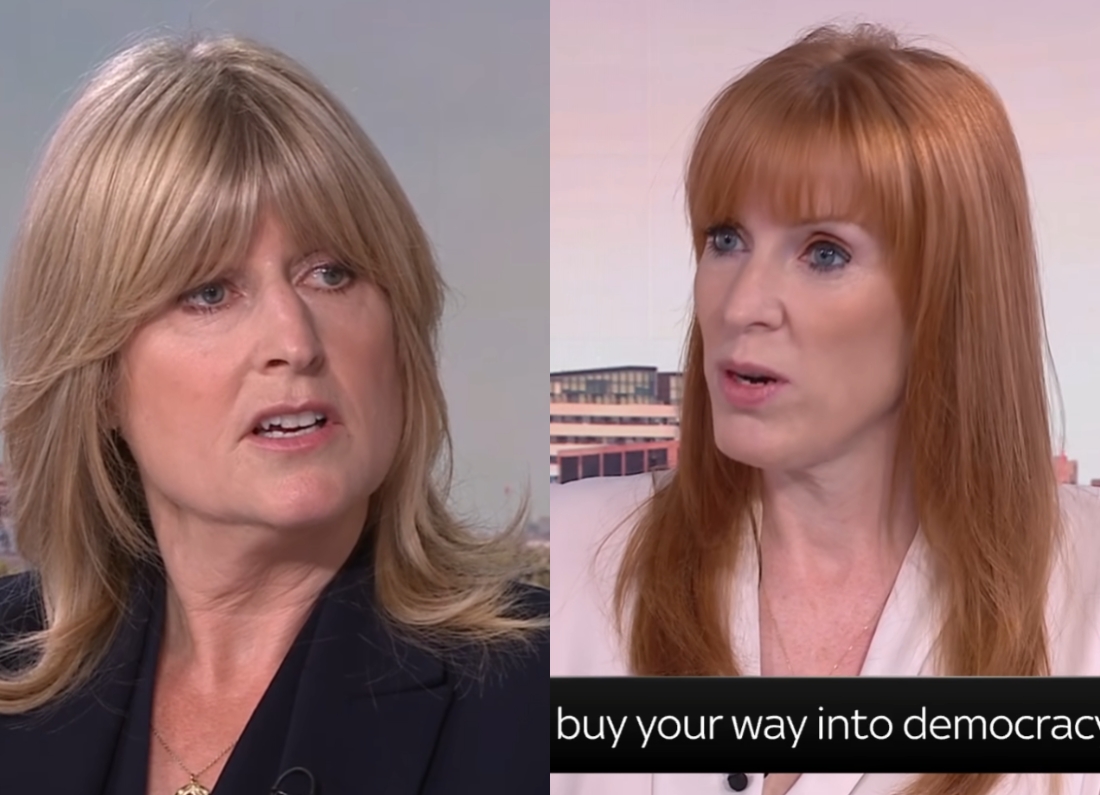
Angela Rayner has won praise after correcting Rachel Johnson over disability benefits, explaining that PIP can support people who are working.
During their discussion, Rayner explained that Personal Independence Payment is not restricted to unemployed people and can help disabled recipients remain in employment.
The Government’s eligibility guidance confirms that having a job does not prevent someone from qualifying. PIP addresses disability-related needs, rather than being a payment awarded simp
ly because somebody is out of work.
Reactions to the exchange
@SaulStaniforth welcomed Rayner’s explanation, writing in part:
“PIP isn’t an out of work benefit”
Well done to Angela Rayner for explaining to Rachel Johnson that PIP isn't an out of work benefit, plenty of people who receive PIP are in work, and PIP enables them to do that pic.twitter.com/saFL3KKR1q
“Why do the rich, like the Johnsons, care so much about depriving people who are struggling?!”
What PIP is designed to cover
Personal Independence Payment helps with additional living costs associated with a long-term health condition or disability.
The payment has a daily living component and a mobility component. Claimants may qualify for either or both, depending on the difficulties they experience.
Daily living activities include preparing food and washing or dressing. Mobility needs can involve physically moving around, but also planning and following journeys. The mobility component is not limited to people with physical disabilities.
The assessment considers how a condition affects those activities. It looks at whether someone can complete them safely, how long they take and whether help is required.
Being able to perform a particular job does not establish that someone can manage every assessed activity without assistance. Employment is not a substitute for assessing their daily living and mobility needs.
A diagnosis alone does not establish entitlement
PIP eligibility is not automatic simply because somebody has a disability or a named medical condition.
Applicants must meet the relevant requirements concerning difficulties with everyday activities or getting around. Those difficulties generally need to be expected to last at least 12 months from when they began.
New claimants usually need to be below State Pension age. Different arrangements apply in Scotland, where people apply for Adult Disability Payment instead. Eligibility guidance
The assessment therefore concerns the practical effects of a condition. Neither being employed nor being unemployed answers the question of whether someone qualifies.
Disability support and income support are different
PIP should also not be confused with Universal Credit.
Universal Credit helps eligible people with living costs when they have a low income, are unemployed or cannot work. Some recipients have jobs.
The Universal Credit guidance confirms that people moving onto it can continue receiving PIP. Claiming Universal Credit does not automatically replace a disability payment awarded for different needs.
A person may consequently receive support with their income and separate assistance connected to disability. The existence of one payment does not establish that the other is unnecessary.
The eligibility rules also expressly allow working people and people with savings to receive PIP. That is the distinction at the centre of the interview: the payment is not reserved for people without employment.
2 responses to “Angela Rayner corrects Rachel Johnson over PIP – and viewers applaud”
Ian Williamson
Of course, if employers paid a living wage then these in work benefits wouldn’t be necessary… over to you and your ilk Rachel Johnson…
Jordon Scott is a digital media specialist and editor at The Daily Britain. He focuses on political coverage, platform strategy, and ensuring journalism remains accessible without compromising editorial standards.
He oversees publication structure, reach, and transparency across the site.











Leave a Reply