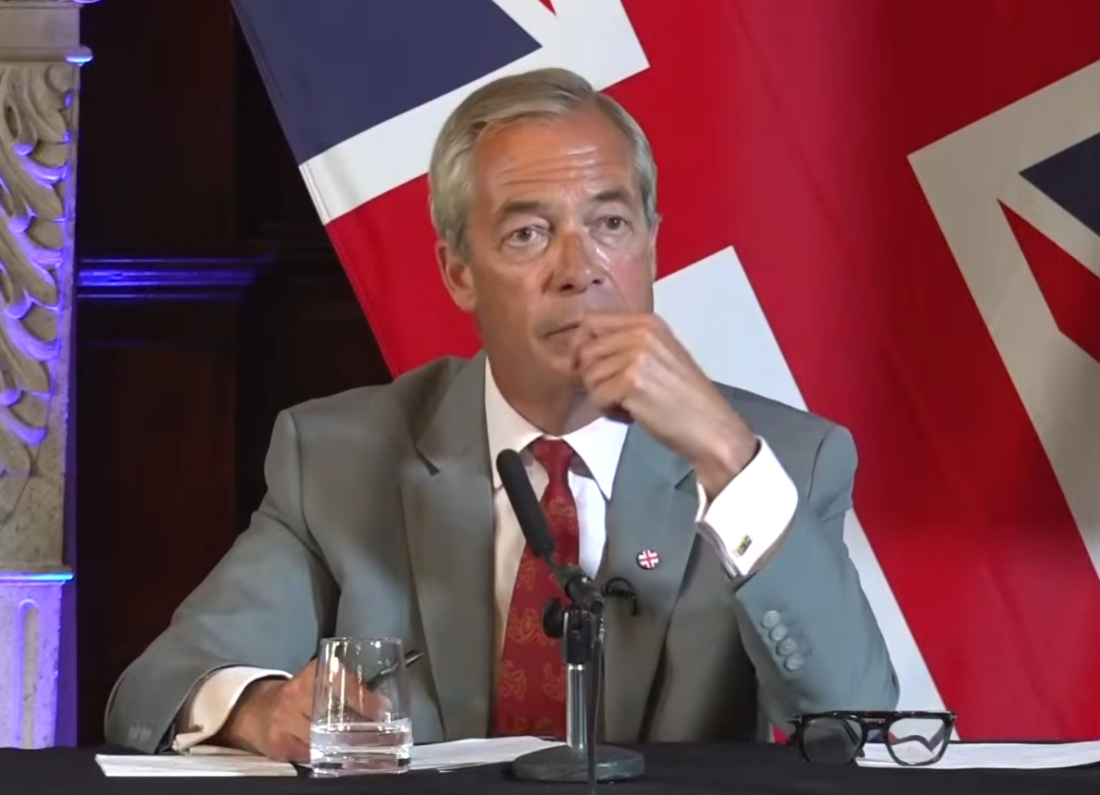
Angela Rayner has mocked Nigel Farage’s billionaire backers as “sugar daddies” before using his paid video messages to deliver a pointed attack on Reform UK’s funding.
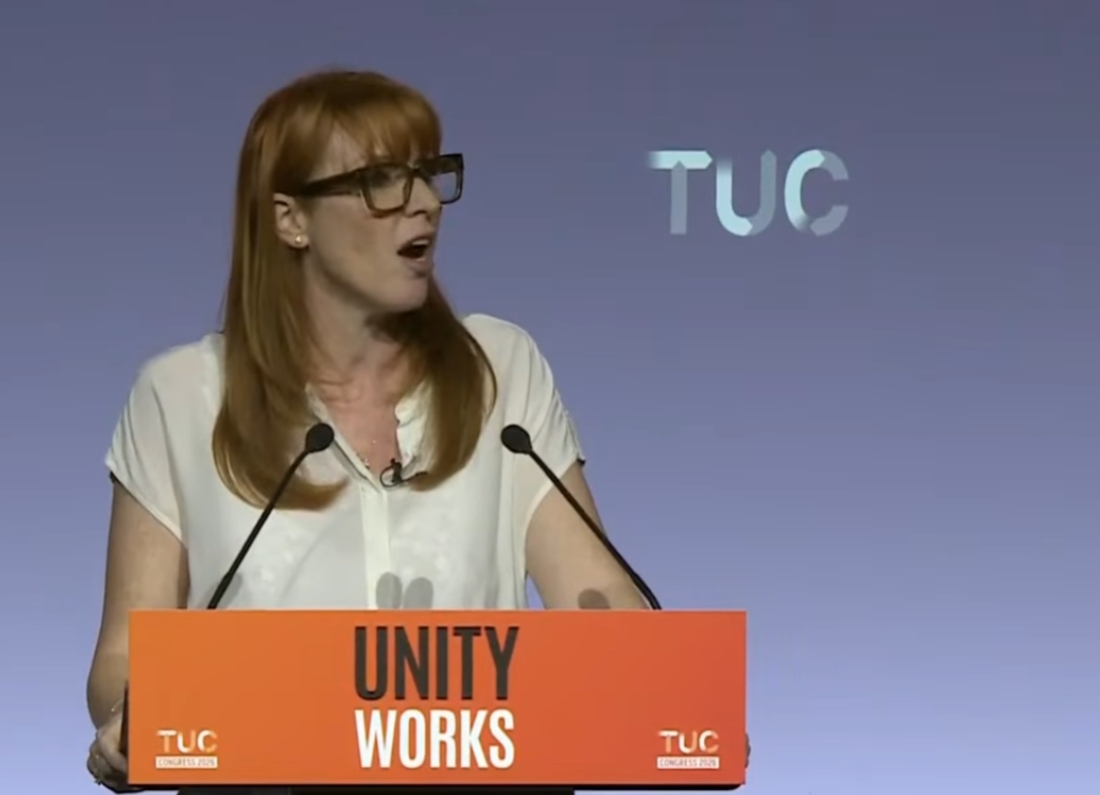
Speaking at the TUC Congress in Brighton on Monday 14 September, the housing and communities secretary challenged the motives behind the party’s £72 million boost from two cryptocurrency billionaires.
She argued that a Reform government would serve its wealthy supporters rather than working people, linking the donations to her warning about the party’s plans for employment protections.
Then came the comparison with Cameo, the platform through which Farage sold personalised messages:
“And if Farage will do you a Cameo for seventy pounds, just ask yourself – what would he do for seventy million?”
The line formed part of her address to union delegates, delivered after Christopher Harborne matched Ben Delo’s £36 million donation over the weekend.
Two donors give Reform £72 million
The two payments have handed Reform an extraordinary financial boost as it prepares for the next general election.
Delo, a co-founder of cryptocurrency trading platform BitMEX, announced his £36 million donation first. Harborne then matched it, saying that hearing about the payment had inspired his competitive spirit.
Both donors have argued that their support will help Reform compete with the established parties. Harborne has said he expects nothing personally in return, including a peerage or a policy change.
Farage welcomed the funding as a way to strengthen Reform’s election operation. Richard Tice has also defended the donors and maintained that the party followed the rules when accepting their money.
Rayner’s speech challenged that explanation. She argued that deregulation and weaker protections would themselves benefit wealthy supporters, even without an individual reward.
That was her political accusation, rather than evidence of an agreement between the donors and Reform.
Workers’ rights at the centre of the attack
Rayner warned delegates that Reform would repeal the Employment Rights Act and the Equality Act. She linked that warning to the prospect of workers losing protections over insecure contracts and dismissal.
The employment legislation is being implemented in stages, so not every measure she discussed is already operating.
Changes to statutory sick pay took effect on 6 April 2026, removing the waiting period and the lower earnings limit. Day-one rights to paternity leave and unpaid parental leave also took effect that month.
Further protections are scheduled for next year. The Government’s timetable places fire-and-rehire protections in January 2027, while guaranteed-hours rights and provisions concerning notice of shifts are listed for implementation during 2027.
Future dates remain subject to parliamentary processes and may change
Union funding enters the argument
Rayner also rejected comparisons between the billionaire donations and political funding drawn from union members’ contributions.
Trade union political funds operate under separate statutory rules. Members have a right to opt out, and unions must keep their political funds separate from their general funds.
The rules changed earlier this year, including the removal of the requirement to renew political funds through a ballot every ten years. Political fund rules remain subject to approval by the Certification Officer.
TUC general secretary Paul Nowak delivered his own attack on Reform’s funding during Congress.
He told delegates:
“Reform UK is a party for sale.”
He added:
“Nigel Farage is a politician for sale.”
Those were accusations in Nowak’s conference speech, not findings that the two donations had purchased particular policies.
Donation rules remain under scrutiny
The funding dispute is also playing out in Parliament.
The Representation of the People Bill includes proposals for a £100,000 annual cap on donations from overseas electors and a minimum-residency period for British citizens returning to the UK.
The Government intends the restrictions to have retrospective effect. Their potential application to Reform’s donations depends on the final legislation and the donors’ circumstances; the proposals should not be treated as a cap already in force.
Farage has criticised the Government’s approach as an attack on Reform. He has also threatened to stop trade unions donating to political parties if Reform forms the next government.
Joe Connor is a UK-based reporter specialising in politics, public policy, and national affairs. He has previously contributed to publications including The London Economic (JOE Media Group) and Spotted News.
At The Daily Britain, he covers Westminster politics, elections, and breaking political developments, alongside in-depth analysis of policy decisions and their real-world impact.











Leave a Reply