

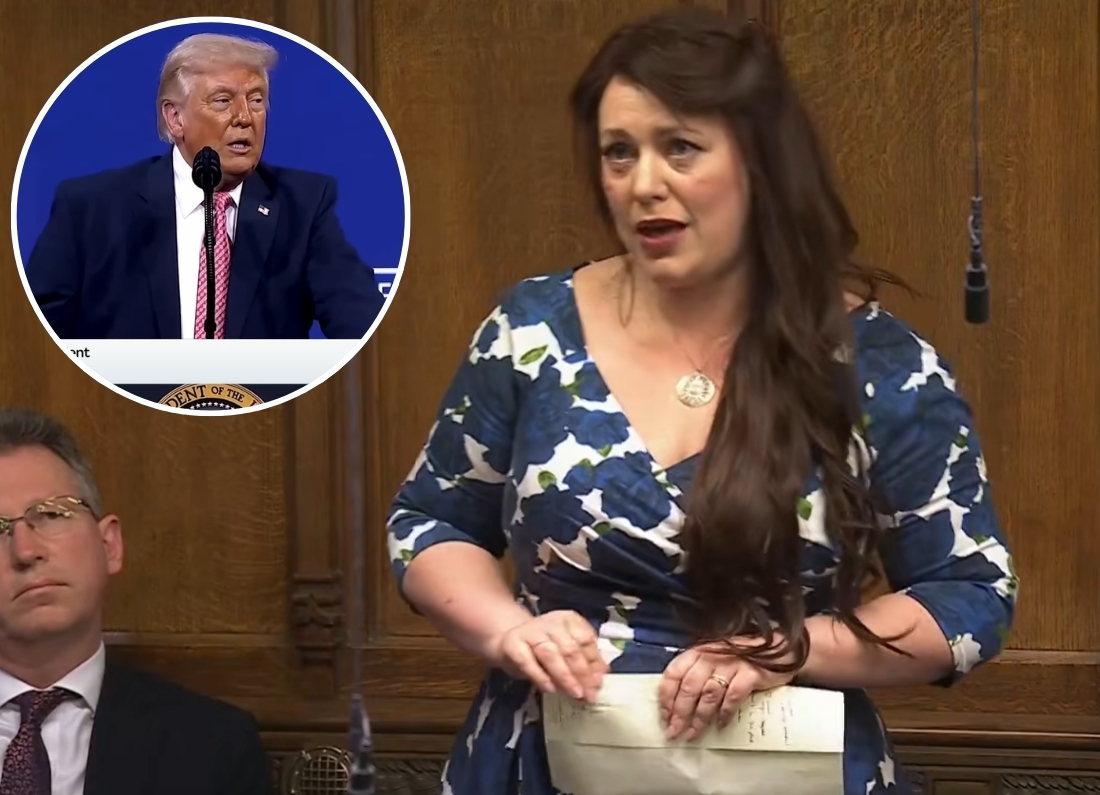
In the high-stakes world of transatlantic diplomacy, words usually serve as shields. But this week, senior British MP Alicia Kearns used them as a sword, delivering a blistering “reality check” to US President Donald Trump following his latest disparaging remarks about the NATO alliance.
The exchange, playing out across social media while the US-led offensive against Iran enters a critical phase, comes at a precarious moment for global security. As Washington continues its campaign to reopen the Strait of Hormuz, the friction between the White House and its European allies has reached a fever pitch. At the heart of the row is a fundamental disagreement over what “showing up” actually means in a modern military alliance.
The catalyst: A war of words over Iran
The tension boiled over after President Trump once again accused NATO member states of being “cowards” for their refusal to commit ground troops or heavy weaponry to the ongoing conflict in the Middle East. With global energy prices soaring and the US military bearing the brunt of the offensive, Trump has demanded that NATO allies “repay their debt” to the United States.
“NATO made a terrible mistake when they wouldn’t send a small amount of military armaments, just even acknowledge what we were doing for the world taking on Iran,” Trump told an investment forum in Miami on Friday. He followed this with a veiled threat that has sent shockwaves through European capitals: “Why would we be there for them if they’re not there for us? Based on their actions, I guess we don’t have to be, do we?”
Setting the historical record straight
Alicia Kearns, the Conservative MP for Rutland and Stamford, was quick to dismantle the President’s narrative that the US is a one-sided benefactor of the alliance. Kearns, who has long been a vocal defender of the rules-based international order, took to X to remind the President that NATO’s history of sacrifice is not a one-way street.
“As a British MP I can tell you what ‘showing up’ looks like,” Kearns wrote. “It looks like 457 British soldiers who died in Afghanistan. NATO has only ever gone to war for one country. Yours.”
Her remarks cut through the political noise by highlighting a historical fact often ignored in “America First” rhetoric: the mutual defense clause of Article 5 has only been activated once in the alliance’s history. It wasn’t triggered to protect London or Paris—it was triggered on September 12, 2001, to protect the United States after the 9/11 attacks.
The human cost of ‘showing up’
By citing the heavy toll the UK paid during the 20-year conflict in Afghanistan, Kearns shifted the debate from dollars and cents to lives and loyalty. The figure of 457 British service personnel represents a generation of families across the UK who lost loved ones in a war that was, fundamentally, an act of solidarity with America.
For a British lawmaker to remind a sitting US President that NATO “showed up” for two decades—only to be told five years later that they aren’t doing enough—signals how frayed the “Special Relationship” has become.
The 2026 dilemma: Why Europe is holding back
The current rift is deepened by the specific nature of the 2026 conflict. Unlike the response to 9/11, many European leaders view the current US offensive against Iran as a unilateral action launched without the broad international consensus required for a NATO mandate.
While Trump claims NATO is “taking a lot of money” from the US, European defense spending has actually surged since the mid-2020s, with almost all members now meeting the 2% GDP target. The issue isn’t money; it’s a fundamental strategic disagreement over whether the Iran conflict should be a global war or a regional containment effort.
A relationship on the brink
The most chilling part of the President’s recent rhetoric is the suggestion that US commitment to Article 5 is now conditional. By stating, “I guess we don’t have to be there,” Trump is effectively hollowing out the core promise of NATO: that an attack on one is an attack on all.
Kearns ended her response with a provocative thought: “The question isn’t whether NATO showed up, it’s whether we forgive you for pretending otherwise.”
As the conflict in the Middle East shows no signs of abating, this clash of narratives will likely define the future of Western security. If the White House continues to treat 70 years of alliance as a transactional ledger, it may find that when the US truly needs help again, the bridge back to its oldest allies has already been burned.
Related: What NATO’s Article 5 actually means – and when it applies







Leave a Reply