

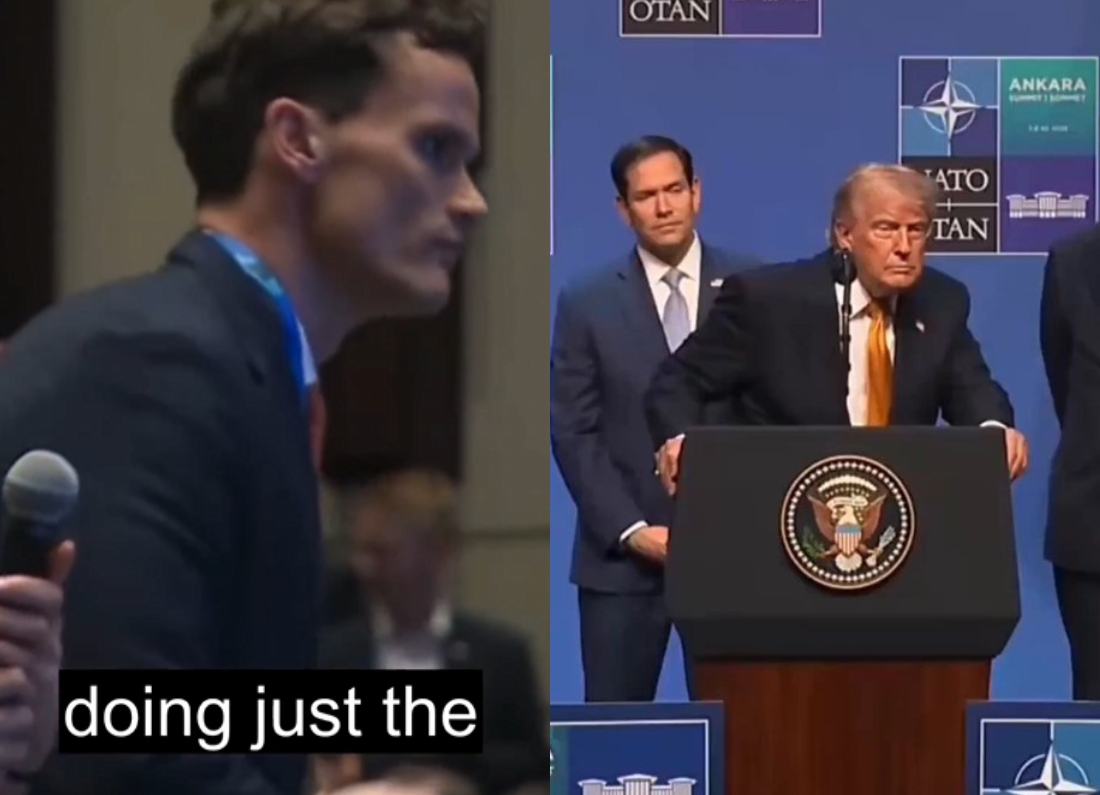
A free and functioning press did what a free and functioning press is supposed to do at the NATO summit in Turkey this week.
It asked Donald Trump a direct question about one of the most dangerous conflicts in the world.
Not a flattering opener. Not a rambling invitation to repeat his own talking points. Not one of those soft-focus questions that lets a politician say “strength” six times and walk off as if something has been answered.
Just a blunt, necessary question about the Iran war, the limits of Trump’s strategy, and whether all his talk of victory has actually produced anything resembling an endgame.
And Trump, very visibly, did not have much of an answer.
The clip was shared widely on X by Ed Krassenstein, @EdKrassen, who wrote: “Trump was just mocked by a reporter on the world stage!”
But the more accurate description might be simpler.
Trump was questioned.
And he did not like the question.
The question Trump did not answer
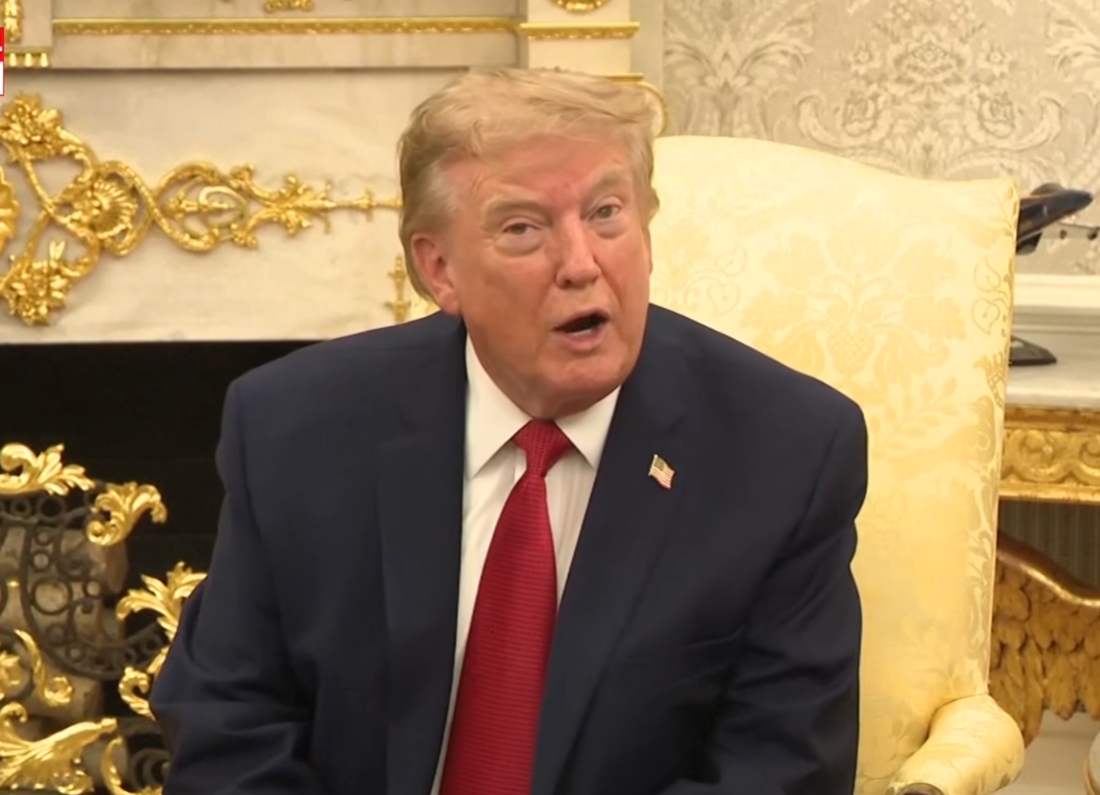
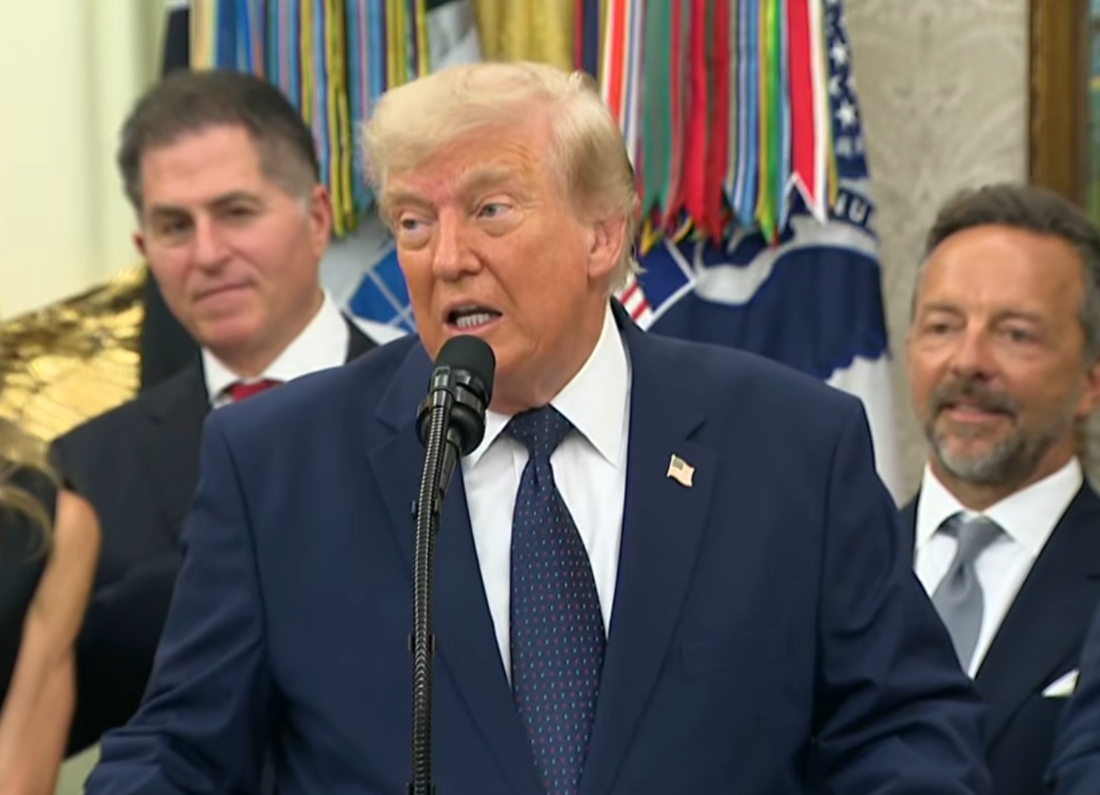
Standing at the podium during the NATO summit, with senior officials behind him and the full theatre of American power around him, Trump was asked:
“The Iran war seems to be a strategic dead end for you. Why are you apparently unable to end the Iran war?”
That is exactly the kind of question powerful people should be asked, especially when the subject is war.
Trump has repeatedly presented his Iran policy as strong, successful and decisive. He has claimed military success, insisted Iran will not be allowed to obtain a nuclear weapon, and framed his approach as proof of American strength.
So the obvious follow-up is: if it is working so well, why is the war still going?
Trump’s answer was pure Trump.
“So I think we’re doing just the opposite. The Iran war has been a tremendous military success. And you know, I can only answer the question by saying they’re not going to have a nuclear weapon.”
Which is not really an answer to the question.
It is a denial of the premise, followed by a victory claim, followed by a pivot to the nuclear issue.
The reporter asked why Trump appeared unable to end the war.
Trump replied by saying the war had been a military success and that Iran would not get a nuclear weapon.
Those are not the same thing.
Why the question mattered
This is why the clip travelled so quickly.
It was not just that a reporter used a sharp phrase like “strategic dead end,” although that obviously helped. It was that the question cut straight through the performance.
Trump has always been skilled at turning press conferences into tests of dominance. He insults reporters, reframes questions as personal attacks, calls things fake, and relies on the spectacle to drown out the substance.
But here, the question was not about his feelings. It was not about whether the reporter was being nice enough. It was not about whether the press corps had shown the appropriate level of reverence.
It was about the actual policy.
If the Iran war is such a success, why has it not ended?
That is the question governments should have to answer when they escalate military conflicts. It is the question that separates a slogan from a strategy. It is also the question Trump clearly did not want to sit with for very long.
The reaction online
The response on X was immediate, and a lot of people focused on the fact that this was not “mocking” at all. It was simply journalism.
Jimmy Carr, @Jimmy9779142373, put it neatly:
“It’s not mocking. It’s called journalism in countries with a free press.”
That line really gets to the heart of it. A reporter asking an uncomfortable question is not an insult. It is not disrespect. It is not a personal attack. It is the job.
Jones, @Jones77009368, wanted more of the same:
“I just love some of these reporters at the NATO summit .. more of this please!”
SkinWolf, @lbrohz8, suggested Trump had not grasped the actual point being put to him:
“Trump himself didn’t get the question, someone should help him understand he’s messing up with Iran.”
Dr.M.A.A.O.W., @Maricaaow, summed up the answer in four words:
“As always, zero answer.”
And that is what made the exchange so revealing. Trump spoke, but he did not really answer. He asserted success, but did not explain the strategy. He insisted Iran would not get a nuclear weapon, but did not explain why the war itself had not reached a resolution.
The American media comparison
Several people also made the point that Trump’s response might have been rather different if the same question had been asked by a reporter back in the United States.
Coco, @ChanelleMGale, wrote:
“If this was in America Trumps response to American media ‘who are you? You low IQ individual you’re so dumb what a stupid question to ask why the hell would you ask that ridiculous question’ He’s far to comfortable being disrespectful to American media cause they allow it”
That is the dynamic many viewers recognised instantly.
Trump has spent years training large parts of the American political media to expect abuse as part of the performance. A tough question becomes a provocation. A challenge becomes “fake news.” A reporter doing their job becomes the enemy.
But the NATO summit setting was different. The question came in a room where Trump was not entirely controlling the atmosphere, and where the usual domestic media ritual did not quite apply.
That is partly why the moment landed. It showed what happens when a journalist asks the obvious question without first wrapping it in six layers of caution.
The Strait point
Others focused on the substance of the Iran question itself.
Davros, @davros17171, wrote:
“They did not have a nuke, but now they own the Strait…trump doubles down because he cannot take responsibility for anything…ever”
That response points to the broader strategic issue the reporter was trying to get at. Trump’s answer focused narrowly on Iran not obtaining a nuclear weapon, but the consequences of a conflict are rarely limited to one stated objective.
War changes regional power dynamics. It affects shipping routes. It affects alliances. It affects oil prices, military commitments, diplomatic leverage and the risk of further escalation.
That is why “they’re not going to have a nuclear weapon” is not a complete answer to whether the war has become a strategic dead end.
A military action can achieve some tactical objective and still leave the wider situation more dangerous, more expensive, more unstable and harder to resolve.
That was the hole in Trump’s answer.
The bigger problem for Trump
Trump likes simple stories.
He likes victory. He likes strength. He likes the idea that problems continue only because weaker leaders failed to solve them before he arrived.
But foreign policy rarely works like that, and war almost never does.
If the Iran war is ongoing, then the question is not whether Trump can produce a line about success. The question is what success actually means. Is it regime change? Is it deterrence? Is it preventing a nuclear weapon? Is it forcing negotiations? Is it avoiding a wider regional conflict? Is it getting American personnel and allies out of danger?
Without a clear answer to those questions, “tremendous military success” is just a phrase.
And that is why the reporter’s question was so effective. It forced the gap between Trump’s rhetoric and the reality of the situation into the open.
He was not being asked whether he felt successful.
He was being asked why, if his strategy was so successful, the war had not ended.
Why it struck a nerve
The whole exchange also exposed something wider about political journalism.
There is a tendency, especially around leaders who thrive on spectacle, to confuse access with accountability. Politicians say something dramatic, journalists report the drama, and the underlying claim is never really tested.
This reporter tested it.
That is why people reacted so strongly. Not because the question was rude. Not because it was theatrical. But because it was the question that should have been asked.
If you claim the war is a success, explain why it is still happening.
If you claim your strategy is working, explain what the endpoint is.
If you claim to have made the world safer, explain why the conflict has not been resolved.
That is journalism.
And judging by Trump’s answer, it is journalism he could have done without.




Leave a Reply