

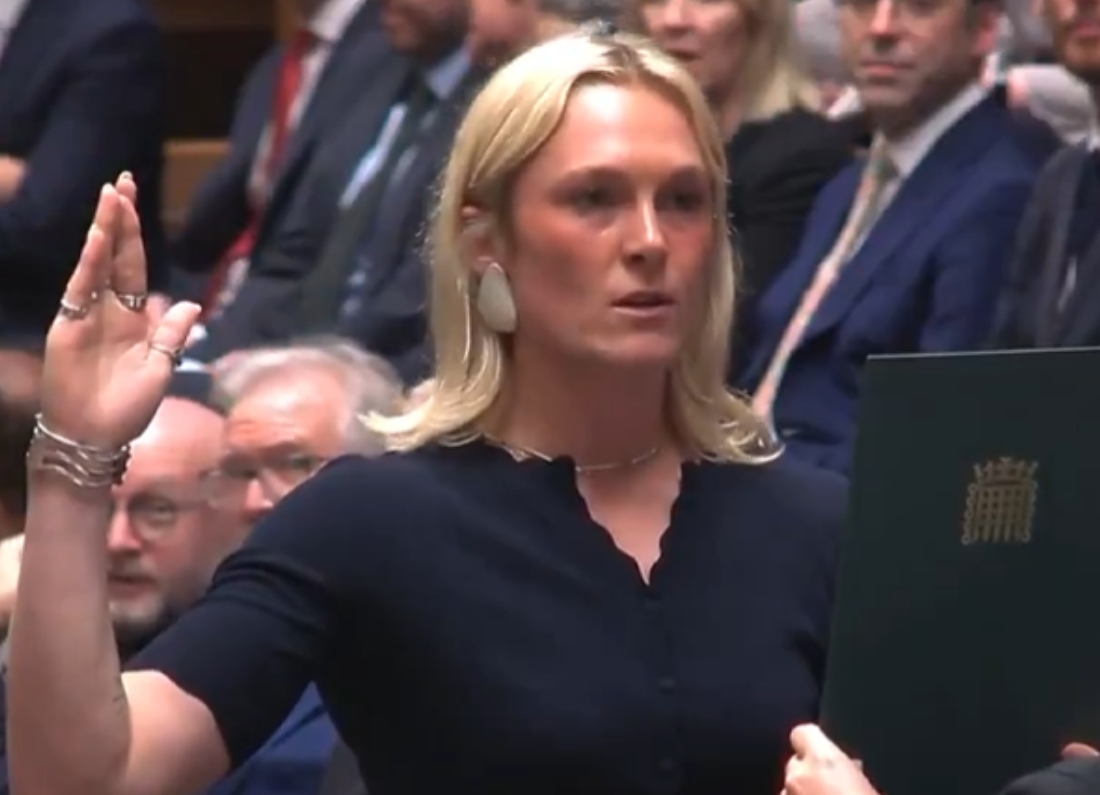
A newly elected SNP MP has sparked a row after appearing to cross her fingers while being sworn in as a member of parliament, with critics accusing her of making a “mockery” of the House of Commons and her supporters saying she was simply putting her constituents first.
Lara Bird, who won the Arbroath and Broughty Ferry seat in the recent by-election, was sworn in at Westminster on Monday. During the oath of allegiance to King Charles, she appears to cross her fingers. The moment was captured on Parliament TV and chatter broke out in the chamber immediately after she finished.
What she said
Bird shared footage of the moment on social media, describing it as a “privilege,” and added her own statement alongside: “I take this oath only so that I can serve the people of Arbroath and Broughty Ferry. My first allegiance is and always will be to the sovereign people of Scotland.”
She wrote on X: “Today, I was officially sworn in at Parliament. I took this Oath in order to serve the people of Arbroath and Broughty Ferry – and declared that my loyalty will always be to the people of Scotland. It is a privilege to serve and represent our communities as your Member of Parliament.”
In a fuller statement responding to the backlash, she said: “On my first day in the job I wanted to make very clear that my true commitment and allegiance will always be to my constituents here and more widely to the people of Scotland. I made it clear in my campaign that I entered politics to serve my local community and my country and that’s what I intend to do every single day.”
She added: “I’m not the first MP to have done this and I’m confident I won’t be the last – it’s pretty telling though that the Westminster establishment find it so offensive that a new MP would pledge allegiance to her constituents.”
The criticism
The response online was divided, though the criticism came in sharply. One user wrote: “You shouldn’t be an MP if you’re going to disrespect the House and can’t take your oath properly.” Another said: “Crossing your fingers while taking the parliamentary oath isn’t a clever protest – it’s childish and undermines the seriousness of the role you’ve just been elected to. It comes across like a 10-year-old trying to get away with telling a fib to their mum.”
Others drew a comparison with Sinn Féin MPs, who have historically refused to take the oath entirely and as a result do not take their seats in Westminster. “If you had a genuine hinterland and any principles, then you’d have refused to take the oath,” wrote one user. “I may disagree with Sinn Féin members, but I respect their stance. Crossing fingers is the act of someone better suited for the playground.”
One critic added: “Your oath means nothing as you made it patently clear you don’t believe what you were saying – pathetic.” Another said it would “not strengthen the case for Scottish independence – it makes your side look unserious and disrespectful to the institution you’re now part of.”
The defence
Supporters pushed back firmly. “She did it for the people of Scotland,” wrote one. Others argued that the oath itself is a constitutional anachronism that many MPs of various parties find uncomfortable, and that Bird was simply making her priorities transparent rather than pretending the oath reflected her actual allegiance.
Bird’s point – that Westminster finds it offensive for an MP to declare her primary loyalty to her constituents rather than the Crown – is genuinely pointed. The oath is a formal requirement of taking a parliamentary seat in Britain, and it has long sat awkwardly with republican, nationalist and non-monarchist MPs of all stripes. Most comply in silence. Bird chose to comply with visible qualification. Whether that is principled or performative is, ultimately, a matter of perspective.
The wider context
The row arrives at a politically charged moment for the SNP and for Scottish politics more broadly. Bird won the Arbroath and Broughty Ferry by-election, and her arrival in Westminster alongside other recent Scottish by-election results has reshaped the parliamentary arithmetic in Scotland. John Swinney, the First Minister, congratulated her on her win.
The debate about the royal oath is not new – it resurfaces regularly, particularly when new SNP or Plaid Cymru members are sworn in, or when the monarchy itself is in the news. Bird’s crossed fingers give it a visual hook that most oath controversies lack, which is presumably part of why the clip spread as quickly as it did. Whether she has helped or harmed her own cause with the gesture is a question her constituents in Arbroath and Broughty Ferry will answer in due course.
You can watch it below:
If you don’t use X, you can watch it on YouTube below:
You may also like: UK could rejoin EU on ‘short’ timeline if it wanted, Barnier says on Brexit’s tenth anniversary




Leave a Reply