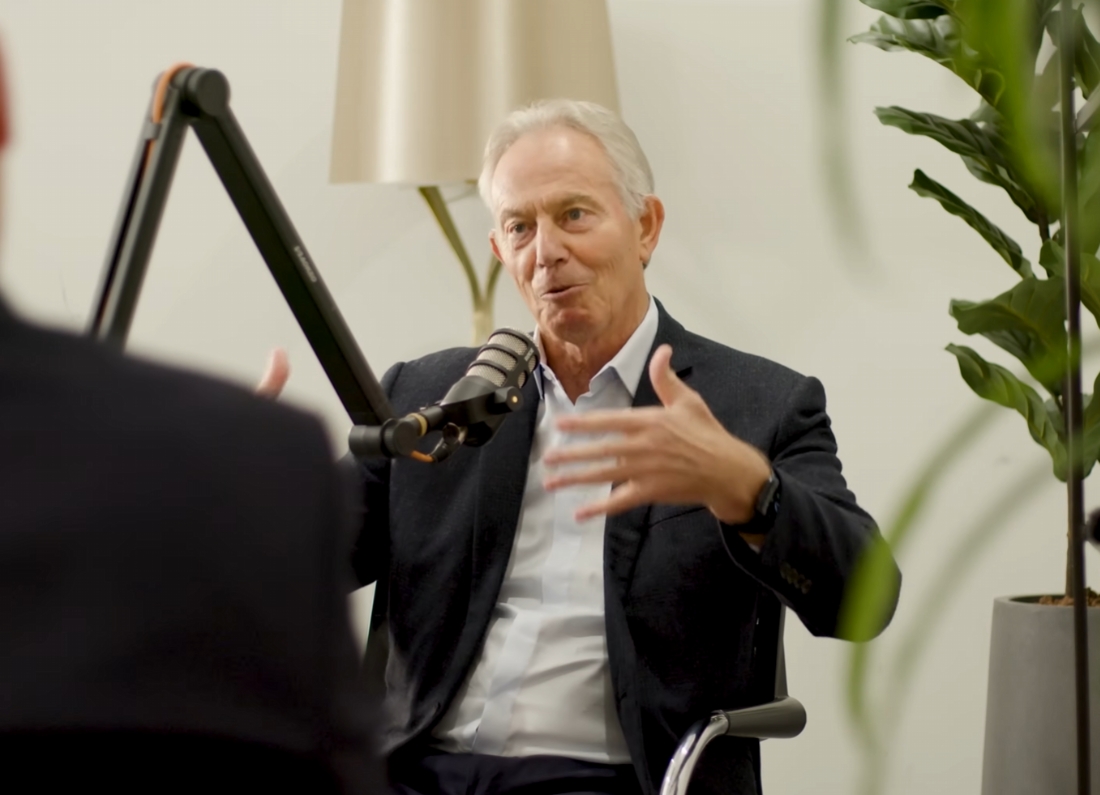
Tony Blair has made his first major public intervention since Labour’s 2024 landslide, publishing a lengthy essay warning the party is “playing with fire with its future and that of the country,” calling the leadership debate between Andy Burnham and Wes Streeting “extraordinarily retro” with a “20th-century feel,” and proposing a ten-point “Radical Centre” programme that includes abandoning Net Zero in favour of cheaper energy, supporting Donald Trump even on Iran, and fundamentally reforming welfare – while dismissing the effort to remove Starmer as “not a serious way of conducting ourselves.”
The intervention is the most significant from a former Labour prime minister since the leadership crisis began. Blair led Labour for thirteen years, won three consecutive general elections and remains the only Labour leader in the party’s 120-year history to win a second full parliamentary term. His assessment carries weight precisely because it comes from someone who achieved what Labour is currently attempting to repeat.
It also carries significant controversy, because several of his prescriptions will be deeply unpopular with the Labour members and trade unions whose support any new leader will need to win.
What Blair said about the leadership contest
Blair was careful not to take sides but landed punches on all directions simultaneously.
On Burnham and Streeting: “Wes Streeting is a huge political talent and Andy Burnham was an outstanding member of my government. But this leadership debate has an extraordinarily retro 20th-century feel to it.”
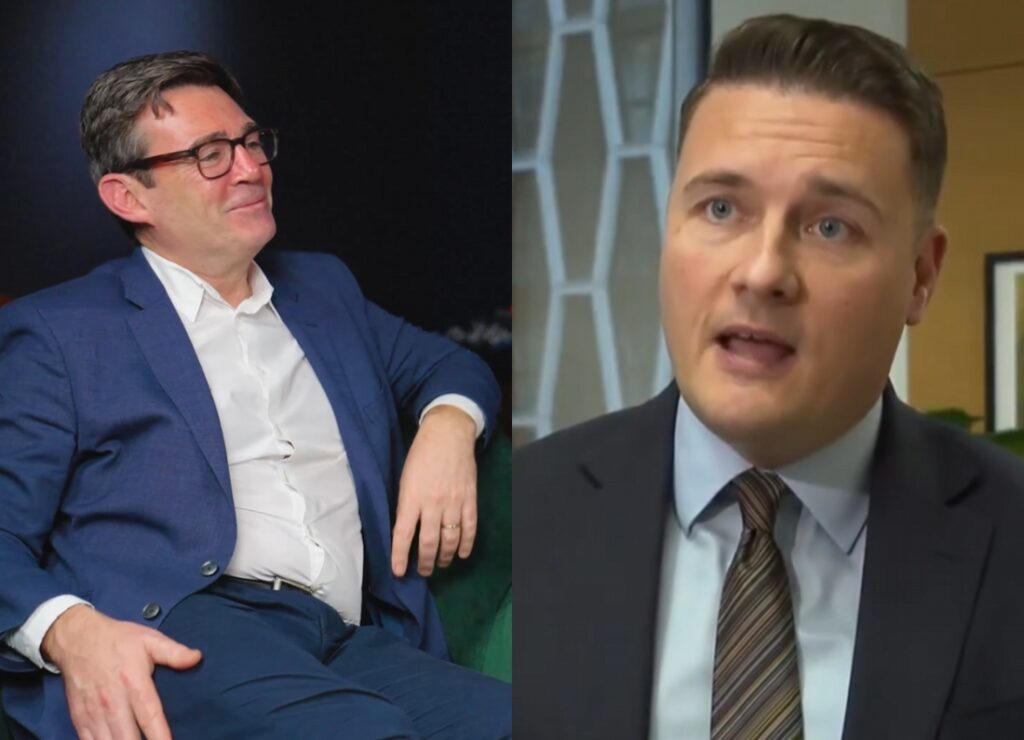
On removing Starmer: “Whether there is a leadership change or not is irrelevant if it doesn’t start with a policy debate. Trying to force the prime minister out before we know what policy direction we’re bringing in is not a serious way of conducting ourselves.”
On Labour’s underlying problem: “The government’s principal problem isn’t Keir’s personality. Or a failure to communicate ‘our achievements’. Or a need to assert more strongly Labour’s ‘values’. It is because we don’t have a worked-out, coherent plan for the country in a fast-changing world.”
He described the government as “governing from an essentially traditional Labour ‘soft left’ position, parked firmly in the party’s comfort zone” – a description that applies more precisely to the Burnham leadership prospectus than to Streeting’s. Blair’s warning against “the left position odds on to win” in a membership vote is, between the lines, a direct challenge to Burnham despite the surface praise.
The attack on Gordon Brown
Blair’s essay includes a passage directed at the period after he left office in 2007 – the moment his successor, Gordon Brown, became Prime Minister. “Labour has never fully recovered from its move to the left in 2007,” he wrote.
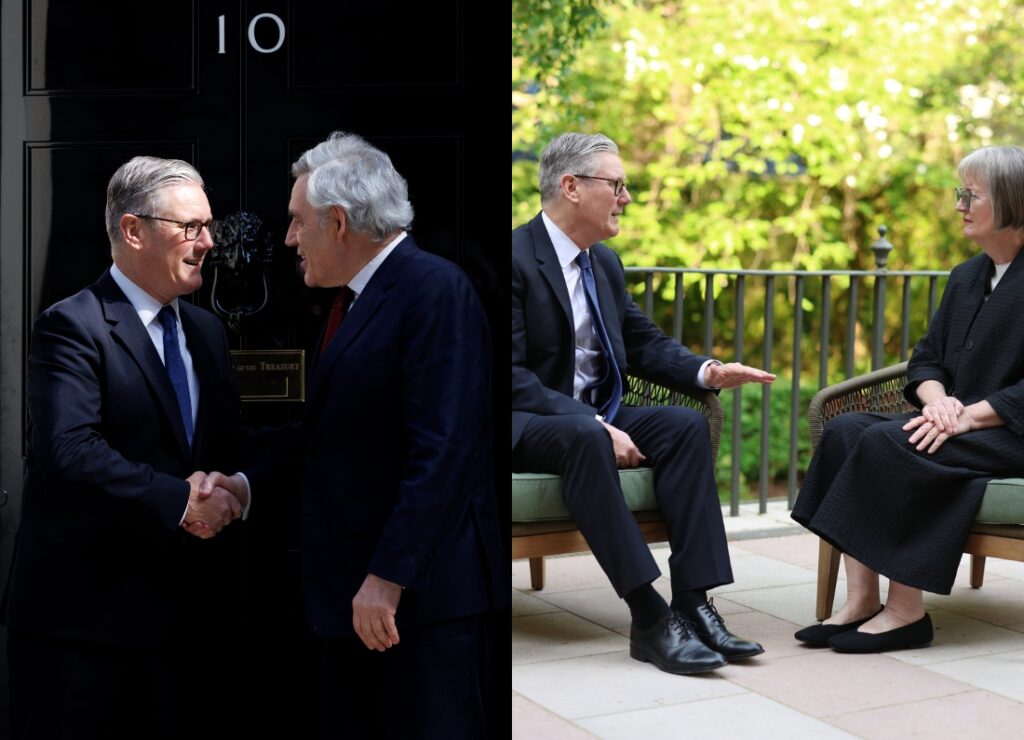
Brown is currently working as Starmer’s special envoy on global finance and cooperation. Blair’s assessment that the party’s decline traces to Brown’s accession is not a new position but its inclusion in a major public essay about the current crisis is a specific and pointed choice.
What the ‘Radical Centre’ actually means
Blair’s ten-point programme is where his essay becomes most specific – and most controversial. His proposals include:
Reversing the government’s workers’ rights legislation, minimum wage increases beyond inflation and non-dom tax changes, which he says have “given headwinds not tailwinds to British business.”
Abandoning Net Zero in favour of cheaper energy: “remove those parts of the net-zero agenda which prioritise clean energy over cheaper energy.” He also advocates using remaining North Sea oil and gas resources.
Fundamental welfare reform: “By the end of this decade, we could be spending more on incapacity and disability benefits than on defence. No serious country can do that.”
NHS privatisation: “Mixing private and public provision in a fundamental realignment of the two.”
On immigration: “Take effective – i.e. ‘whatever it takes’ – action to solve the illegal immigration issue.” He advocates “targeted immigration in certain sectors for economic growth.”
The programme is, in essence, a request that Labour move significantly to the right on economic policy while remaining broadly centrist on social policy – the New Labour formula Blair believes remains the only path to electoral success.
The Trump and Iran controversy
Perhaps the most contested passage concerns the United States. Blair wrote that while Starmer was right not to participate in the American military action in Iran – “we were never asked to ‘join'” – Britain should have allowed its military bases to be used for American refuelling operations. “I understand the reasons for refusal but it’s not the best way to treat our ally.”
He added that maintaining the American alliance means staying with it “even when it is difficult or unpopular.” This is a direct instruction to future Labour leaders to take a less independent line from Trump than Starmer has adopted – a position Starmer’s refusal to participate in the Iran war has made popular with the British public.
The response from different Labour factions
Blair’s essay will be received very differently by different parts of the Labour movement. For those backing Burnham – whose platform of renationalisation, land value tax and devolution is as close to a defined governing programme as the contest has produced, as we reported in our Burnham campaign launch piece – Blair’s “retro” characterisation will sting most. Burnham’s entire appeal is built on the authenticity of a politics rooted in specific communities, and Blair’s abstract “Radical Centre” is almost the opposite of that appeal.
For the Streeting wing, Blair’s essay provides intellectual cover for the modernising agenda while also questioning whether the leadership contest itself is happening at the right time or in the right terms.
For the parliamentary party members who have been calling for Starmer’s removal, as we reported in our coverage of the 90+ MPs, Blair’s “not a serious way of conducting ourselves” is a cold rebuke from the most successful electoral figure in the party’s history.
The limitations of the intervention
There is a specific irony in Blair’s timing and position that his essay does not fully acknowledge. Labour won three elections under Blair’s leadership. It then lost in 2010. It spent the following fourteen years in opposition. The “left move” Blair blames for Labour’s decline in 2007 was partly a response to the specific toxicity his own government’s foreign policy – particularly Iraq – had created with the membership and significant sections of the public.
Blair’s essay is intellectually serious and politically experienced. It is also the analysis of a man whose own governing legacy is one of the reasons the Labour Party struggled for a decade and a half after he left. Whether his reading of what Labour must become is right or whether it is one very specific and contested version of what worked in a very different political era is a question that the More In Common polling we reported on in our Burnham bounce piece – showing the public most enthusiastic about the most un-Blairite candidate in the race – does not answer definitively, but does complicate.