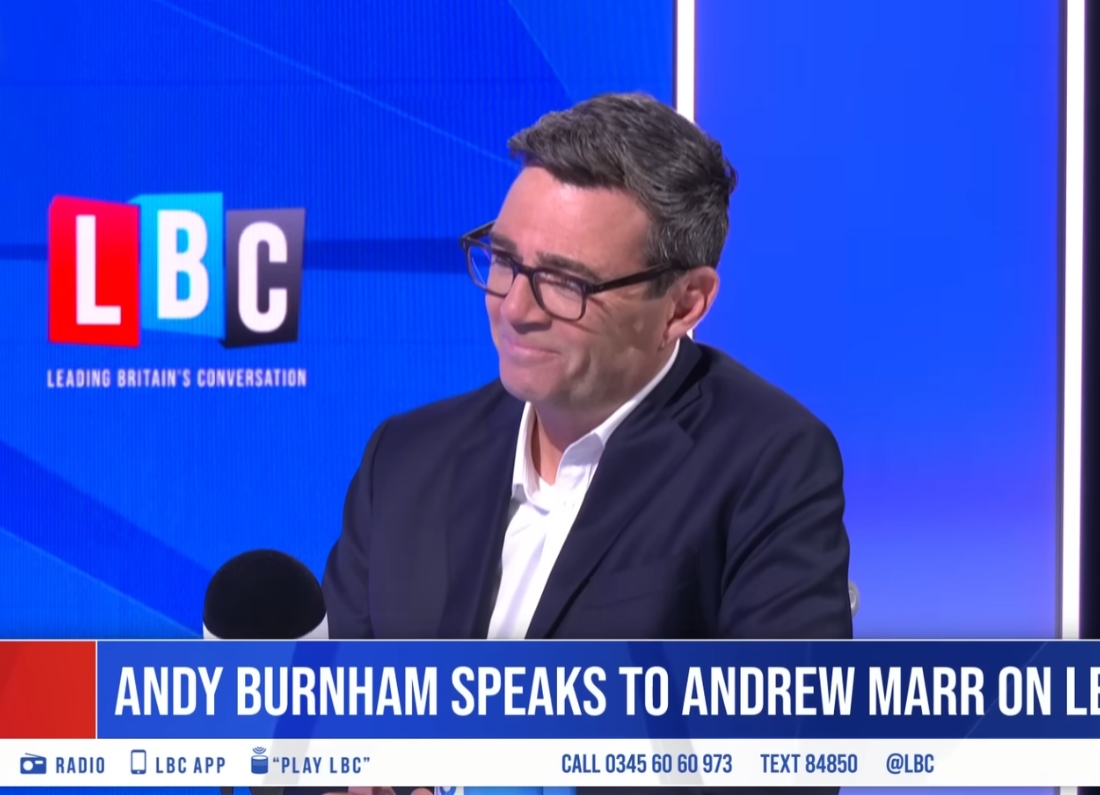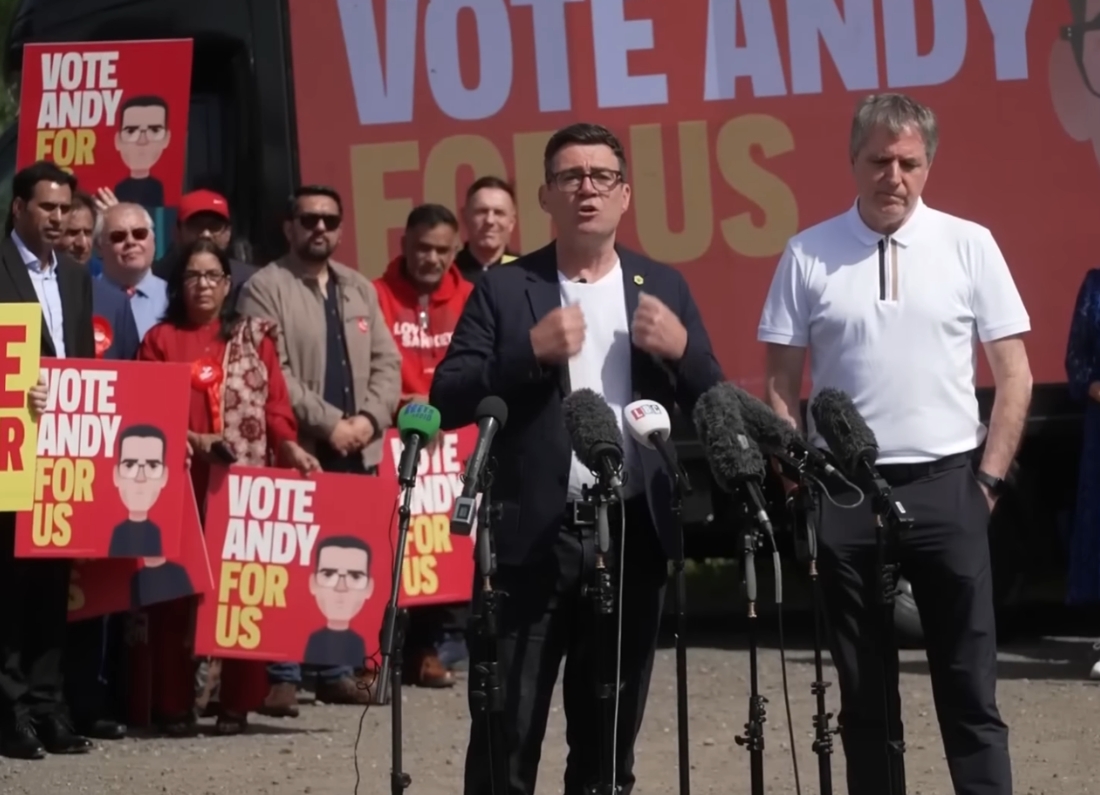
Andy Burnham has formally launched his Makerfield byelection campaign with the most detailed economic programme of the Labour leadership contest so far, backing a land value tax that could raise up to £35.5 billion a year, reformed council tax, a social care levy to replace inheritance tax and stronger public control over utilities – while pledging not to raise income tax, VAT or national insurance and committing to the government’s borrowing rules after bond markets reacted negatively to his leadership bid.
“I think land is under-taxed,” Burnham told The Telegraph, pointing to large areas of unused land across Greater Manchester on which there is currently no meaningful charge when plots are left idle without development.
The land value tax – what it is and what it would raise
UK land was valued at £7.1 trillion by the Office for National Statistics in 2024. A levy of 0.5% on that total would raise approximately £35.5 billion a year. A 1% charge would generate roughly £71 billion. These are hypothetical figures – Burnham has not committed to a specific rate – but they illustrate why land has long attracted the attention of tax reformers: the numbers are significant and the asset cannot be moved offshore.
Unlike traditional property taxes, a land value tax is charged on the unimproved value of land rather than the buildings on it. The specific logic is that it should be cheaper to develop land than to sit on it – discouraging the land banking that critics argue is one of the primary causes of Britain’s housing shortage. A landowner who builds homes pays no more than one who leaves the same plot empty. A land value tax changes that calculation directly.
Burnham has supported the concept for years. During his 2010 Labour leadership bid – which he lost – he proposed a land value tax as the mechanism for abolishing stamp duty, which he described as “a tax on the aspirations of young people to put down roots and get on with life.” He quoted Thomas Paine as the idea’s original advocate: “an idea so old Labour it can be traced back to Thomas Paine.”
At his campaign launch on Friday, he was careful about framing. “I see a big case for land and business and property tax to be changed,” he said, adding that he was “open to being radical” within the parameters of Labour’s existing manifesto. He did not specify whether a land value tax would replace existing property levies or run alongside them.
What the experts say
The response from economists was nuanced rather than straightforwardly supportive.
Tax expert Dan Neidle cautioned against presenting land value tax as a simple tool for targeting wealthy landowners. “The vast majority of people you are going to tax are normal people,” he said. He also pointed out that the UK already taxes property more heavily than any other OECD country when measured as a share of GDP – making the “undertaxed” framing contestable. His argument was that land value tax only works effectively if used to offset other levies rather than as an additional charge: abolishing stamp duty and potentially council tax and business rates in exchange.
Tim Leunig, chief economist at Nesta, drew a distinction between the principle and the framing. “Overall, it is not the case that land is undertaxed in Britain. It is the case that land is atrociously badly taxed.” The council tax system is based on property valuations from 1991 – 35 years out of date – which means it places disproportionate burdens on poorer communities where property has appreciated less. Stamp duty is widely criticised for discouraging people from moving to be closer to work.
Arun Advani, a property tax specialist at the University of Warwick, agreed: “It is definitely true that the way we tax land in this country is a mess – like large parts of the tax system.” The case for reform is strong. The specific design of any reform is where it becomes complex.
Council tax, business rates and hospitality
Beyond the land value tax, Burnham backed reform of council tax, which he described as “highly regressive.” The current system charges the same rate regardless of income, bears no relationship to current property values and places heavier burdens on poorer areas. As we reported in our Reform first year piece, council tax is already a source of tension in Reform-controlled councils that promised to cut it and instead raised it.
On business rates – the tax that is widely blamed for contributing to high street decline – Burnham proposed using visitor levies on hotels to lower rates for the hospitality sector. As we reported in our two pubs closing every day piece, the hospitality sector is under particular pressure from the current combination of energy costs, National Insurance increases and the minimum wage rise. Burnham’s proposal connects directly to the communities he is asking to vote for him on 18 June.
Inheritance tax and the care levy
Burnham restated his long-held position on social care funding: scrapping inheritance tax in favour of a dedicated care levy. “I know there’s a great resentment about inheritance tax, so actually just, you know, take that away, perhaps, and look at a care levy,” he said.
The idea mirrors the proposal he made as health secretary under Gordon Brown between 2009 and 2010 – a flat levy to fund universal free social care. The Conservatives branded it a “death tax” in the 2010 general election and the attack resonated strongly with older voters. Burnham acknowledges it is not in Labour’s current manifesto – “I’m not going to resile from it. I’ve long believed we should have a different way for paying for care” – but is unwilling to drop it regardless.
Wes Streeting has proposed a similar direction on inheritance tax, alongside aligning capital gains tax rates with income tax rates, which he argues could raise £12 billion a year. Burnham said he was open to looking at capital gains tax reform following Streeting’s proposals.
The fiscal rules commitment – and what triggered it
The campaign launch came after a specific and significant market event. Bond markets reacted negatively to Burnham’s bid to replace Starmer as Prime Minister, raising yields on UK government debt. The reaction reflected investor concerns about what a Burnham programme – renationalisation, land value tax, radical tax reform – might mean for borrowing and market confidence.
Burnham addressed it directly. He confirmed he would not raise income tax, VAT or national insurance rates. He committed to Labour’s self-imposed borrowing rules. “I am committed to the manifesto commitments on tax. I think that’s really important from a trust point of view.”
He also distinguished his public control argument from straightforward nationalisation – a distinction that may have been calibrated partly for the bond market audience. “I use that phrase advisedly. People then shorthand it as nationalisation, it’s not the same thing.” On Thames Water specifically: “You don’t just say ‘nationalise water’. You could have a localised public control option there.” As we reported in our Thames Water rescue deal piece, investor anxiety about Burnham’s water position is already affecting the rescue deal for the collapsed utility.
The land value tax, the fiscal rules commitment and the care levy together sketch the outline of what a Burnham government’s economic platform might actually look like: radical in direction, cautious in the specific commitments it will bind itself to before having the full picture of what it has inherited.