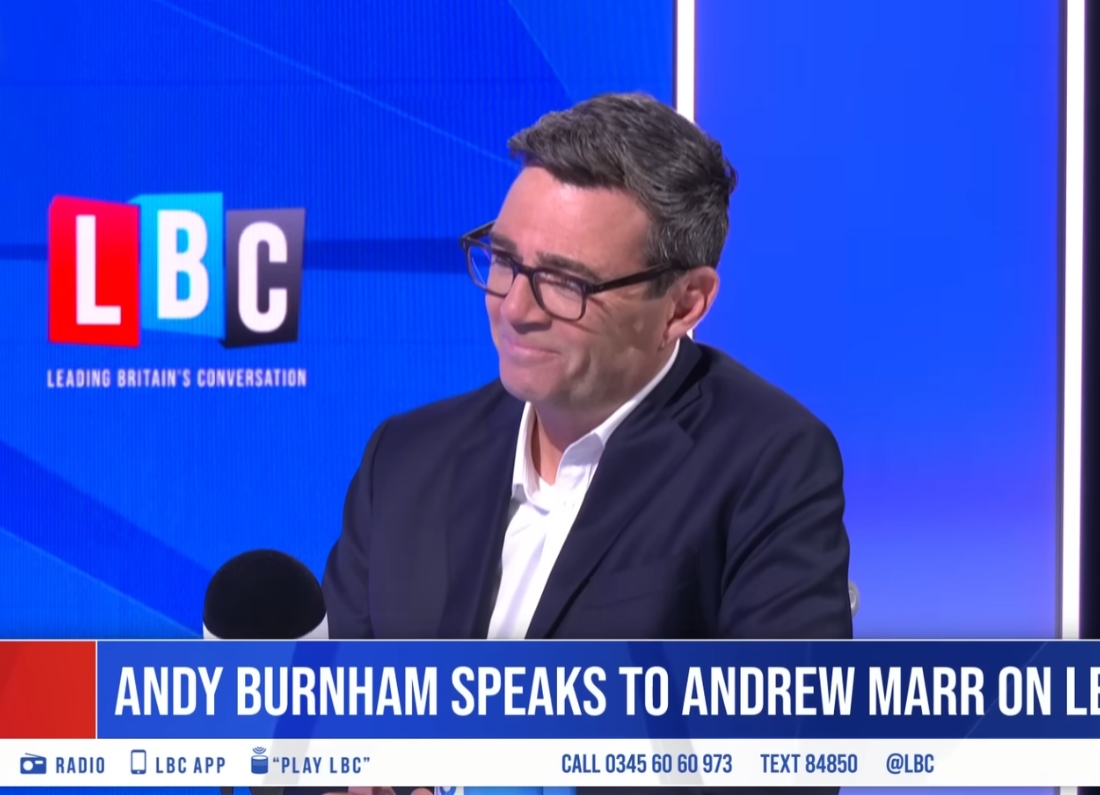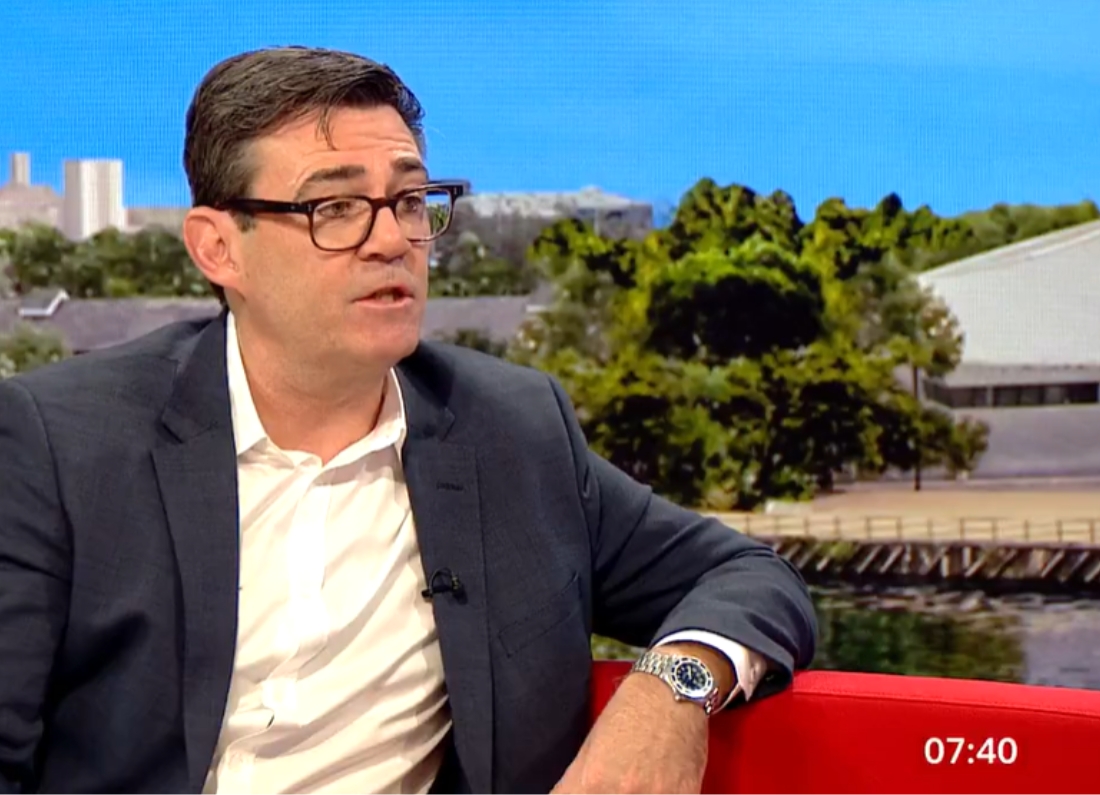
Andy Burnham has given his clearest commitment yet to introducing electoral reform if he becomes prime minister, backing proportional representation to make British politics “less point-scoring, more problem-solving” – in a BBC Radio Manchester interview that could prove decisive for whether the Green Party dials down its campaign in the Makerfield byelection scheduled for 18 June.
The Greater Manchester mayor, who has been seeking a return to parliament via Makerfield in order to challenge Keir Starmer for the Labour leadership, has long supported proportional representation. But Thursday’s interview represents his most direct public statement yet that he would pursue electoral reform in government – a commitment with immediate and practical implications for the byelection he needs to win before the leadership contest he intends to enter.
What Burnham said
Speaking on BBC Radio Manchester, Burnham said he believed in “a different type of politics – a politics that is more place first rather than party first. Where you can work with others, you do that. I do think there needs to be reform to the electoral system to enable less point-scoring, more problem-solving – that’s what I think we need. Less short term, more long term.”
The language is characteristic Burnham – framed in terms of community and pragmatism rather than party ideology. “Place first rather than party first” echoes his Greater Manchester governance model, where his stated approach has been to work across party lines on specific problems rather than governing through Westminster tribalism.
He did not, however, specify when he would seek to introduce electoral reform, nor whether he would commit to starting the process if he became prime minister this year. The commitment is clear in direction. It remains vague in timeline.
Why the Greens are watching closely
The specific political significance of the pledge lies in its relationship to the Makerfield byelection and the Green Party’s decision about whether to stand.
As we reported in our Caroline Lucas stand-aside piece, the former Green MP has publicly called on her party not to contest Makerfield if Burnham is Labour’s candidate – arguing that his PR commitment could “transform our democracy and counter the dire threat of a Reform UK government.” The Green Party had already begun its candidate selection process and said it was looking forward to the campaign.
A credible Burnham commitment to electoral reform is precisely the prize Lucas identified as worth prioritising over party electoral interests in a single seat. For the Greens, proportional representation is not one policy among many – it is the policy that would transform the party from a 7-15% polling force with five Westminster MPs into a party with potential representation in the hundreds.
The More In Common hypothetical polling we reported on in our Burnham bounce piece is also relevant here. That poll showed the Greens dropping from 11% to 7% under Burnham’s leadership – suggesting that a significant chunk of current Green support is parked Labour vote that would return under Burnham. Under proportional representation, however, the Greens at 7% would still win significant Westminster representation. The calculus for whether to stand aside becomes considerably more attractive.
On the EU – distance from Streeting
Burnham also used the BBC Radio Manchester interview to carefully distance himself from the position Wes Streeting had staked out as his most prominent policy differentiation in the leadership contest – calling Brexit a “catastrophic mistake” and saying the UK should rejoin the EU.
Burnham had previously told Labour conference that he wanted to see the UK back in the EU “in my lifetime.” He stood by that long-term aspiration on Thursday but applied a specific political brake: “The country has to fix itself and we have to get to the heart of some of these fundamentals that don’t work for people and that has got to be our relentless priority in the next five or 10 years before we then worry about our relationship with other places.”
Five to ten years. Not in this parliament. Not as an immediate priority. The positioning puts clear distance between Burnham and Streeting on the question that, as we reported in our Lammy five refusals piece, has already reopened Labour’s Brexit civil war at the worst possible moment for a party trying to win back Leave-voting communities. Makerfield voted Leave. The Burnham framing – fix Britain first, Europe in a decade – is a direct concession to that political reality.
The broader pitch
Burnham’s interview also contained the most explicit version yet of his overarching political argument – one that goes beyond specific policies to a diagnosis of what is wrong with British politics itself.
“I really believe that politics in this country is at a moment where we either change it or it really becomes quite broken and people lose faith completely and that’s a dangerous place for the country to get,” he said.
“I think part of the problem is the whole system down there [in Westminster] has not been run for our part of the world. Politics is made for other people in other places and not been wired for these parts of the world – and that’s what I’m in this to change. If politics doesn’t change in this country I don’t know where we will end up in a few years time.”
This is the argument we explored in our populism analysis piece – that the fundamental challenge facing any new prime minister is not just policy but whether mainstream politics can offer an alternative to the emotional appeal of populism. Burnham’s pitch is that it can, and that he is the one who can make it.
He described his leadership bid as an attempt to “change Labour” and return it to “the party people perhaps once knew when they were younger, solidly on the side of working-class people and working-class communities.”
Whether he gets the opportunity to make that argument on a national stage depends first on winning Makerfield on 18 June – against a Reform UK party whose candidate’s background is already generating headlines, as we reported in our neo-fascist Facebook connections piece, and against a Farage who has vowed to throw everything at the contest while simultaneously refusing to answer questions about his financial arrangements, as we reported in our Channel 4 car getaway piece.