

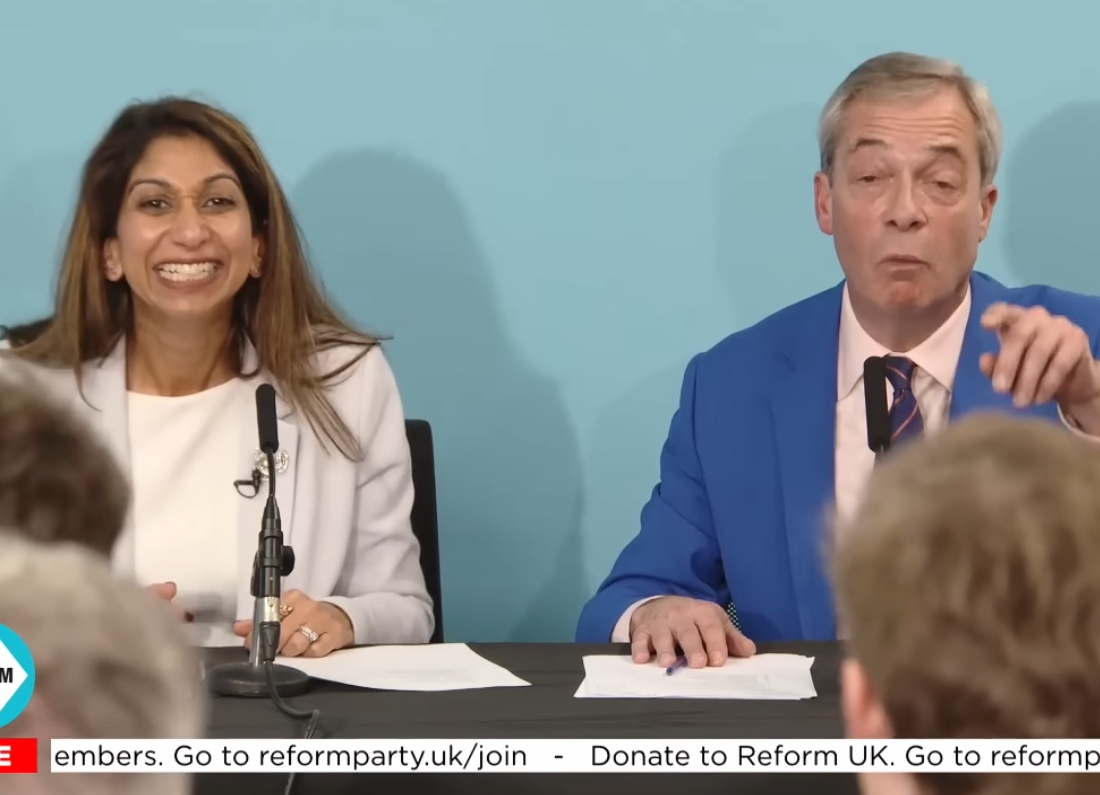
Suella Braverman has reignited a familiar Westminster argument about “mandates” after saying she “believes in by-elections” – before effectively ruling out holding one in her own seat following her defection to Reform UK.
The former Home Secretary formally left the Conservatives to join Nigel Farage’s party on 26 January, in a high-profile switch that Reuters described as the latest in a run of defections designed to bolster Reform’s claim that it is becoming a serious parliamentary force.
Braverman’s move has increased scrutiny on a question that resurfaces whenever MPs change parties mid-Parliament: should a politician who was elected under one party banner voluntarily resign and seek re-election under a new one?
The row matters politically because it goes to trust. Many voters choose a local candidate primarily because of the party label and manifesto; others say MPs are elected as individuals and should be free to act according to their judgement between elections. Britain’s constitutional system leans toward the latter view, which is why defections are dramatic but not automatically procedural.
What has inflamed this particular controversy is Braverman’s own framing. Asked about whether she should face her constituents again, she appeared to endorse the general principle of a by-election, saying: “I believe in by-elections, definitely.”
But she then made a case for why the principle should not apply to her. In the same exchange, she argued that if she were switching in the opposite direction – “leaving the Labour Party to go to the Conservatives, or government to go to the opposition” – “there’s a very strong case there for a by-election”.
Braverman also suggested she had already separated herself from the Conservative brand during the 2024 campaign, telling interviewers: “I spent the last general election apologising for being a Conservative, and I believe that I won that seat despite wearing a Conservative rosette, not because of it.”
Her position is likely to frustrate opponents because it lands in an obvious grey zone: she is effectively saying by-elections are the right democratic response in some circumstances, but not when the politician believes they have a personal mandate that transcends party.
The legal reality: defections don’t trigger by-elections
However heated the politics becomes, the law is clear: MPs do not have to resign simply because they leave the party they stood for. The House of Commons Library explains that there are “no rules requiring the resignation of an MP who leaves one political party for another”.
That position reflects a long-standing constitutional argument about representation: MPs are elected to use judgement on behalf of constituents, rather than acting as delegates who must constantly seek instruction. It is also why the UK has never had an automatic “defection by-election” rule.
In practice, an MP can vacate a seat through resignation, disqualification, death, or through the recall process in specific circumstances. Recall does not apply because an MP has changed party; it applies when defined legal thresholds are met, such as certain criminal convictions or Commons suspensions.
That gap between what is legally required and what some voters expect is the fuel for political anger. A defector can say they are acting on principle; critics can say voters did not sign up to this.
What voters backed in Fareham and Waterlooville
Braverman’s constituency figures are now central to the argument. Official local results for the 4 July 2024 general election show Braverman won Fareham and Waterlooville with 35%, with Labour second on 23%, the Liberal Democrats third on 19%, and Reform UK fourth on 18%.
Those numbers cut both ways.
For critics, they underline the simple point: the Reform candidate did not come close to winning the seat and finished fourth, so Braverman’s voters did not choose a Reform MP.
For Braverman and Reform supporters, the figures can be read differently: she won as an individual in a fragmented field, and she is now claiming her views align more honestly with her new party than with a Conservative Party she argues has been insincere about its promises.
She has also claimed the switch will produce clearer representation, arguing constituents will now have “a more authentic” MP who speaks “in alignment with her party”.
That argument is politically potent but controversial. Many constituents will accept that an MP’s views can evolve; others will say the least an MP can do after switching parties is ask the public to endorse the change.
The wider context: defections and pressure on the Conservatives
Braverman’s decision is part of a broader pattern that has become a major story on the right. The Institute for Government has noted that party switching is relatively unusual overall, but becomes significant when it is clustered and when it tells a wider narrative about a party’s direction, unity and electoral prospects.
Reform, meanwhile, has been trying to turn a small parliamentary base into momentum – using defections to argue that it is absorbing disillusioned Conservatives and becoming the main home for right-leaning voters who want a sharper break from mainstream politics. Reuters has reported Reform’s claim that it is now polling strongly despite having far fewer MPs than Labour, which gives each defection heightened media impact.
That is also why the “by-election” line matters. Reform wants to present defections as democratic realignment; critics want to portray them as politicians switching without accountability.
If you believe a by-election should be held, there is a petition you can sign here.
Should the rules change?
Every time this debate flares up, the same proposal reappears: legislate to require MPs to face a by-election if they change party allegiance. The case for reform is intuitive: if party labels are a core part of what voters choose, switching parties looks like changing the product after purchase.
But the counter-argument is equally deep-rooted: MPs are elected to exercise judgement, and forcing a by-election whenever a party relationship breaks down could create perverse incentives, strengthen party machines over individual representatives, and produce constant churn.
There is also a practical political reality. Changing the rules would require government time and a majority, and any party considering such a change must think through whether it would backfire the moment its own MPs face internal disputes.
For now, the constitutional position remains unchanged. Braverman can lawfully remain the MP for Fareham and Waterlooville while sitting for Reform UK, and there is no automatic trigger for the voters to decide again.
But politically, her remarks are likely to follow her. By telling the public she “believes in by-elections” while declining to hold one herself, she has handed opponents a simple line of attack: that the principle is good for other people, but inconvenient at home.
You may also like: UK by-elections explained: what happens when MPs defect









Leave a Reply