

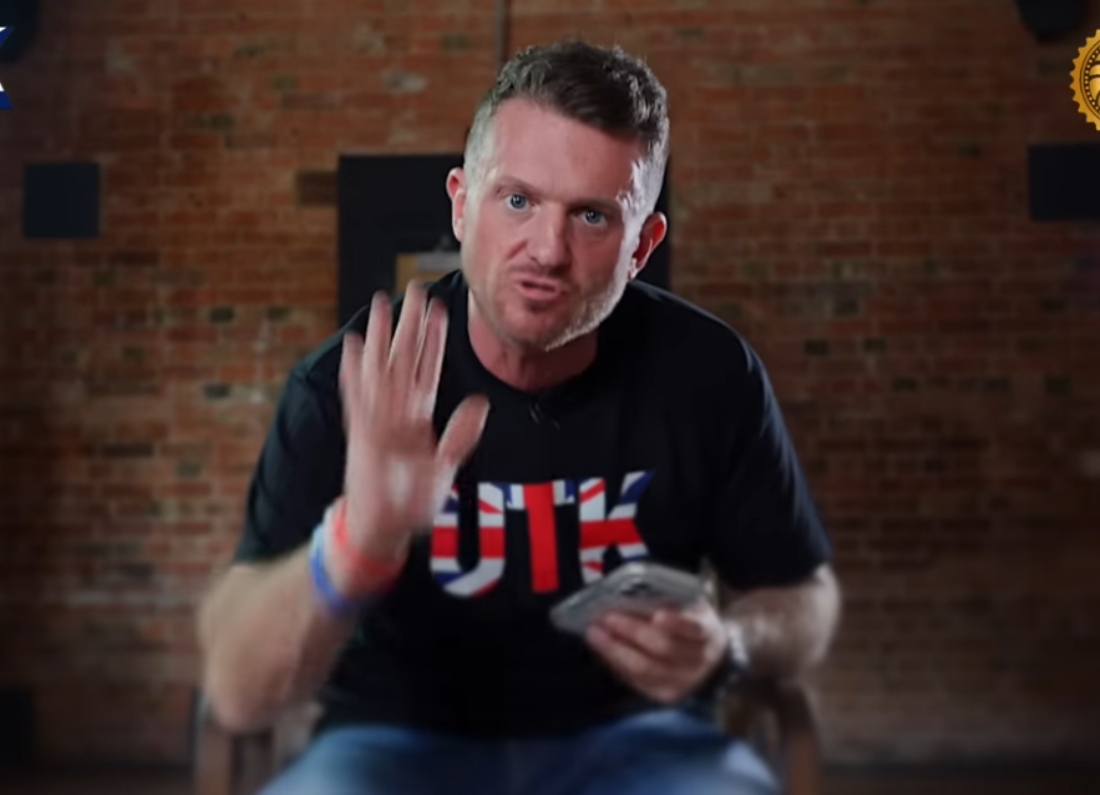
Tommy Robinson – real name Stephen Yaxley-Lennon – was detained at Heathrow Airport on Saturday under section 3 of the Counter-Terrorism Border Security Act 2019. Robinson, 43, claimed on social media that he was held for almost three hours and had his iPhone and Samsung Galaxy phones seized. The Metropolitan Police declined to comment. It is not known what the specific grounds for the stop were. The detention came at the end of a week in which Robinson returned from Moscow, where he had met Elon Musk’s father, Errol, called Russia “a civilised society” and “not the enemy of Britain,” and posted protest locations across the United Kingdom in connection with the Belfast knife attack – a post that Elon Musk subsequently shared with his 240 million followers.
The legal basis
Section 3 of the Counter-Terrorism Border Security Act 2019 gives police officers at ports powers to stop, question, search and detain individuals suspected of travelling to plan, prepare and carry out hostile acts. It is a broader power than standard counter-terrorism provisions and applies specifically to the port environment.
What the stop was in relation to specifically is not known. The Metropolitan Police did not confirm the stop had taken place or explain the grounds for it when approached.
Robinson used social media to frame the detention as an attack on journalism: his spokesperson posted on X that “they likely want to see who he is talking to, and maybe find out who his sources are, sources who will expose politicians for their part in the rape of a generation of British girls. This is an attack on free speech, this is an attack on investigative journalism, nothing more nothing less.”
The week that preceded it
As we reported in our Robinson Moscow piece, Robinson spent the week in Moscow alongside Errol Musk, who had attended the annual Kremlin-backed economic forum. Robinson filmed a video with Errol Musk in what appeared to be a Moscow hotel in which he said: “We are going to go and cause some trouble.” When asked by The Guardian why he had travelled to Russia, he said: “I’ve come to see how this country got itself so well on to the straight and narrow and see the beauty of a civilised society here.”
He also said: “Russia is not the enemy of Britain. That narrative has long since died a natural death.”
This statement about Russia was made during the same week that two British defence ministers resigned over defence spending, UK intelligence has assessed Russia could attack a NATO country by 2030, and the Government’s own Defence Investment Plan was delayed – as we reported in our Healey resignation piece.
While in Moscow, Robinson also posted details of planned demonstrations across Britain and Northern Ireland in connection with the Belfast attack. As we reported in our Hasan Musk Belfast piece, Elon Musk shared those protest location lists with his 240 million followers. The riots that followed saw homes burned, a bus set alight and masked men on the streets of Belfast chanting “get foreigners out.”
His previous counter-terrorism stop
Robinson has been stopped under counter-terrorism powers before. In July 2024, he was stopped by officers at the Channel Tunnel in Folkestone while driving a friend’s silver Bentley to Benidorm. He refused to give police the PIN to his phone, arguing the device contained confidential journalistic material. He was cleared of a terror charge after a district judge concluded he could not be sure the police stop was lawful.
The Heathrow stop follows the same pattern – phones seized, the claim of journalistic privilege, and a request for public donations to fund legal costs. Whether this stop will follow the same legal trajectory as the Folkestone one is not yet clear.
Robinson’s role in the recent disorder
Robinson, the former English Defence League leader, has been central to the online amplification of both recent events. As we reported in our Belfast riots pieces, he shared protest locations while in Moscow and helped to direct crowds onto the streets of Belfast during consecutive nights of violence. As we reported in our Nowak articles, he spearheaded protests in Southampton in the wake of Henry Nowak’s death, during which clashes between rioters and police left 13 officers and a police dog injured.
Labour chair Anna Turley described Musk and Robinson as “bad-faith actors” inflaming tensions from a safe distance – as we reported in our Robinson Moscow piece. “He’s not at risk,” Turley said. “It’s mums and families and people living in those homes in Belfast and on the streets of Britain who are at risk.”
The framing – and what it means
Robinson’s spokesperson’s claim that the Heathrow stop is “an attack on free speech” and “an attack on investigative journalism” is the standard framing Robinson deploys when stopped by police with counter-terrorism powers. It positions him as a journalist with sources to protect rather than as a far-right activist with phones that may contain communications relevant to public disorder investigations.
Whether that framing holds legally, as it did in Folkestone in 2024, or whether this stop proceeds differently, will become clear in due course. What is established is the timeline: Robinson flies to Moscow, meets Elon Musk’s father, posts riot location lists, calls Russia a civilised society, flies back to London, and is detained at Heathrow under counter-terrorism legislation.
The Metropolitan Police are not saying anything further.
Of course, it didn’t take long for the begging bowl to come out:



Leave a Reply