London Mayor Sadiq Khan has backed Keir Starmer to survive the mounting pressure on his leadership, saying replacing him in 2026 would be an act of “folly” – as new polling shows 64% of voters now believe the Prime Minister should resign, a figure that places him in a more precarious public position than either Liz Truss or Rishi Sunak at their lowest points.
Khan, speaking to Bloomberg, was asked directly whether Starmer would still be Prime Minister by the end of the year.
“Yes, I do,” he replied. “I think it would be folly, when we’ve got what’s happening in terms of geopolitics.”
The stability argument
Khan’s case rested on a simple proposition: political stability is one of Britain’s most valuable assets as a trading nation and diplomatic partner, and deliberately throwing that away in the middle of a global energy crisis and a deteriorating relationship with Washington would be self-defeating.
“One of the things people abroad admire most about us is a certainty and a stability,” Khan told Bloomberg. “That is our USP. Why would we want to jeopardise our USP by changing leader at this stage?”
The mayor also pointed to the structural reality of Labour’s position. Starmer holds a 170-seat majority in the House of Commons and the next general election does not need to take place until the summer of 2029. There is no mechanism by which opposition parties can force his removal, and the parliamentary arithmetic means even a significant backbench rebellion would fall well short of a meaningful challenge unless the cabinet moved against him.
The half-time admission
Khan did not pretend the situation was comfortable. His football analogy was deliberately candid about where Labour currently stands.
“The way I describe it, in football terms, is we’re approaching half time,” he said. “We are losing. The opinion polls shouldn’t be ignored.”
He added: “But there’s so much to go in the game and the most important poll is what happens at the final whistle.”
The admission that Labour is “losing” carries weight coming from one of the party’s most recognisable figures. Khan is himself frequently listed among potential future Labour leaders, making his decision to publicly back Starmer – rather than remain neutral or stay silent – a deliberate political intervention.
The polling picture
Khan’s defence of Starmer comes as the polling picture has become increasingly dire. Separate analysis from April 2026 found that 64% of voters now believe Starmer should resign as Prime Minister – a level of public dissatisfaction that reportedly places him in a worse position than both Liz Truss and Rishi Sunak at their respective nadir points in office.
Net approval ratings for Starmer have been hovering between -42 and -48 across multiple major pollsters. Perhaps most damaging for the government is the erosion of support among Labour’s own 2024 voters – around 37% of those who backed Labour in last year’s general election are now said to support calls for him to go.
Reform UK is polling alongside the Conservatives in second place nationally. The Greens – polling joint first with Reform – are taking votes from Labour on the left at the same rate Reform is taking them on the right. Labour itself sits at around 17% in the most recent national polling.
Who could replace him?
Should Starmer fall, the succession question has been actively discussed within Westminster for months. Angela Rayner – the former Deputy Prime Minister who left cabinet after a stamp duty controversy – is currently the bookmakers’ clear 6/4 favourite to take over as Labour leader.
Wes Streeting, the Health Secretary, has been discussed in Bloomberg’s own reporting as a potential challenger who could miss his window if he does not move before the local elections.

Bloomberg reported in January that Labour MPs and aides – speaking anonymously – had identified Streeting as the “front-runner in the event of a leadership contest this year,” warning that he could miss his opportunity if he delayed too long. Other names frequently mentioned include Andy Burnham, the Greater Manchester mayor, and Yvette Cooper, the Foreign Secretary.
Khan himself has been included in some longer-term succession discussions, though he has given no indication of seeking the leadership and his Bloomberg interview was explicitly framed as backing for the incumbent rather than a positioning exercise.
The pressure Starmer is facing
Khan’s intervention comes at the sharpest moment yet in the crisis over the appointment of Peter Mandelson as US ambassador. Former Foreign Office permanent secretary Olly Robbins told the Foreign Affairs Committee last week that No 10 had a “genuinely dismissive attitude” to Mandelson’s security vetting, pushed to get him into post before Trump’s inauguration, and was “never interested in whether – only in when” the clearance would come through.
Robbins also made a direct personal criticism of the Prime Minister’s judgement, saying the due diligence process that raised serious reputational warnings – including Mandelson’s links to China, Russia and Jeffrey Epstein – “should have coloured the prime minister’s judgement.”
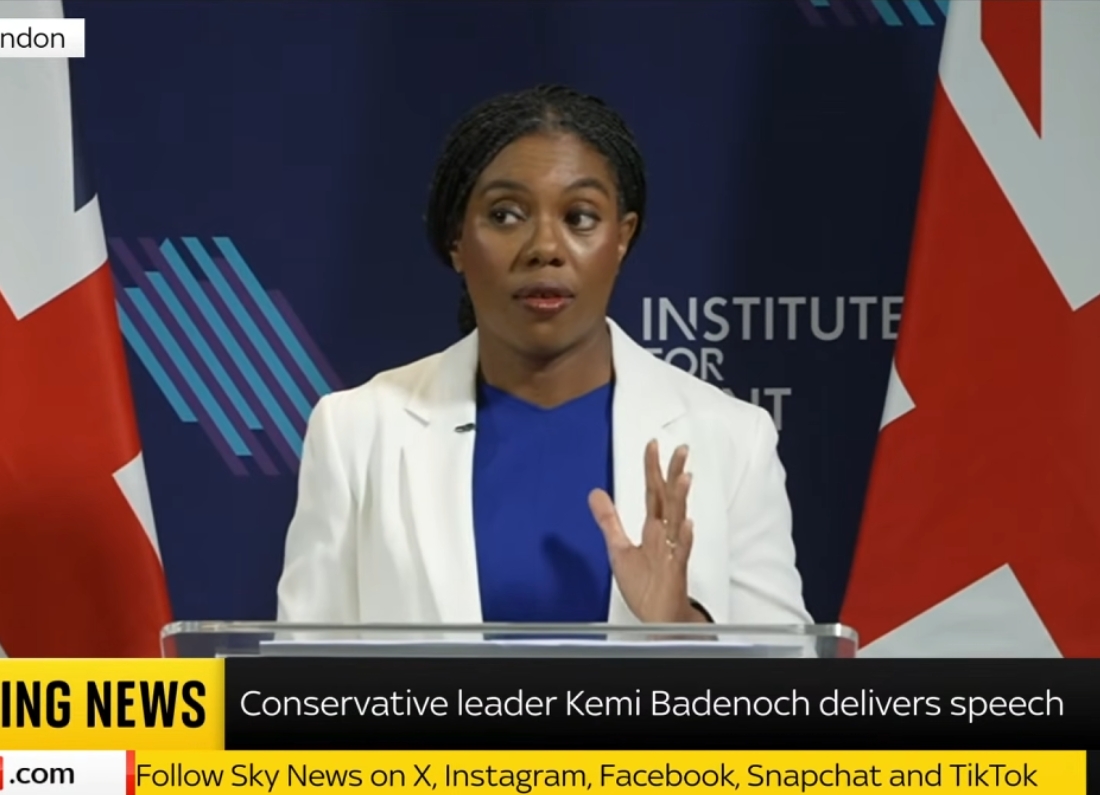
Cabinet ministers have privately said the mood is “bleak.” Labour peers within the party have called publicly for Starmer to go. Farage has predicted the PM will “cling on.” Parliament is being prorogued on Tuesday, which will mean Starmer avoids another PMQs grilling from Kemi Badenoch over the affair.
What May 7 means
With the local elections just two weeks away, the pressure on Starmer’s leadership will reach its first real test at the ballot box. Labour is projected to lose up to 2,000 council seats across England in a result that MPs have privately described as a potential “bloodbath.” The SNP is forecast to win again in Scotland, potentially with an outright Holyrood majority. Plaid Cymru is expected to form the Welsh government for the first time.
Khan’s argument is that none of that – however painful – justifies a leadership change before the final whistle. He may be right that Starmer will survive 2026. But the football analogy he chose was more revealing than he perhaps intended. Managers who are losing at half time can survive to win games. They can also be replaced before the second half even begins.
You may also like: Mahmood says she’d taser and deport Polanski, Farage, Badenoch and Davey – then tells white liberals to ‘f— right off’