


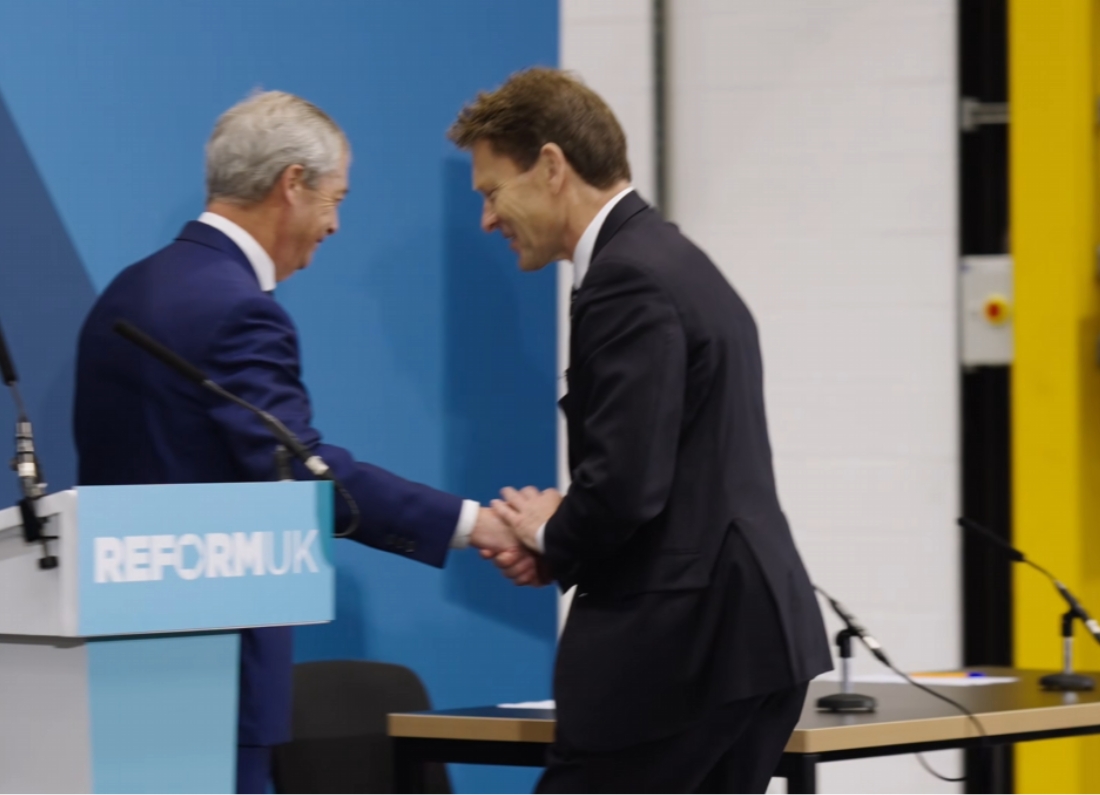
Reform UK has been mocked as “a care home for old Tories” during a lively edition of BBC Question Time, after an audience member questioned how Nigel Farage’s party can present itself as a movement for change while recruiting former Conservative politicians.
The line prompted laughter and applause in the studio, as the panel debated whether Reform’s recent run of high-profile defections strengthens the party’s credibility or undermines its anti-establishment pitch.
The exchange took place on Thursday night’s programme from King’s Lynn, Norfolk, where the panellists included Labour’s shadow Scottish secretary Douglas Alexander, Conservative MP James Cartlidge, UCU general secretary Jo Grady, and commentator Konstantin Kisin.
Reform has made political capital out of positioning itself as an insurgent force in Westminster, arguing that both Labour and the Conservatives have failed to tackle issues such as the cost of living, public services and immigration. But the party’s growth has increasingly been accompanied by questions over who, exactly, is joining it – and whether the influx of former Conservative MPs risks blurring Reform’s message.
The ‘care home’ remark and why it landed
During the programme, an audience member put the challenge directly to the panel: “How can anyone think Reform are a party of change when they only appear to be a care home for old Tories?”
The question captured a criticism that has been building as Reform takes in more politicians who previously served under Conservative governments. ITV News has listed a series of defections from the Conservatives to Reform and reported that more than 20 former Conservative MPs have joined the party, while Reform has grown its parliamentary presence in part through MPs switching allegiances.
For Reform’s opponents, that pattern is a gift: it allows them to argue that the party is less a clean break from the political establishment and more a new home for parts of the Conservative Party that have fallen out with their leadership.
For Reform’s supporters, the counter-argument is that it is normal for political movements to attract experienced politicians when they are gaining momentum, and that defectors are evidence Reform is becoming a serious electoral force rather than a protest vehicle.
Douglas Alexander’s response and the wider warning
Douglas Alexander suggested Reform should not be dismissed merely as a refuge for former Conservatives, arguing it poses a deeper political challenge. In a clip shared by Scottish Labour, he said Reform represents “something far more profoundly challenging” and criticised the party’s campaigning style, pointing to a previous controversy involving online adverts in Scotland.
That reference relates to a row in 2025 after Reform published online content targeting Scottish Labour leader Anas Sarwar, which opponents condemned as racist and as a “dog whistle”.
The Guardian reported that the advert claimed Sarwar would “prioritise the Pakistani community” – wording critics said was misleading because Sarwar did not use that phrase in the clips shown. STV News also reported that a Reform candidate defended the advert and said the “prioritise” phrasing was “a quote from us” rather than Sarwar’s words.
Sarwar has previously argued the approach was designed to cast doubt on his identity and belonging. The Guardian reported he described it as a deliberate “dog whistle” and said it sought to question his “loyalty” and “belonging”.
Reform’s recruitment strategy meets its branding problem
The political reality is that fast-growing parties often face a trade-off between credibility and purity. On one hand, voters can see “serious” figures joining and conclude the party is ready for power. On the other, the more a party relies on familiar political faces, the harder it becomes to sell itself as a radical alternative to the system.
This tension is already surfacing in campaign messaging. Reform’s critics argue that a party filled with former ministers and MPs from the recent political era cannot plausibly claim to be starting from scratch. Reform, meanwhile, is likely to argue that the point is not whether someone previously wore a Conservative rosette, but whether they now support a new programme.
In practice, the “care home” line resonated because it condensed that entire argument into a single, memorable jab – one that is easily shareable on social media and instantly understood by audiences who have watched Westminster personalities move between factions in recent years.
What comes next
In the near term, Reform’s ability to handle this criticism may depend on whether it can show that defectors are adding substance rather than just headlines. That means demonstrating local organisation, coherent policy proposals and discipline in candidate selection – while avoiding controversies that allow opponents to frame the party as divisive.
For Labour and the Conservatives, the Question Time moment is a reminder that Reform’s rise is now a mainstream political topic, not a fringe curiosity. Mockery can be effective, but it also signals attention -and attention is a resource for insurgent parties.
The deeper question raised on the programme is whether British politics is entering a period where the old party labels matter less than the sense of cultural and political alignment – and whether voters see defections as opportunism, authenticity, or simply the new normal.
You may also like: Lee Anderson mocked over Gorton by-election photo gaffe









Leave a Reply