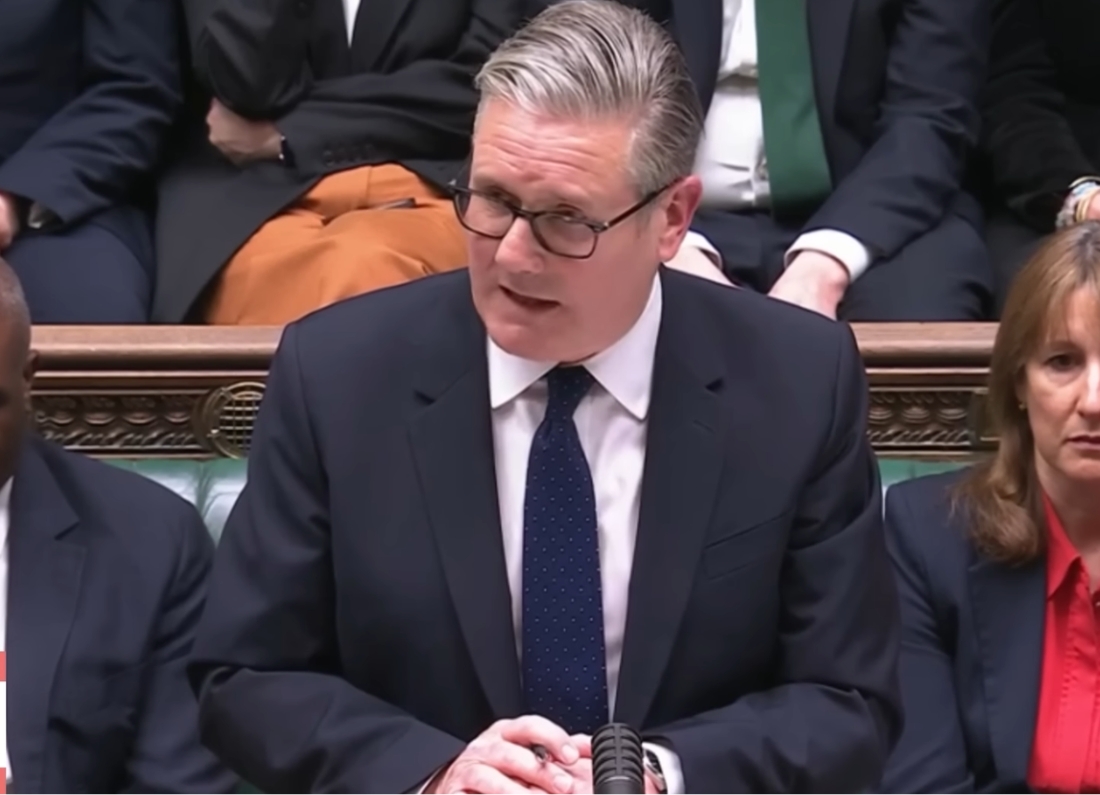
Keir Starmer faced one of the most difficult parliamentary sessions of his premiership on Monday, as MPs from all sides of the House – including members of his own party – subjected him to sustained and often withering scrutiny over his decision to appoint Peter Mandelson as UK ambassador to the United States, despite security vetting officials having recommended against clearing him for the role.
The backdrop was already damaging. The Guardian had revealed last week that Mandelson failed the developed vetting process conducted by UKSV, only for the Foreign Office to overrule that decision without telling ministers. Starmer had sacked Foreign Office permanent secretary Olly Robbins in response, and promised to come to parliament and “set out all the relevant facts in true transparency.” What followed was an excruciating 90 minutes that left questions about the Prime Minister’s future more open, not less.
1. Laughter during his opening statement
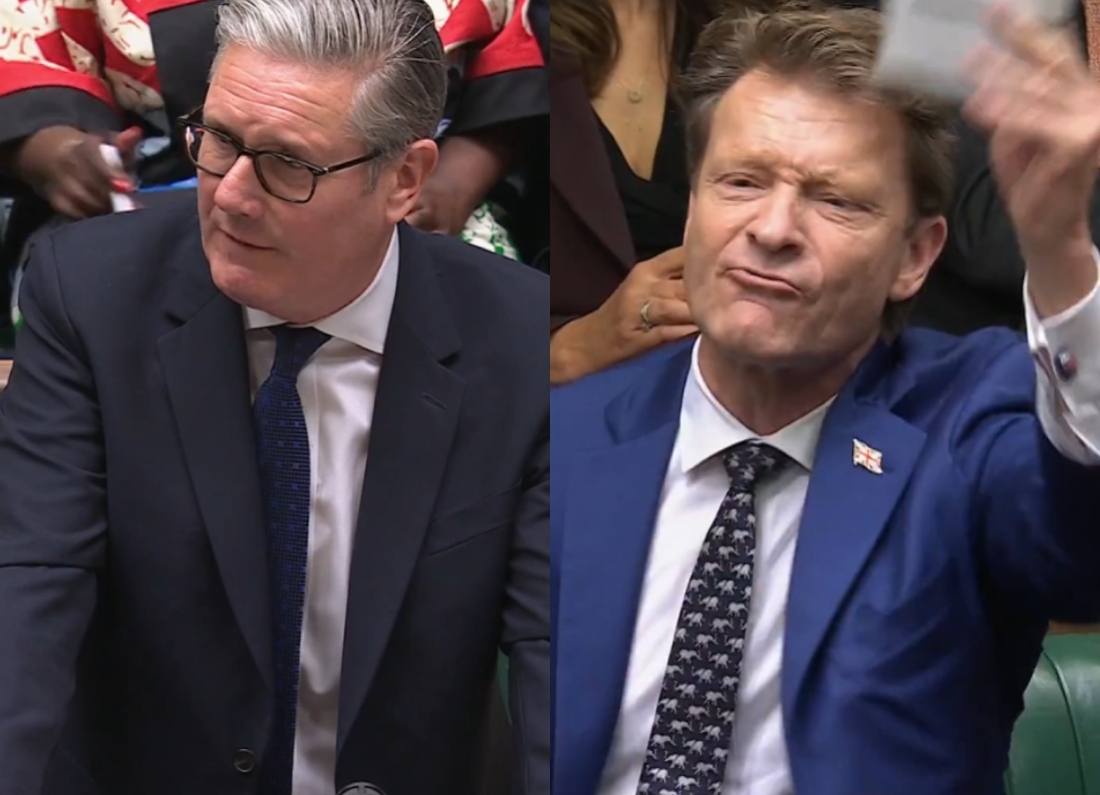
Starmer opened by attempting to get ahead of the obvious response from MPs, acknowledging that “many members across the House will find these facts to be incredible.”
He was immediately interrupted by a wave of laughter from the opposition benches – a response that appeared to genuinely catch the Prime Minister off guard. He pressed on.
“To that, I can only say they are right,” he said. “It beggars belief that throughout the whole timeline of events, officials in the Foreign Office saw fit to withhold this information from the most senior ministers in our system in government.”
The laughter was not merely mockery of Starmer’s discomfort. It captured something more fundamental – the implausibility of the central narrative the Prime Minister was asking the House to accept: that an appointment as consequential as the UK’s most senior diplomat in Washington could proceed with the security services’ formal recommendation against it, and that nobody in government thought to tell the Prime Minister.
2. The Mother of the House asks the most basic question
Diane Abbott – the MP for Hackney North and Stoke Newington, and the longest-serving female MP in the Commons, who carries the title “Mother of the House” as a mark of parliamentary respect – cut to the heart of the matter more cleanly than anyone else in the chamber.
Abbott noted that Mandelson had already been fired from government twice before he was ever considered for the ambassador role. She drew attention to the PM’s repeated insistence that he had not been told about the vetting failure, before asking the question that hung over the entire session.
“It’s one thing to say, as he insists on saying, ‘Nobody told me, nobody told me anything, nobody told me’,” Abbott said. “The question is, why didn’t the prime minister ask?”
Abbott has sat as an independent since losing the Labour whip last year, and has become one of Starmer’s most persistent critics from the left. Her question – simple, forensic and devastating – drew no satisfactory answer. Starmer said he had asked the cabinet secretary to review the “process” around hiring Mandelson once “further revelations” came to light. That was not what she asked.
3. A former shadow cabinet colleague scorches Starmer’s career
John McDonnell, the Labour MP for Hayes and Harlington and Starmer’s former shadow chancellor, did not confine himself to the mechanics of the vetting failure. He went further – and deeper.
“Isn’t the reality this: when he sought to realise his ambition to become leader of the Labour Party, with very little base within the party, he became dependent on McSweeney and Mandelson, and Labour Together to organise and fund his election,” McDonnell said.
He suggested that Mandelson had then been rewarded with “the highest diplomatic office” as a result of that dependency. “The unspoken message to civil servants was: what Mandelson wants, Mandelson gets. This has damaged the party that I’ve been a member of for 50 years,” McDonnell said.
Starmer rejected the characterisation of Whitehall, insisting it was “simply not good enough” for civil servants to withhold information of this gravity. But he did not substantively address the underlying claim – that the appointment was driven by political gratitude rather than merit.
McDonnell’s intervention was significant precisely because it came from within Labour. It crystallised what many in the party have believed but few have been willing to say publicly: that Mandelson’s appointment was never purely about diplomatic capability, and that the political relationship between the two men made proper scrutiny less likely, not more.
4. Ed Davey compares the scene to Partygate
Liberal Democrat leader Ed Davey drew the comparison that many in the room were already thinking. “It’s 2022 all over again,” he told the Commons, invoking the Partygate scandal – in which Boris Johnson was found to have misled parliament about rule-breaking parties in Downing Street during Covid lockdown, before blaming officials for the culture that allowed it.
The parallel is uncomfortable for Starmer. As leader of the opposition during Partygate, he was among the most vocal in demanding Johnson resign over misleading the House. He argued then, as Badenoch argues now, that a Prime Minister who tells parliament due process was followed – when it was not – has a case to answer.
Davey reminded the House of that directly. He pointed out that Starmer had promised to do things differently in government, and noted that “the fact that he even had to make this statement today shows how badly he has failed.” He called on the Prime Minister to resign.
5. Labour benches empty behind the Prime Minister
Perhaps the most telling moment of the session was not what was said but what was seen. As the session wore on, the Labour benches behind Starmer thinned out noticeably – a visual that told its own story about the mood of the parliamentary party.
A Labour source told HuffPost UK: “Starmer is fighting for his political life and look how his benches have thinned out. Feels like it’s sinking fast. I suspect post-May Labour MPs will start saying he has to set out a timetable to go.”
That timing matters. May 7 – the date of the local elections in England, the Scottish Parliament vote and the Welsh Senedd contest – is three weeks away. Labour MPs have privately described it as a potential “bloodbath.” Until now, the prevailing internal logic has been that no challenge to Starmer makes sense before the results are known, because it risks making the losses worse. After May 7, that logic dissolves.
What Monday’s session demonstrated is that even a statement designed to draw a line under the Mandelson affair may have deepened the wound rather than healed it. The laughter during the opening statement, the unanswered question from Diane Abbott, the career critique from John McDonnell, the Partygate comparison from Ed Davey, and the emptying benches behind him – none of these are consistent with a Prime Minister who has successfully weathered a crisis.
Whether Labour MPs choose to act on what they saw in the chamber will become clearer after 7 May. The question Abbott asked – why didn’t he ask? – did not go away when the session ended.
You may also like: Richard Tice allegedly failed to pay £100,000 in corporation tax through shell companies that donated millions to Reform UK