

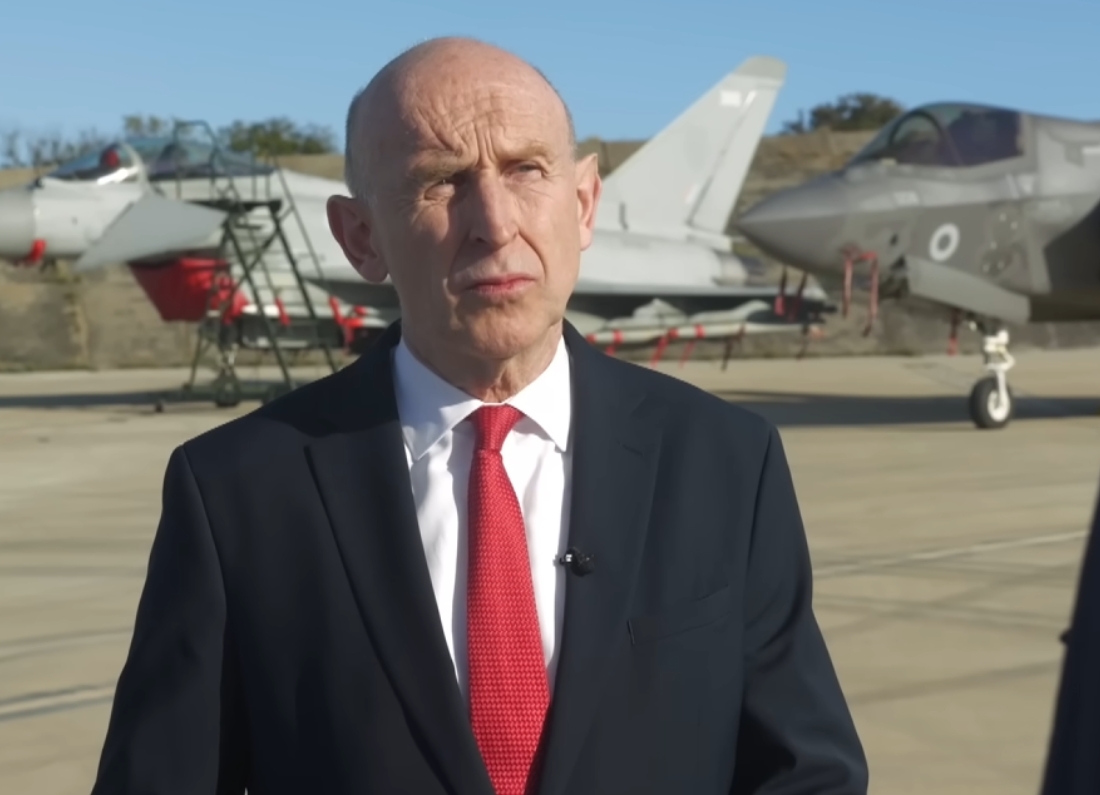
John Healey has resigned as Defence Secretary in a resignation letter that accuses Keir Starmer and Rachel Reeves of being “unable and unwilling” to commit the resources needed to defend the country at a time of rising international threats. In a development that further undermines Starmer’s already fragile authority, Healey revealed that the Defence Investment Plan – scheduled for publication today but now delayed – would raise defence spending by just 0.08 of a percentage point of GDP between next year and 2030, taking it from 2.6% to 2.68%. He argued the country needed to reach 3% by 2030. Without that, he said, he was “being forced to make decisions that would reduce the readiness of our forces and increase the risk to personnel on operations, and could make the country less safe.”
The resignation lands at the worst possible moment for a prime minister who is meeting G7 allies in France next week, faces the Makerfield byelection on Thursday and travels to Ankara for a NATO summit in early July.
What Healey said
The resignation letter is direct. “You have been unable and the Treasury has been unwilling to commit the resources that the nation needs to defend the country at this time of rising threats. I would not be able to accept a Dip settlement that does not give our forces the resources they need. I am now left with no other option than to submit my resignation as your defence secretary.”
He flagged Starmer’s own words against him: the prime minister explicitly warned last week that UK intelligence had assessed there could be a Russian attack on a NATO country as early as 2030. As we reported in our Europeans US ally survey piece, only 11% of Europeans now see the US as an ally, majorities in every country doubt America would come to their aid if attacked, and there is growing European urgency around defence self-reliance. Healey’s argument is that the UK’s own spending plans do not match its own threat assessment.
He also revealed the specific timeline failure: he had “only learned of Starmer and Reeves’s final military spending plans on Monday” – days before the scheduled publication. And he criticised the structure of what was agreed: the additional spending was “backloaded” to later years, when “the pressure of operations and imperative to speed up readiness to fight is in the first two years.”
The numbers behind the resignation
The trajectory of the spending row is documented and significant. Starmer agreed in February 2025 to increase defence spending to 2.5% of GDP, believing this would fund the commitments in the Strategic Defence Review, which was then published in June 2025 with nearly £20 billion of extra MoD funding over five years confirmed.
Within months of that review being published, defence officials said they would need another £28 billion over the next four years to actually fulfil its commitments. The gap between what was promised and what was funded was identified almost immediately.
Healey requested approximately £18 billion from the Treasury. Rachel Reeves refused to sign off on anything above £12 billion for weeks. After intense pressure from the Prime Minister, a figure of approximately £15 billion was agreed – funded in part by other departments cutting their capital budgets by about 1%, with energy and transport particularly targeted.
Healey considered that insufficient. His resignation letter makes clear this was not a close call: the gap between what he needed and what he was offered was not bridgeable within the current fiscal framework.
The cabinet context
The Defence Investment Plan row has produced what the Guardian describes as “some of the worst infighting since Labour took power,” with cabinet relations “badly damaged” by the protracted standoff. Several departments had already agreed to cut their capital budgets to pay for the military spending that was agreed – making Healey’s resignation not only a loss for Starmer but a complication for the colleagues who made cuts to support a DIP that the Defence Secretary himself has now rejected.
Healey was among the cabinet ministers who privately urged Starmer to consider his position last month. His allies have ruled out any leadership bid. His resignation is therefore not a leadership positioning exercise – it is a genuine disagreement about policy, executed in the most publicly damaging way possible for the Prime Minister.
What happens next
The Prime Minister will want to appoint a replacement quickly. Security minister Dan Jarvis and armed forces minister Al Carns are both reported to be in the running. The complication with Carns is that he has already described the DIP as “not fit for purpose” and said Starmer should reopen it – a position that, if he takes the Defence Secretary role, would create its own difficulties.
The delayed publication of the DIP has not resolved the underlying problem: the government has committed to reaching 3.5% of GDP by 2035 and has an ambition to reach 3% in the next parliament, but the specific pathway to get there – through a plan that will now be published under a new Defence Secretary, after Healey’s resignation, in the week of the Makerfield byelection – is considerably more politically fraught than it was this morning.
As we reported in our Burnham Newsnight piece, Burnham’s pitch is built on the argument that Labour is managing the country with insufficient courage and insufficient investment. Healey’s letter – “unable and unwilling to commit the resources” – could have been written to order.








Leave a Reply