

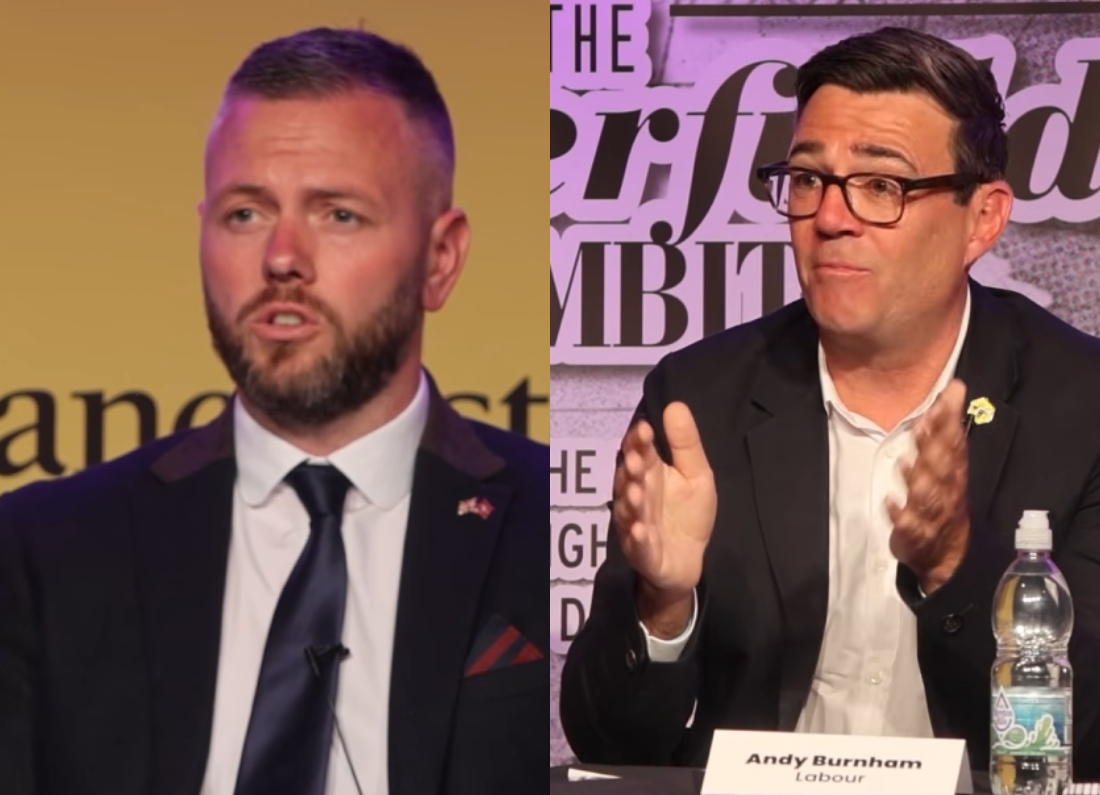
Robert Kenyon arrived at Winstanley College for the Manchester Evening News hustings and, when the immigration question came from the audience, asked for it to be read out again.
Then he asked for it to be read out a second time.
When it eventually landed – “what policies would you support to manage immigration effectively whilst ensuring public services can meet demand?” – he thanked the questioner, described it as a great question, and launched into an answer that included the phrase “floodgates have opened.”
Andy Burnham was waiting.
The hustings at Winstanley College brought together five of the leading Makerfield candidates in front of an audience of students, teachers, journalists and local residents. Questions covered immigration, the Green Belt, women’s rights, heritage protection and opportunities for young people. The students in the audience were, by multiple accounts, politically engaged and not easily impressed. They left talking about Burnham more than any other candidate. But the immigration exchange, in particular, was worth sitting with.
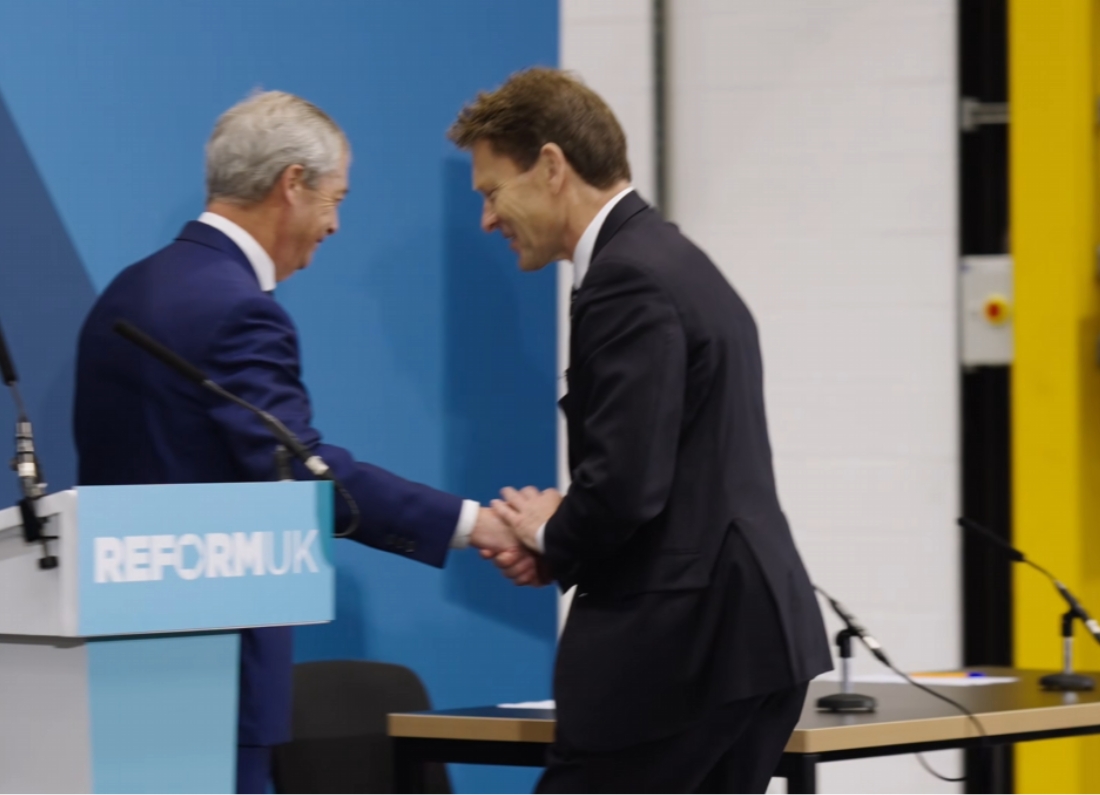
Kenyon’s position, once he’d eventually articulated it, landed broadly where you’d expect. “We support net negative immigration,” he said. “But people coming in who want to work – for the NHS, you’re welcome to come. If you’re going to work for the NHS as a doctor or a nurse – I think it’s 36% of doctors are born abroad, 30% of nurses are born abroad – so you’re more than welcome to stay and help us.” He said the “floodgates have opened” in recent years, that more people means more houses needed, and that those without the right to be here should be removed. “Keep the ones that we want here. It’s as simple as that.”
Burnham picked up on the floodgates line and turned it around cleanly.
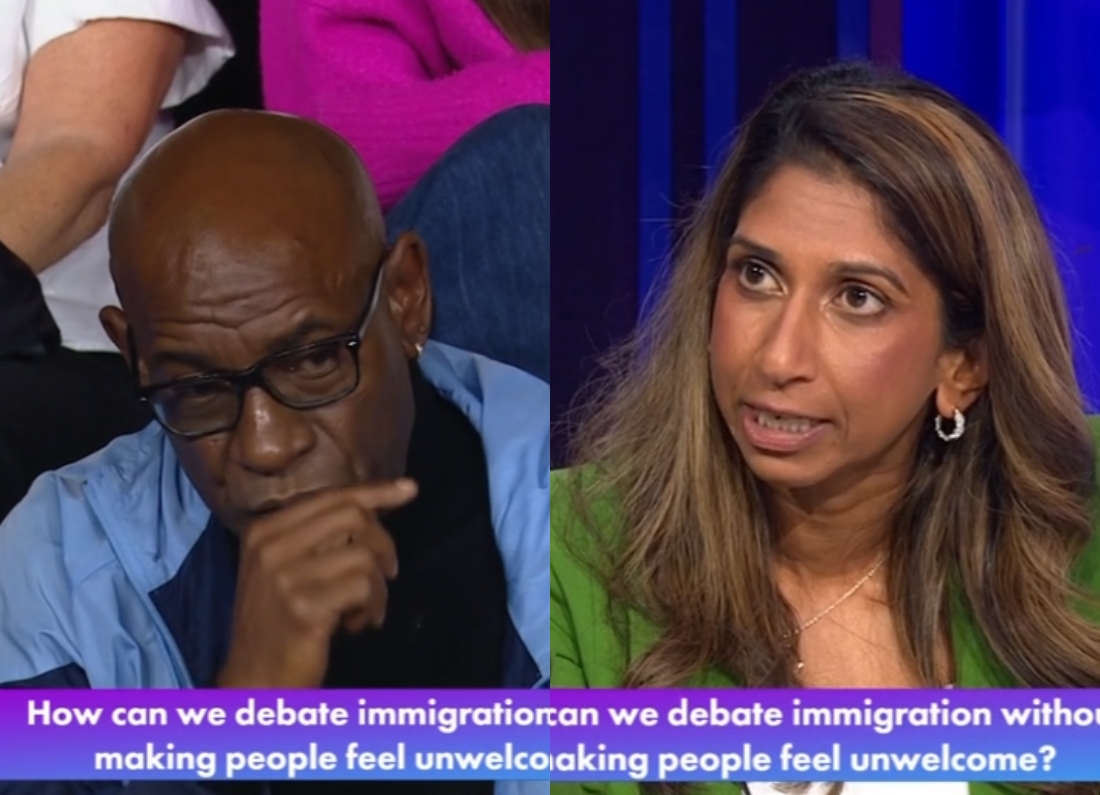
“Who was in charge of the immigration system when we saw net migration at the highest levels I think we’ve ever seen in recent times? Two prominent members of Reform, Suella Braverman and Robert Jenrick.”
He went on: “Small boat crossings are down 40% this year compared to last. Net migration is down 80%. Those are good foundations now to get the system back in a place where the public have confidence. There’s further to be done, more to be done on the crossings particularly, but absolutely let’s remember – there are people here working here who contribute to our society, contribute to our economy, contribute to our NHS. Let’s get this whole issue back in proper balance.”
As we reported in our Jenrick community note piece, Jenrick was Immigration Minister during the period when the fast-track asylum scheme was operating – a scheme Home Office staff privately called a “grant factory” and which critics said drove the record application numbers. Braverman was Home Secretary. Both are now in Reform and both have described the record as “treacherous Tory immigration policy.”
The Green candidate made a similar point about the NHS statistics Kenyon had cited, but from a different angle. “You’re more likely to be treated by an immigrant in the NHS than have one of your family in the queue. The cause of problems in our public services is underinvestment in our public services.” She called for a “politics of compassion” – allowing asylum seekers to work while their claims were processed rather than leaving them dependent on support.
The Conservative candidate, to his credit, tried to hold the middle ground. “The way to deal with it is with care and control rather than rhetoric and division.” He outlined measures taken toward the end of the Conservative government to reduce legal migration. He did not invoke the floodgates.
The young people section produced the most personal moment of the afternoon, and it came from Burnham.
“When I was in Westminster, I saw Westminster make young people the target for cuts. Most obviously on the student loans. People graduate now, they pay off – or they think they’re paying off – but the loan is actually getting bigger. It’s unbelievable how national politics is treating young people.”
He described taking an idea from young people in Greater Manchester – a free bus pass for everyone under 25 – and implementing it through the Bee Network. “That is what it’s all about. Ideas from young people show that they can be delivered. Show that politics can do positive things in your lives.”
Kenyon’s answer to the same question was to promise to hold a surgery at Winstanley College once a month if elected, and to note that he has a 17-year-old apprentice from Penistone who keeps him informed. “He tells me what’s going on. I know what his struggles are.”
The Liberal Democrat used the young people question to make the case for proportional representation. “This by-election is a really great example of how people often feel like they have to vote for the lesser of two evils in an election. Voting to try to stop Reform, or voting to try to stop Andy from potentially becoming Prime Minister. There is no real choice in this election for you to be able to go out and vote for the candidate that you actually agree with the most.”
It was, under the circumstances, a fairly honest account of what everyone in the room already knew.
Thursday is polling day.
You can watch it below:




Leave a Reply