

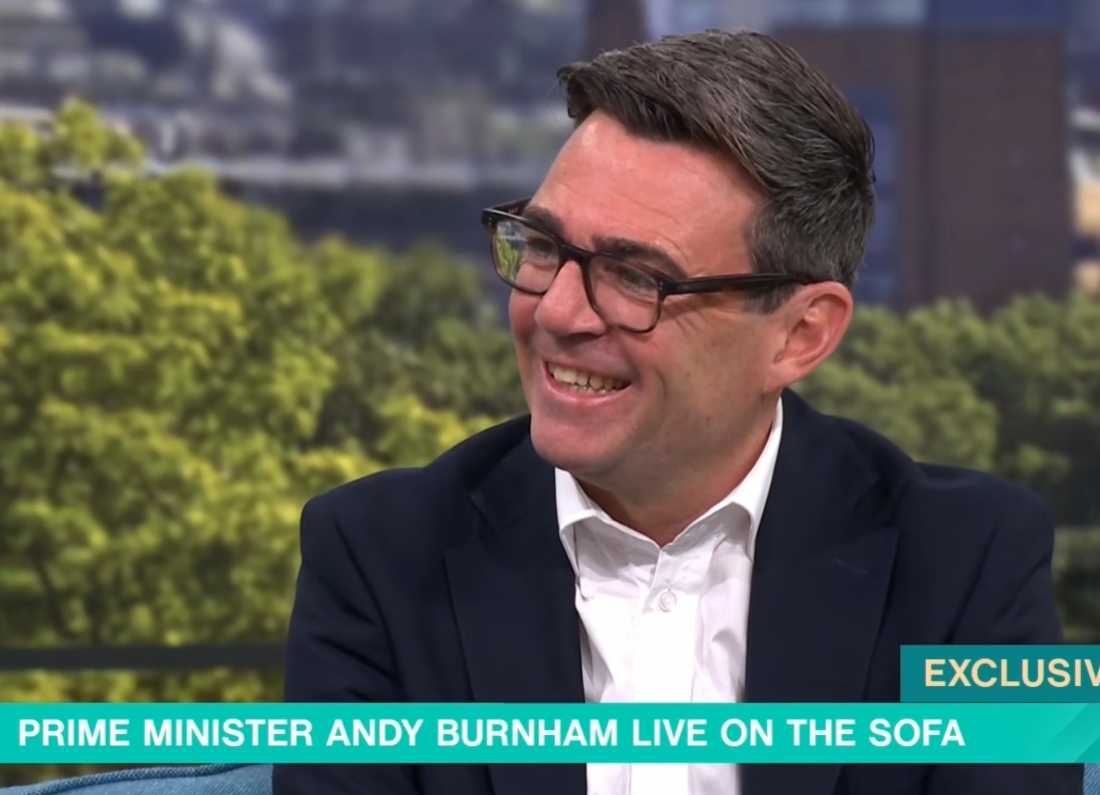
Just 21 per cent of voters now believe Brexit has been more of a success than a failure, according to polling that will intensify pressure on Andy Burnham to seek a closer relationship with the European Union.
The survey found 57 per cent regard Brexit as more of a failure, while a majority would support the prime minister moving beyond the limits inherited from Sir Keir Starmer’s government.
Some 56 per cent backed a relationship with the EU that crossed Labour’s existing “red lines”, which rule out returning to the single market or customs union and restoring freedom of movement during this parliament.
A further 10 per cent wanted closer ties without crossing those lines. Only 16 per cent favoured maintaining the current relationship or moving further away from the EU, with the remainder undecided.
The findings were published by the think tank British Future as Burnham prepares for his first major summit with European leaders since entering Downing Street.
Rejoin holds a clear lead, but voters remain uncertain
The poll also produced a substantial lead for those who would support reversing Brexit.
According to the British Future research, 46 per cent said they would vote to rejoin the European Union, compared with 29 per cent who would vote to remain outside.
That gives rejoin a 17-point advantage across the full sample. However, a quarter of respondents were undecided, demonstrating that dissatisfaction with Brexit has not yet become an unequivocal mandate for renewed membership.
Support for holding another referendum was also more cautious than the headline rejoin figure might suggest.
Only 34 per cent wanted another vote as soon as possible. A further 28 per cent supported holding one at a later date, while 21 per cent did not want another referendum and 16 per cent were unsure.
British Future said its findings showed that many voters were willing to consider closer cooperation without necessarily wanting the political argument of 2016 reopened immediately.
Its director, Sunder Katwala, said Burnham had “pragmatic permission from voters to seek closer ties with Europe”.
He cautioned that politicians would still need to address difficult questions involving immigration, sovereignty and the compromises that would accompany a substantially closer relationship.
Youth mobility receives strong support
The clearest support emerged around a proposed youth mobility agreement.
Some 57 per cent backed a reciprocal scheme allowing British and European citizens aged between 18 and 30 to live and work in the UK and EU for a limited period. Only 12 per cent opposed the proposal.
Youth mobility arrangements are distinct from unrestricted freedom of movement. They can include age limits, time restrictions, visa quotas and conditions governing employment and access to benefits.
Support for such a scheme extended beyond people already committed to rejoining the EU, suggesting it could provide Burnham with a politically achievable agreement at the forthcoming summit.
Labour MP Andrew Lewin said the findings should encourage the government to move quickly in negotiations and described completing a youth mobility agreement as one of its most important priorities before the end of the year.
The poll also found widespread support for practical cooperation in other areas. Closer trade links were backed by 62 per cent, while 57 per cent supported stronger defence cooperation. Majorities also favoured greater collaboration on health and agriculture.
Burnham has promised to be bolder on Europe
Burnham has said he wants to be more ambitious than Starmer in rebuilding relations with Brussels.
However, Downing Street has maintained that the government remains committed to Labour’s manifesto position. That means no return to the European Union, single market or customs union and no restoration of freedom of movement.
The prime minister is therefore attempting to negotiate a more substantial partnership while remaining inside limits that restrict some of the most consequential changes available.
The new polling suggests those restrictions may now be more cautious than a majority of the electorate.
The Independent reported that the survey involved 3,007 UK adults and was conducted by Number Cruncher Politics between 2 and 16 June 2026.
It follows growing calls for Burnham to reconsider Labour’s approach. Former party leader Neil Kinnock has urged him not to feel constrained by the existing red lines, while London mayor Sadiq Khan has called for the question of EU membership to return to the ballot after the next general election.
Former Conservative minister Nick Boles has separately proposed a new European arrangement involving single-market access, defence cooperation and greater opportunities for young people.
As The Daily Britain previously reported, Boles believes a much closer relationship could become a powerful dividing line between Labour and its political opponents.
The public mood has moved faster than government policy
The findings add to a growing body of polling showing that public opinion has shifted markedly since the 2016 referendum.
Previous research has found majorities describing Brexit as damaging and supporting closer ties with Europe. One large Survation poll produced a decisive rejoin lead, while separate polling found widespread concern about the effect of leaving the EU on trade and the economy.
The latest survey is more cautious than some of those results because respondents were allowed to remain undecided. Even under that format, rejoin finished comfortably ahead of staying outside.
It also reveals a significant middle group whose members are open to practical cooperation but remain uncertain about full membership and freedom of movement.
British Future divided respondents into five groups, ranging from the 22 per cent firmly committed to rejoining to the 19 per cent determined to remain outside. More than four in ten belonged to the movable middle.
That group is likely to shape the political debate facing Burnham. Its members appear dissatisfied with the outcome of Brexit and willing to support closer ties, but many still want clearer answers about the terms and consequences.
The immediate test will be whether Burnham can secure a youth mobility agreement and deeper cooperation at the forthcoming summit without formally abandoning Labour’s promises.
The poll suggests voters have given him room to go further. Whether he is prepared to use it is now the central question.
One response to “New Brexit poll delivers a blunt message to Andy Burnham”
-
Shite and tripe. Devious hype. Cloud cuckoo land. Brexit unadulterated now






Leave a Reply