

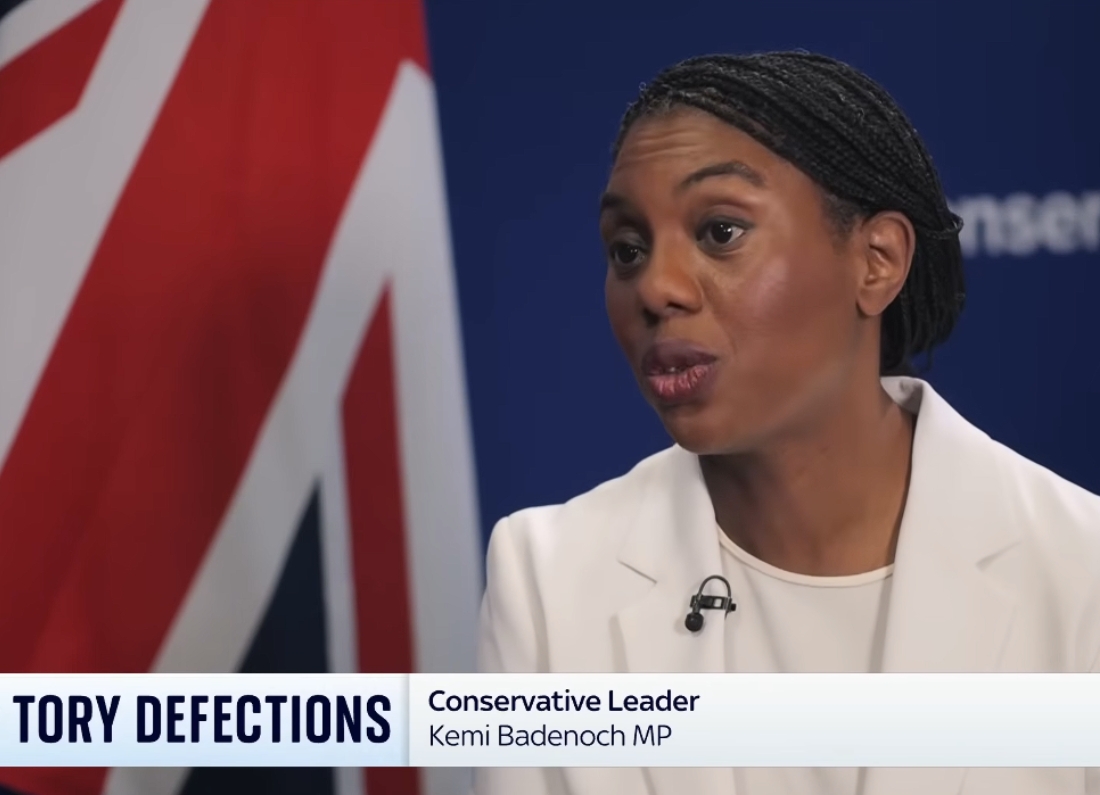
Kemi Badenoch has sought to draw a clearer ideological line for the Conservative Party, saying it has “values of the right” but that its agenda “will appeal to the majority”, as she pushed back against internal calls for a more centrist pitch to voters.
In an interview with Sky News political correspondent Mhari Aurora, Badenoch listed the policies she wants to define her leadership: “Delivering a stronger economy; lower taxes; backing business; making sure that our children have a better future; pushing aspiration; improving education standards; getting kids off social media; delivering stronger borders by leaving the ECHR … and so much more.” She added: “These are policies that are firmly on the right but will appeal to the majority.”
The comments come as the Conservatives face pressure from both directions: Reform UK has made gains in the polls and continues to attract defectors, while some within the Tory family argue the party needs to broaden its offer to win back moderate voters who have drifted away. Badenoch’s message is that the route back runs through clarity and discipline – and that, as leader, she sets the agenda.
A direct warning to would-be “centrists” in the party
Badenoch’s interview touched on the emergence of Prosper UK, a centre-right movement associated with figures including former West Midlands mayor Sir Andy Street and former Scottish Conservative leader Baroness Ruth Davidson. The group has argued that the Conservatives should compete for voters by occupying “the centre ground” and differentiating themselves from Reform UK.
Millions of voters are turned off by populism & are looking instead for competence and realism@Prosper_UK_ exists to support a Conservative Party focused on growth, opportunity & responsible government
— Andy Street (@andy4wm) January 26, 2026
Britain can do better & prosper again
Join today: https://t.co/mKsbzTzA6a pic.twitter.com/2cLageWjiP
Badenoch rejected the idea that she should reposition in response to that pressure. “I want people to know the Conservative Party is sitting right on the common ground,” she said, adding: “I’m very welcoming of people having their own opinions. But I am the party leader.”
Her intervention matters because it is not simply an argument over tone. It is a strategic dispute about what the Conservatives are for after a bruising period in government, and how – if at all – they should compete with Reform without drifting into a narrow, factional politics.
In Badenoch’s telling, this is not a battle between “left” and “right” so much as one between “right and wrong”. She told Sky that the party should stop “fighting the battles of the past” and focus on improving people’s lives, claiming the Conservatives had tried to be “a left-wing party” in government and “lost our way”.
The policy signals: tax, education, social media, and the ECHR
Badenoch’s list of priorities was designed to present a joined-up story: pro-business economics, cultural and social conservatism, and tougher border policy. Some of the most striking signals are the promises around social media restrictions for children and leaving the European Convention on Human Rights (ECHR), both of which are increasingly central to her pitch.
On social media, Badenoch has previously backed stronger restrictions for under-16s, arguing that online platforms can be harmful for young people. Sky News has reported Conservative calls for a ban on social media use for children under 16, framing it as a safety issue and a cultural dividing line.
On the ECHR, Badenoch’s position has been controversial because it touches core constitutional questions. Leaving the Convention is legally possible: Article 58 allows states to “denounce” the treaty with six months’ notice. But critics argue the practical effects would be wide-ranging, affecting how rights are protected and potentially requiring major domestic legal changes depending on what replaced the Human Rights Act framework.
Badenoch’s allies argue that the policy is about border control and sovereignty, while opponents say it risks weakening rights protections and causing legal and diplomatic fallout. Either way, it is now firmly part of the platform she wants the public to associate with the Conservatives – and she appears determined to make it a loyalty test inside the party as well.
“Drama queens” and “tantrums”: Badenoch escalates the rhetoric
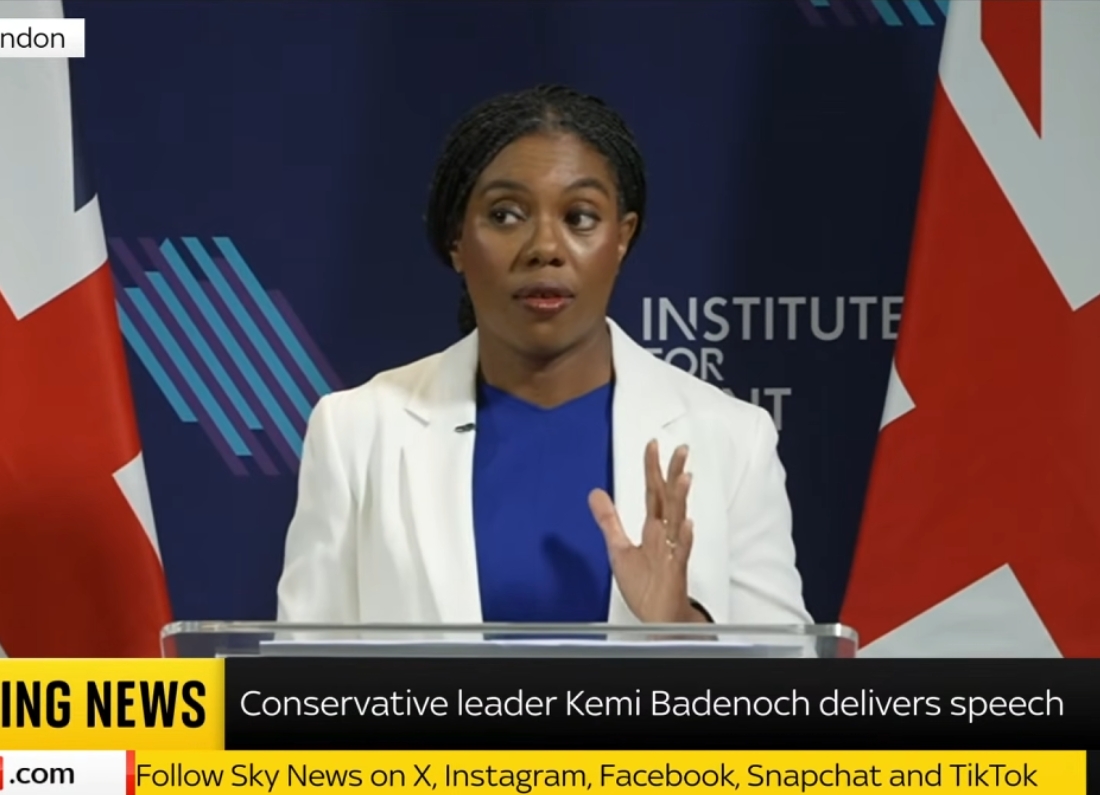
Badenoch has also tried to reframe the wave of defections to Reform as personal careerism rather than principled disagreement. In a speech in central London on Wednesday morning, she said both Reform and Labour had proven themselves to be “drama queens”. She also described defections from her party as being driven by “personal ambition”, and argued: “This is a tantrum dressed up as politics.”
In what was widely interpreted as a message to former colleagues who have moved to Reform – including Robert Jenrick and Suella Braverman – she added: “To those who are defecting, who don’t actually disagree with our policies, I will say: I’m sorry you didn’t win the leadership contest.” She then listed grievances she implied were behind the switches: not getting a frontbench role or an honour.
The choice of language is deliberate. Badenoch appears to want a contrast in character as well as policy: steadiness versus theatrics, and “owning up” to mistakes versus refusing accountability.
The Braverman “mental health” row and Badenoch’s damage control
That argument has been tested by the Conservatives’ own missteps. After Braverman defected, the party issued – and then retracted – a statement suggesting it had tried to look after her mental health. The comment drew sharp criticism from across politics and from mental health organisations, who said it risked stigmatising mental illness and using it as a political weapon.
Badenoch told Sky News the statement “should never have gone out”. She said she had it retracted quickly and that the person responsible had been “spoken to”. She added: “That’s not the sort of party that I’m running,” before arguing that the Conservatives should be judged on how they handle mistakes: “When we get things wrong, we own up, we apologise and we do something to fix it.”
This matters for Badenoch because it goes to the heart of her attempt to present a more disciplined operation. If her pitch is competence and seriousness, unforced errors – especially ones involving sensitive issues – carry a higher political cost.
What Badenoch is trying to achieve
Badenoch’s core claim is that “right-wing” policies can be popular if they are framed as practical and rooted in everyday concerns: growth, school standards, and public safety. The internal debate is whether that bet narrows the party’s coalition at exactly the moment it needs to rebuild.
Prosper UK’s approach is based on the opposite fear: that moving too sharply right will push moderate conservatives into the Liberal Democrats or towards staying at home, while still failing to outflank Reform. Supporters of Badenoch counter that a muddled “centre” pitch would simply look like more of the same – and that voters want clarity.
With an opposition party, the question is not just what the leader believes, but what the public hears. Badenoch’s interview and speech were designed to ensure the answer is unmistakable: the Conservatives will define themselves as a party of the right – and she thinks that is exactly where the majority is.
You may also like: UK by-elections explained: what happens when MPs defect






Leave a Reply