

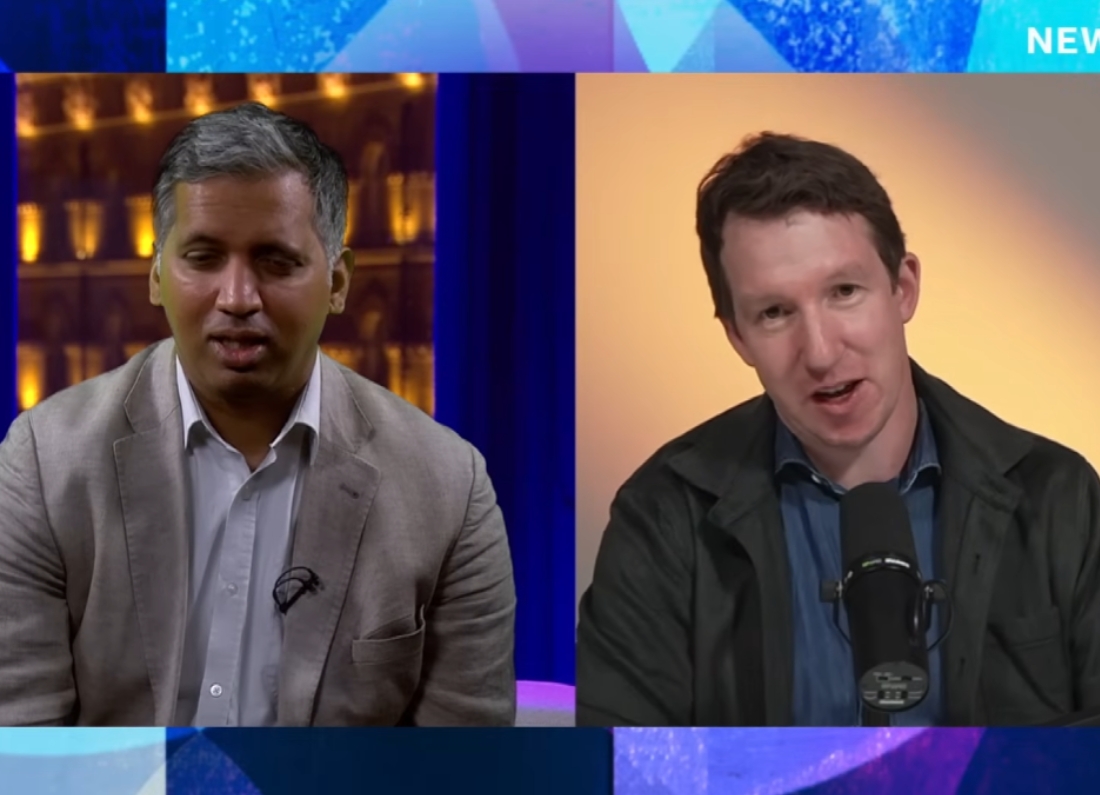
Anthropic, the AI company behind the Claude chatbot, has called for a global coordinated pause in advanced AI development, warning that the technology is improving so quickly that humans risk losing control. In a BBC Newsnight interview with Faisal Islam, Anthropic co-founder Jack Clark revealed that 80% of the code in Anthropic’s own systems is now written by Claude itself – and that 100% is possible within two years. “Right now, it’s like the AI industry has a gas pedal but it doesn’t have a brake pedal,” Clark said. “What we’re saying is we want to do some of the work required to build that brake pedal.”
The warning comes as Anthropic prepares for an initial public offering that could value the company at nearly a trillion dollars – and as a separate University of Toronto research team published findings on an AI-powered worm capable of adapting its own hacking strategy as it spreads across computing networks.
What Anthropic is warning about – and what’s already happening inside the company
Clark’s Newsnight interview provided the most specific public account yet of what is actually changing inside a leading AI company. In 2021-2024, coders at Anthropic wrote a certain volume of code. Now they write eight times as much. The reason: 80% of the code going into Anthropic comes from Claude and Claude-related systems.
“Something is beginning to speed up about AI development itself,” Clark told Faisal Islam.
The trajectory toward 100% – the threshold at which an AI system is writing all of its own code, without human coding input – is what the company calls recursive self-improvement. Based on current trends and given sufficient computing power, a self-building AI could be capable of designing its own successor. Clark said reaching 100% is “plausible” within one to two years, and that it “would have huge implications.”
He framed this with a specific structural concern. “You want the option to be able to take your foot off the gas and put your foot on the brake. Right now, it’s like the AI industry has a gas pedal, but it doesn’t have a brake pedal in the car. And what we’re saying is we want to do some of the work required to build that brake pedal. So we in the world have an option.”
The workforce is already changing
Clark’s account of what happened when he returned from paternity leave in February 2026 – he had been away since November 2025 – illustrated how quickly the internal dynamic has shifted.
“I came back and I discovered that some of the teams I work with – I had colleagues who were now working as if they had large teams of people around them, but in fact they were just working with many many copies of AI systems.”
Anthropic has changed how it hires as a direct consequence. “Instead of hiring a big set of engineers, we’re now hiring a bunch of interdisciplinary experts like lawyers or philosophers or others because the technical work has been taken care of. So smaller teams, faster moving teams, and everyone at the company is more like a manager than an individual employee now.”
The implication for the wider economy is significant. Clark was direct: “Jobs that in the past would have been at risk of automation in things like factory work in previous generations – now that same phenomenon is going to play out in knowledge work.”
Asked specifically whether AI agents could replace lawyers, accountants or copywriters before 2030, he said the story was now that any profession is going to work with AI systems and change how work happens as a consequence – with “some potential for AI to come in and augment or automate different types of work.” He was careful to say this is not showing up yet at large scale in the broader economy – “but clearly that’s the implication and we’re trying to share data about it.”
What skills still matter
Clark’s answer on what kinds of people will thrive in this environment was consistent and specific throughout the interview. The bottleneck at Anthropic is no longer engineering capacity. It is ideas.
“We’re now limited more by the ability to generate good ideas than the ability to do the engineering to turn those ideas into reality. So everyone who generates a bunch of ideas, is creative, has entrepreneurial ideas, is going to be advantaged by this.”
His advice to young people alarmed about their career prospects: “Develop a hobby. Anyone who has a hobby has something that they’re passionate about and that they know more about than most people. And with that hobby, you can have curiosity. You can have ideas and you can use that to really get the most out of these AI systems.”
He was also direct about the discipline he would recommend. “I have a liberal arts background. I would have always said go into the liberal arts. People that are creative and people that can think broadly, people that read a lot, people that have interests are the ones most benefited by this. And it’s a great time for philosophers. We’ve just hired a whole bunch of them here.”
The coordination problem and what Anthropic is proposing
The written post from Anthropic, co-authored by Jack Clark and Marina Favaro, head of Anthropic’s research institute, sets out the structural challenge. Without coordination, a slowdown by cautious actors simply allows the “least cautious” players to catch up. The only mechanism that avoids this is global verification – a coordinated pause that lets advanced AI labs confirm global rivals have actually slowed or stopped, “and that a bad actor could not use the auspices of a coordinated slowdown to jump ahead in secret.”
OpenAI published a competing view on Wednesday, arguing that “democratic governments – not private companies acting alone – must ultimately determine the rules, safeguards, and accountability mechanisms.” The Trump administration responded to both by issuing an executive order placing the responsibility on labs to voluntarily submit their most capable models for government cybersecurity testing. Regulation, in other words, was delegated back to the industry.
Clark’s response to the question of whether this amounts to companies deciding their own fate drew on a historical precedent. “We went through this with the oil barons in a previous era. And what was society’s response? Society’s response was to come up with a sensible policy and regulatory framework that gave people confidence in oil and the benefits that oil could provide to the world and meant that you didn’t have to worry about the personalities of the people leading the companies. That’s clearly where we end up here.”
Mythos, cybersecurity and capabilities they didn’t predict
Clark confirmed that Anthropic’s Mythos model – which is still in limited release, available to a small group of European companies – had capabilities that Anthropic did not predict when it was developed. Most significantly, it proved capable of finding vulnerabilities in banking systems and other critical infrastructure.
“Last year we started writing about recursive self-improvement and the potential for AI systems to get a lot better at cyber, and we built the evals and tests that would tell us if that was the case. Then when Mythos came out we discovered our AI systems had got a lot better at cyber. That led to us rolling it out differently because we want to give the world time to deliberate about how to use this technology.”
This connects to the University of Toronto findings published alongside Anthropic’s post, in which researchers developed an AI-powered worm that adapts its own hacking strategy as it spreads from device to device. Lead researcher Nicolas Papernot warned: “Anything connected to the internet is now at risk because of how low the cost has become to mount these cyberattacks. That old laptop you have in your basement that you don’t check on regularly doesn’t seem like a very high-value target, but it can be used as a launch pad to attack higher-value targets.”
The personal dimension – and Anthropic’s position in Britain
Clark’s personal motivation for speaking publicly was clear. When asked if he was worried for his children if the warning doesn’t get through, he said: “I am worried for my kids if we as a society don’t have a serious conversation about what the implications of AI’s continued advances mean. They’re going to mean there are potentially great benefits. There are also risks. They are going to change things about society and they are going to need to change aspects of policy and we have to have that conversation soon.”
On Britain specifically, Clark said Anthropic has grown its UK office from 200 to 800 people – driven by the quality of British talent. The UK’s AI Security Institute tested Mythos before its limited release. He told British policymakers: “Britain has the talent, it has the expertise and it has some of the industry that is going to supply this boom. Support that.”
As we reported in our Pope Leo AI encyclical piece, Anthropic co-founder Chris Olah attended the presentation of Leo’s Magnifica Humanitas encyclical, which called for AI to be “disarmed” and lethal autonomous weapons banned. Leo’s framing and Clark’s framing share an underlying concern: the pace of AI development has outpaced the ethical and institutional frameworks needed to govern it.
Anthropic is simultaneously preparing for an IPO that could value it at nearly a trillion dollars. Clark did not comment on specifics but said: “The implication from this research and what I take to be true is AI progress is going to be faster in the coming years than it has in prior years. And the capabilities of these systems are going to get a lot better a lot more quickly than I think many people expect.”
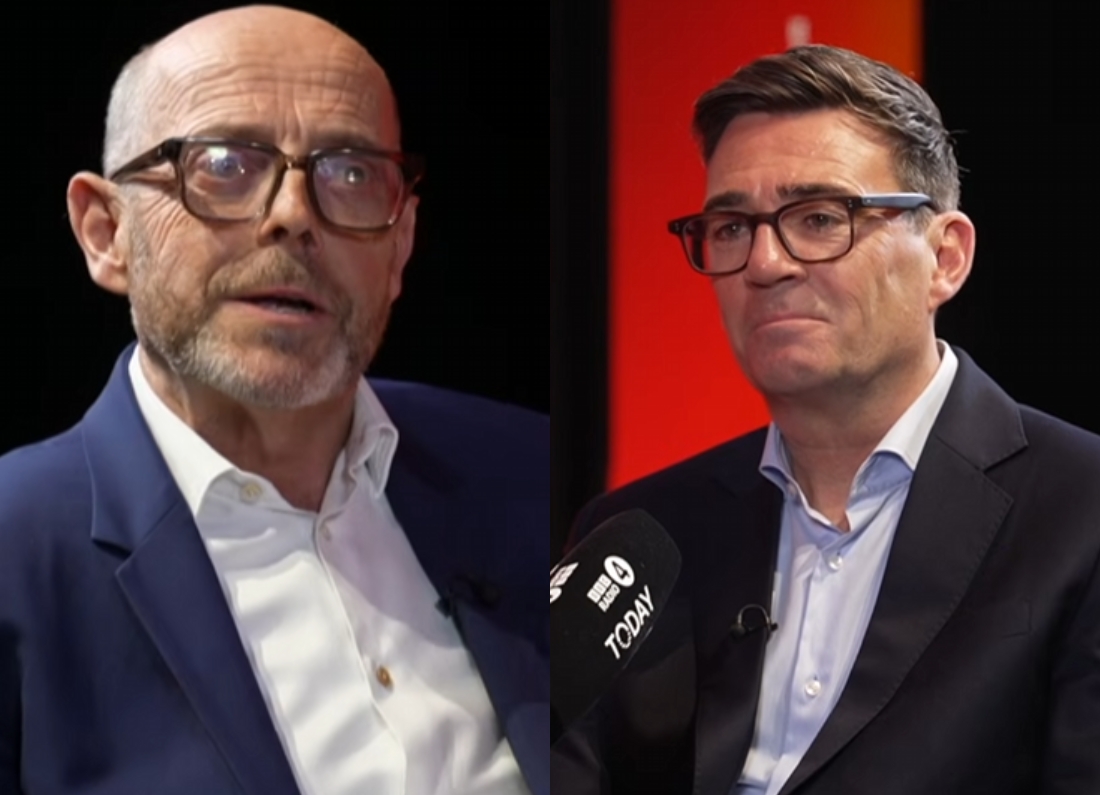
You can watch the BBC Newnight interview below:








Leave a Reply