

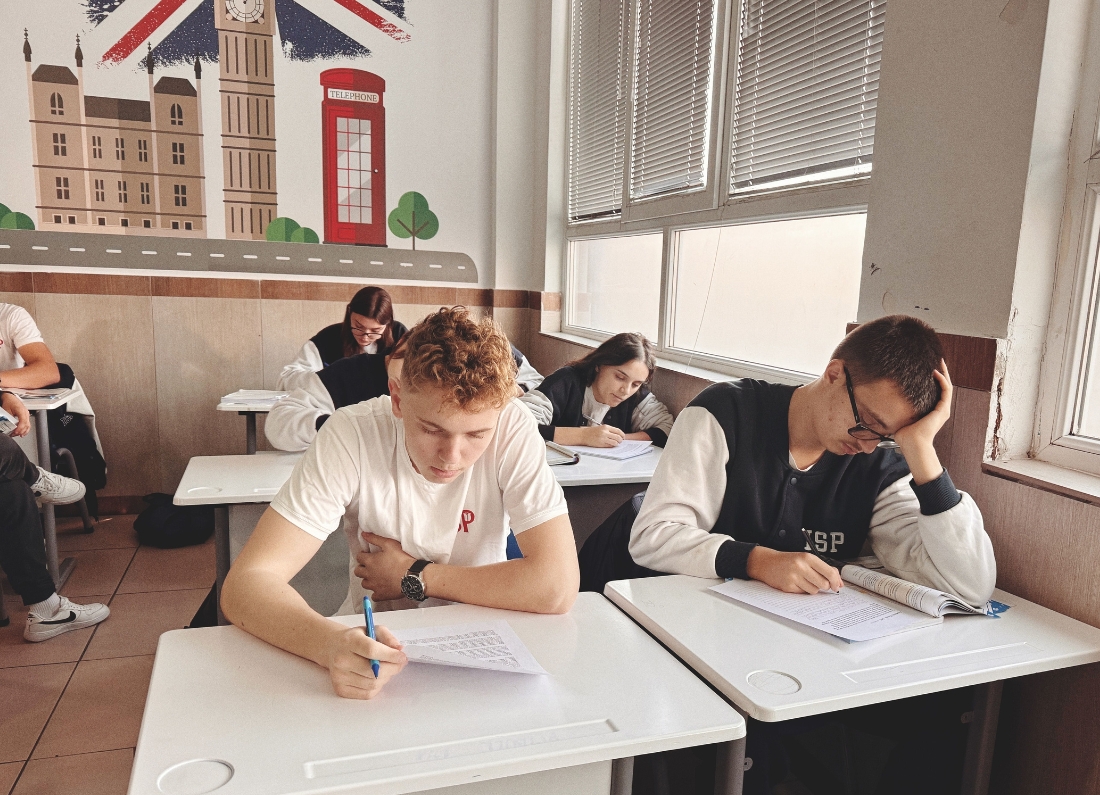
Millions of school children face the prospect of sweltering in poorly-ventilated classrooms next week as temperatures are forecast to hit 38C on Tuesday and Wednesday. The Met Office has issued Amber Extreme Heat Warnings from Monday through to Thursday, and schools across England and Wales are scrambling to put measures in place ahead of what could be the hottest days of the year so far.
The question on parents’ minds is a simple one: will schools close?
Why schools struggle in the heat
A large proportion of Britain’s school buildings were not designed for the kind of temperatures now arriving with increasing regularity. Many date from the post-war era or the 1970s and 1980s, with large south- or west-facing windows, flat roofs, dark surfaces and minimal ventilation. The result is classrooms that can become significantly hotter than the air outside.
Lucio Poli, a teacher at Ely St John’s Community Primary School in Cambridgeshire, described a building with west-facing windows and black tiles that makes it extremely difficult to keep the heat out. Daniel, a deputy head at an inner-city state secondary in London, put it more bluntly: “During the hottest days, teachers can barely teach, let alone students learn. My staff say it’s really hard to function properly.”
Children with special educational needs, those with certain health conditions, and girls during their menstrual cycle can be particularly affected. Each year brings reports of children overheating, feeling ill, fatigued or passing out during heatwaves.
What schools are doing
Schools are not waiting for government guidance. In Wales, where temperatures will reach 35C, Whitchurch High School has already written to parents advising students to bring refillable water bottles, wear a cap when outside and apply sunscreen before arriving. Sheldon School in Chippenham, Wiltshire, is allowing students to wear PE kit or uniform without tie or jumper – including shorts – from Monday, while also advising students to seek shade during breaks.
Some schools have invested more significantly. St Peter’s Church of England Primary in Rickmansworth, Hertfordshire, has replaced black asphalt playgrounds with artificial turf, refurbished the roof and installed air conditioning in half the school. Most schools, however, have nowhere near those resources – a disparity that sits alongside research showing more than a fifth of the UK’s austerity-era children have been scarred by poverty, with school infrastructure funding among the casualties of the squeeze.
The official position
Despite the pressure, the Department for Education’s current guidance says it does not advise schools to close in hot weather, on the grounds that “school attendance is the best way for pupils to learn and reach their potential.” No widespread closures have been announced ahead of next week’s forecast.
When temperatures hit 40C in 2022, Cambridgeshire County Council told schools there was “no limit on maximum temperature” – a statement that left many teachers and unions incredulous. The council later said schools “would be expected to undertake a risk assessment,” noting that “very few schools closed completely” during that event.
The push for a maximum temperature limit
Both the Climate Change Committee and the Trades Union Congress have called for a legal maximum temperature limit for schools – similar to the existing minimum temperature protections that exist for workplaces. The Department for Education says it is “carefully considering” these proposals.
Daniel Kebede, general secretary of the NEU teaching union, made the case clearly: “A maximum working temperature for schools would encourage investment into making schools heat-resilient, with mitigations such as air conditioning, which would protect learning, the important exam period, and keep staff and children safe and comfortable.”
Education Secretary Bridget Phillipson has stopped short of committing to a limit. Asked at the beginning of June, she said: “We’ll always look closely at what schools need and I do recognise that some of the temperature fluctuations that we see, and particularly some of the hot weather in recent years, can make life really difficult for teachers and staff and can have an impact on children’s learning as well.” She did not rule out introducing measures.
The bigger picture
The annual heatwave school debate is no longer just a weather story. 141 countries have now voted to make climate action a legal obligation, and John Major has warned that scrapping net zero tells the next generation “tough luck”. Extreme heat events that were once rare are now arriving several times a summer, and school buildings that were adequate for British weather in 1970 are increasingly inadequate for British weather in 2026.
Whether next week’s forecast triggers any closures will depend on individual headteachers making their own judgements in the absence of central guidance. What is clear is that the conversation about a legal maximum temperature – and the investment needed to make schools resilient to heat – is no longer one that can be put off indefinitely.










Leave a Reply