Reform UK has made the most significant local election gains in the party’s history, topping the national vote share, winning its first London council in Havering and sweeping across traditional Labour heartlands in the north and midlands – as the Greens won their first ever directly elected mayor in Hackney, Labour suffered one of its worst local election performances in modern history, and Keir Starmer vowed “I’m not going to walk away” despite calls from his own MPs to resign.
The final picture across England showed a political landscape transformed. Reform topped the national equivalent vote share, Labour lost hundreds of councillors and control of multiple councils, the Greens had their best-ever local election night and the Conservatives continued their collapse as a national force. In Scotland, the SNP returned to power for a fifth consecutive term. In Wales, Plaid Cymru are on course to form the country’s first non-Labour government in 27 years.
Reform wins Havering – the first London council
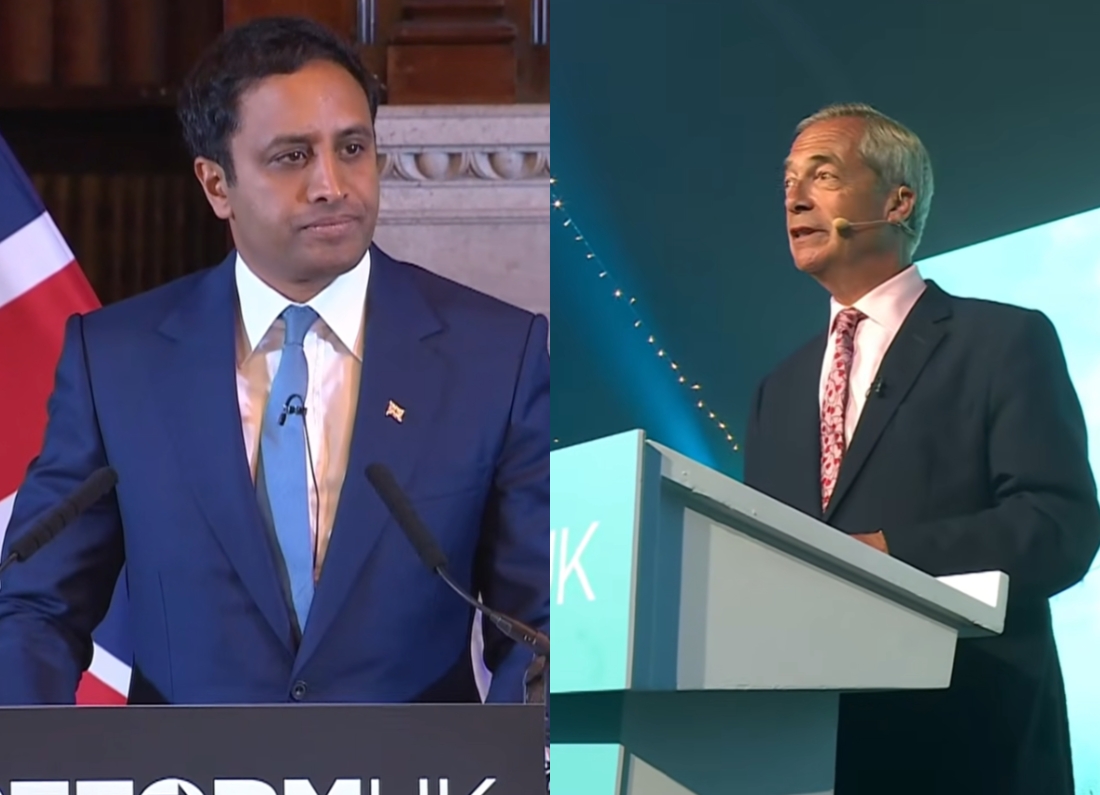
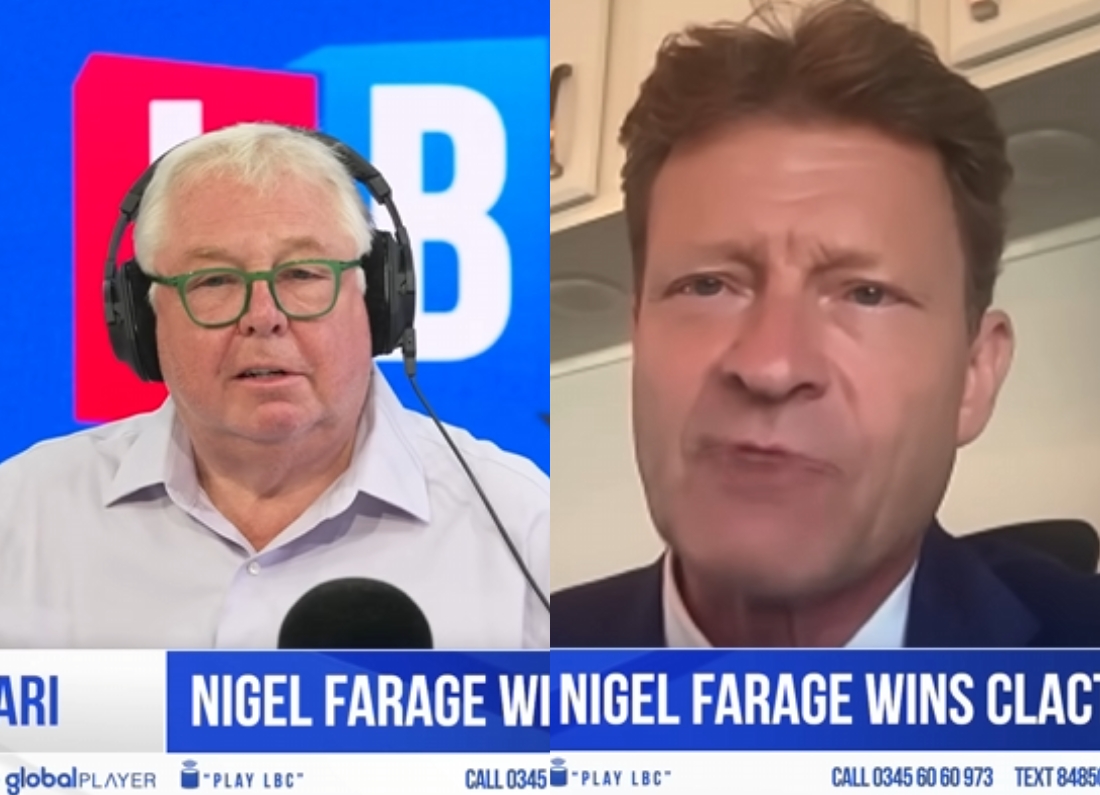
The standout early result was Reform’s takeover of Havering – east London’s outer borough – giving Farage’s party its first control of a London council. Farage appeared in Havering to declare it was now “under new management,” calling the national results “a truly historic shift” in British politics. “Forget left-right, there is no more left-right, it’s gone, it’s out of the window, it’s finished,” he said.
As we reported in our coverage of Farage’s Havering press conference, the Reform leader was also asked about his undisclosed £5m personal gift from crypto billionaire Christopher Harborne – and dismissed the question with “we’ll talk about that any other time you like.”
Wigan: the symbolic result of the night
Labour’s loss in Wigan – losing all 22 of the seats it was defending in a borough that has returned Labour to Westminster without interruption since 1906 – was the most symbolic result of the night. Reform took 24 of the 25 seats. Culture secretary Lisa Nandy holds Wigan as her parliamentary seat.
Labour also lost control of Tameside – the council in the constituency of former deputy prime minister Angela Rayner. As we reported in our earlier coverage of Labour’s leadership crisis, Rayner is among the senior figures whose allies have made clear they are ready to step up.
Greens win Hackney – the first directly elected Green mayor
The Greens’ historic night began in Hackney, where Zoe Garbett became the party’s first ever directly elected mayor in British political history. Garbett beat Labour by nearly 9,000 votes – securing 35,720 votes against Labour’s 26,865 – in one of Labour’s safest London boroughs.
In her victory speech, Garbett said: “People have made it clear they are desperate for an alternative to this failing Labour government. It’s not old politics parties versus new parties. This is about a system of fear versus a movement of hope. Today we start a fightback.”
As we reported in full in our coverage of the Hackney mayoralty result, the Greens also had breakthrough wins in Exeter, Chorley, Lincoln, Salford and Ealing – their best ever local election performance nationally.
Green leader Zack Polanski declared: “Two-party politics is no longer dying – it is dead. This is a historic victory for the Green Party.”
Labour MPs call for Starmer to resign
The calls from within the Labour Party began before the sun came up. Labour MP Jonathan Brash, whose wife lost her seat on Hartlepool Council, said: “I think the very best thing the prime minister could do now is to address the nation tomorrow to set out a timetable for his departure.”
Polanski also called on Starmer to go: “That is why Keir Starmer has to listen to the people and go.”
Starmer’s response
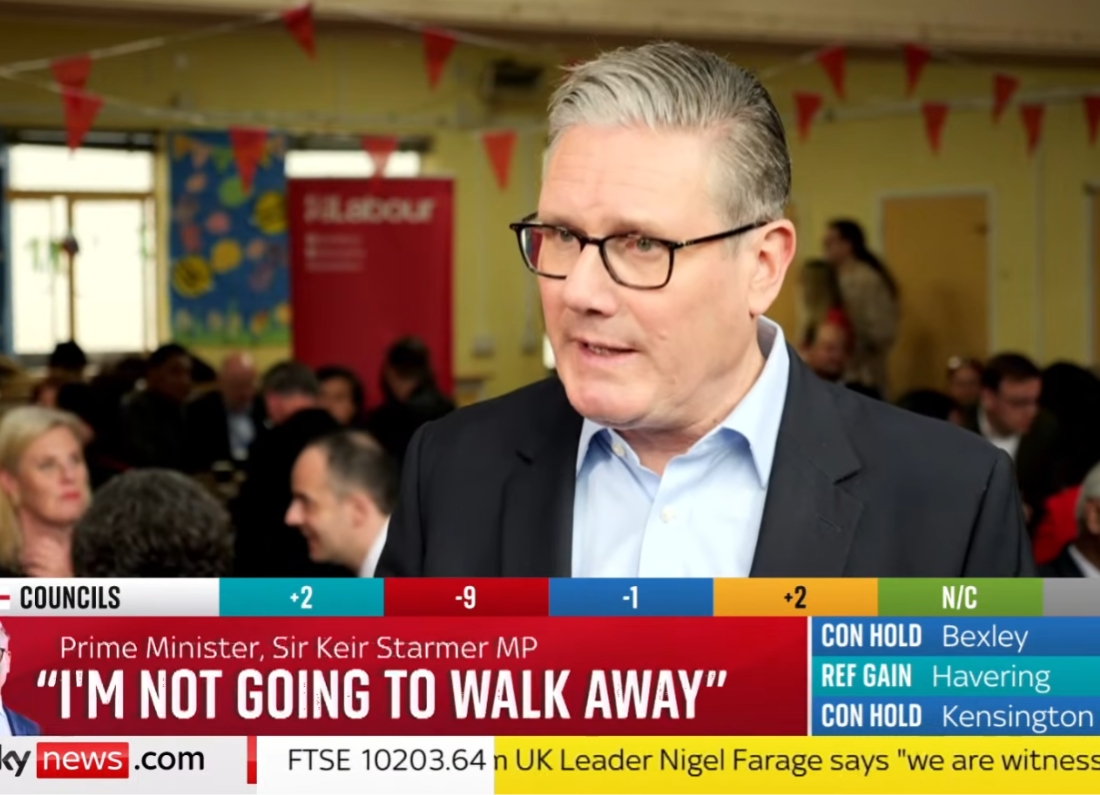
“I’m not going to walk away and plunge the country into chaos,” Starmer said. “I led our party to that [2024] victory. That is a five-year mandate to change the country.”
He acknowledged the losses directly: “They are very tough, and there’s no sugarcoating it. I take responsibility.” Asked if he would stand at the next general election, he replied: “Yes. It was a five-year term I was elected to do, I intend to see that through.”
A team of special advisers was moved into Downing Street on Friday morning specifically to protect Starmer from a leadership challenge – as we reported in our coverage of the YouGov poll showing 53% of Britons want a snap election if Starmer is removed.
The national picture – Reform and the Conservatives
BBC political editor Chris Mason said the results showed “the fracturing of our politics” with “none of the parties managing a runaway popularity, but votes splintering in five or more different directions.” Polling expert Sir John Curtice told the BBC that both Labour and the Conservatives were “losing seats at a scale that is towards the higher end of what they feared.”
The Conservatives suffered heavily across their traditional county council heartlands in the east and south of England, with Reform taking control of Essex, Norfolk and Suffolk – historic Tory strongholds that had never previously elected a Reform council.
Coventry: Labour loses majority for first time since 2010
In Coventry, the city’s biggest election since 2004 – with all 54 seats contested for the first time in 22 years due to a boundary review – produced a historic result. Labour lost its majority on Coventry City Council for the first time since 2010, with Reform winning 20 seats and Labour 24. No party holds the 28 needed for a majority.
As we reported in full in our Coventry final results article, cabinet member Jim O’Boyle and Conservative group leader Gary Ridley both lost their seats. The Greens took all three seats in Holbrooks. Labour leader George Duggins survived in Longford. Coventry is now in no overall control.
Scotland and Wales
In Scotland, as we predicted in our SNP preview piece, John Swinney’s party returned to government for a fifth consecutive term despite only 23% approval ratings – their fragmented opposition unable to coordinate around a single challenger.
In Wales, Plaid Cymru are on course to form the country’s first non-Labour government since devolution began in 1999 – a historic moment for Welsh politics and for the wider realignment of British electoral politics. As we reported in our Welsh election preview, the Welsh Election Study found the dominant voter emotion heading into the election was “disappointed.”
What happens next
Labour’s leadership crisis is now a matter of days, not weeks. Streeting has 81 MPs. Burnham has a plan and a replacement mayor lined up. Rayner has not declared. The 53% of Britons who want a snap election if Starmer goes have their answer – he says he is not going anywhere. Whether Labour MPs agree is the defining question of the days ahead.
Reform’s historic night raises a different question: can the party govern at the scale its voters have now given it? As we reported in our analysis of Reform’s first year in local government, the party’s record has not matched its rhetoric. It now has hundreds more councils to prove otherwise.
Updated 8 May 2026 with final results from England, Scotland and Wales.