The head of RenewableUK, the renewable energy industry’s chief lobbying organisation, has warned that a Reform UK government attempting to strip renewable energy projects of their subsidy contracts would severely undermine investor confidence and could trigger the kind of economic instability last seen during the 49-day premiership of Liz Truss – while legal experts warn that attempting to break watertight private contracts could expose the government to more than 50 international lawsuits.
Tara Singh, a former energy adviser to David Cameron who recently became chief executive of RenewableUK, made the warning ahead of this week’s local elections, in which Reform is expected to make significant gains and position itself as a government-in-waiting.
“The signal this would send to the entire investor community would be really damaging,” Singh said. “We’ve all lived through a Liz Truss era, and I don’t think this is something that we would want to go back to.”
What Reform has promised
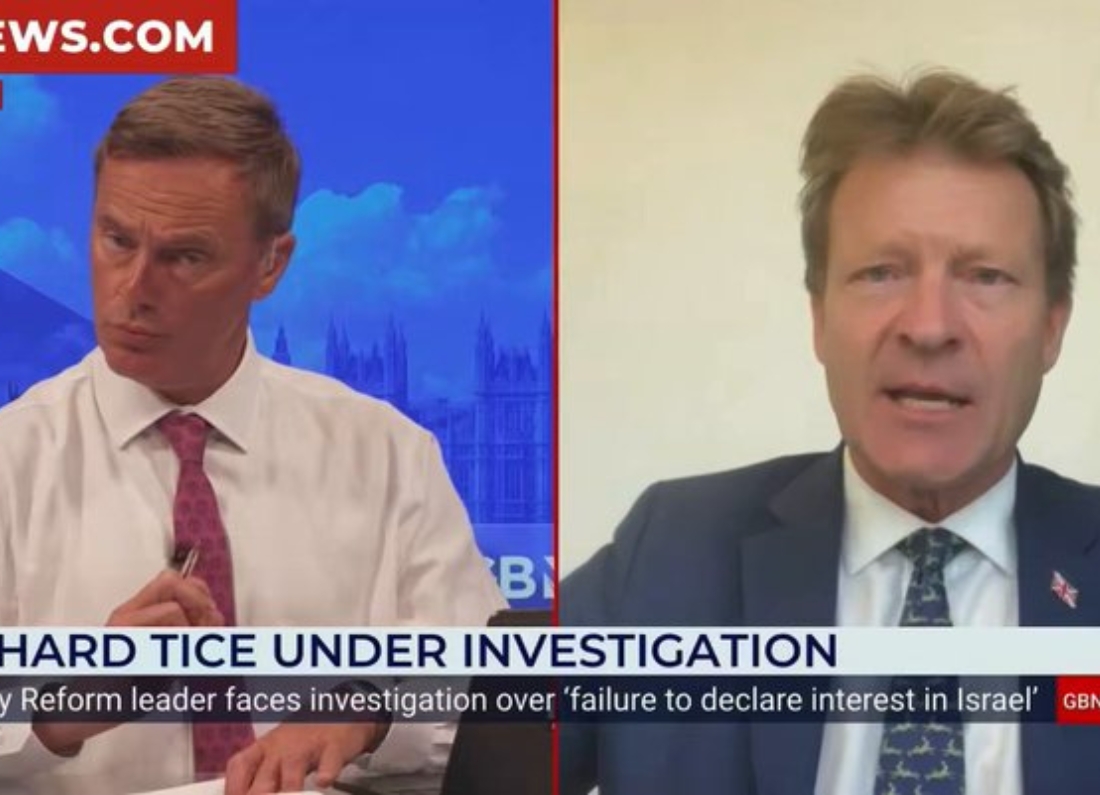
Last summer, Richard Tice – Reform’s deputy leader – sent a formal letter to large renewable energy developers putting them on notice that a Reform government would scrap all existing contracts-for-difference deals. Contracts for difference are the government-backed subsidy agreements through which renewable energy developers receive a guaranteed fixed price for their electricity, providing the long-term revenue certainty required to justify the billions of upfront capital investment that offshore wind farms, solar parks and other large-scale projects require.

In his letter, Tice wrote that “the political consensus that has sheltered your industry for nearly two decades is fracturing” and that the party would “seek to strike down all contracts” if it formed a government.
Why scrapping the contracts could be catastrophic
Singh’s warning is not merely rhetorical. It rests on a specific and well-documented international precedent.
After the 2008 financial crisis, Spain’s government attempted to scrap subsidy agreements with solar energy developers, arguing the original contracts were too expensive. The result was more than 50 international lawsuits filed against the Spanish government under the Energy Charter Treaty and other international investment protection agreements – along with severe and lasting reputational damage that raised the cost of all subsequent infrastructure investment in Spain by making the country a riskier destination for capital.
Singh said the same dynamic would apply in Britain. The contracts are “watertight private law subsidy contracts” – meaning that refusing to honour them would not simply cancel the arrangements but would expose a Reform government to large-scale litigation from the domestic and international investors who signed them in good faith. The legal fees and potential damages could run to billions of pounds, paid for by British taxpayers, without ever building or operating a single wind farm.
“Refusing to honour the industry’s watertight private law subsidy contracts would make it possible for developers to sue a Reform government to get their money back,” Singh said. “It wouldn’t save any money.”
The investor confidence problem
Beyond the legal exposure, Singh argued that the policy would damage Britain’s reputation as a destination for long-term infrastructure investment far more broadly than in the energy sector alone.
When investors assess whether to commit capital to a country for periods of ten, fifteen or twenty years – the timescales required for major infrastructure projects – they are fundamentally assessing political risk: the likelihood that a future government will change the rules and make their investment unviable. A British government that explicitly scraps legally binding contracts with energy developers tells every investor in every sector that no contract in Britain is secure.
The Liz Truss comparison is precise. Truss’s mini-Budget of September 2022 triggered a collapse in bond markets and a fall in sterling partly because it demonstrated a willingness to ignore conventional economic governance. The signal it sent – that the British government was prepared to act in ways that professional investors considered irrational – required the Bank of England to intervene and ultimately contributed to the shortest premiership in modern British history. Singh argues that unilaterally scrapping billions of pounds of legally binding contracts with energy investors would send a comparable signal.
The Iran war has made this argument considerably more powerful than it would have been eighteen months ago. The conflict has produced the second major fossil fuel price shock in four years, pushing oil to $110 a barrel and UK energy bills up by £300. Renewable energy – which has no fuel costs and is therefore insulated from global fossil fuel price shocks – has been cited by the government as the structural solution to the vulnerability that has cost British households hundreds of pounds in additional bills since the war began.
The economic case for renewables
A senior industry figure quoted by the Guardian made the economic argument in direct terms. “Go and look at what’s going on across the country: offshore wind operations are coming up along the coastlines and making an incredible difference to those communities because they are bringing in billions in investment and employing local people. It’s incredibly difficult to ignore the economic benefits that the industry is providing. If you want to generate economic growth – and I think everyone can agree on doing that – then you need to invest in infrastructure and energy security.”
RenewableUK projects that the renewable energy sector will account for 112,000 jobs by 2030 – with Singh pointedly noting that “many of them will be in areas which are Reform-leaning.” Scrapping the contracts would put those jobs at risk, in the same communities where Reform draws much of its support.
Building new renewable energy projects has also become cheaper than building new gas plants – a fact that was already true before the Iran war made gas significantly more expensive. Singh argued this made the political argument for renewables independent of ideology: “Renewable energy is just one technology, one way of producing electricity. It doesn’t have to come with an ideological label attached to it. Everything has become so tribal. But at the end of the day, voters do like renewables. Even among conservative voters there’s a clear majority in favour of net zero.”
Reform’s response
Tice was characteristically direct in his rejection of the industry’s case. “RenewableUK has gaslit and misled the British people,” he said. “Reform has given industry plenty of notice that we will review and scrap these unfair subsidy contracts signed under the current failed regime. British families and businesses have had enough of sky-high bills to subsidise intermittent power. We’ll deliver cheap, reliable energy instead of more virtue-signalling that damages our economy.”
Reform’s position – that renewable subsidies are responsible for high energy bills and that scrapping them would deliver cheaper energy – has not been substantively supported by independent analysis. The electricity market reform announced by Ed Miliband is specifically designed to break the link between gas prices and electricity bills by moving more generation onto fixed-price contracts-for-difference. Under that model, renewable energy actually lowers bills relative to gas-dependent generation. The Iran war has provided real-world evidence for this argument: renewable generation has been the part of the electricity system insulated from the price shock, while gas-fired power has driven the bill increases.
The broader political context
The industry’s concern about Reform has deepened significantly in recent months as the party has moved from protest movement to credible government contender. Tice’s letter of last summer was initially treated with some scepticism by energy developers – a party on 15% in the polls making threats about future government action was not an immediate business concern.
Reform is now polling at 27% and is widely expected to win hundreds of council seats and potentially two regional mayoralties on Thursday. One senior industry figure told the Guardian: “What has changed is that they’re clearly positioning themselves as a force to be reckoned with, as the next government in waiting. They are absolutely preparing for government, and you can’t ignore that.”
The trajectory is one that investors cannot afford to ignore. If Reform enters government in 2029 – or if a hung parliament produces a Reform-influenced administration before then – the question of what happens to the renewable energy contracts that underpin tens of billions of pounds of infrastructure investment becomes an urgent live issue rather than a theoretical future risk.
Singh’s call for politicians to set aside the “culture war” over energy policy and focus on energy security, costs and job creation is unlikely to land with Reform’s leadership before Thursday. But the economic case she is making – that investor confidence, legal certainty and long-term infrastructure investment are interconnected public goods that no responsible government can afford to destroy – is one that will outlast any individual election campaign.
You may also like: Reform plans to ‘punish areas’ that don’t vote for them with migrant detention centres – and critics say it’s an abuse of power