

![Vice President JD Vance Delivers Remarks in Budapest, Hungary [YouTube]](https://thedailybritain.co.uk/wp-content/uploads/2026/04/jdvance.jpg)
The United States government will begin automatically registering men in the military draft pool from December, under new rules that set a deadline of 30 days after their 18th birthday – as the White House refuses to rule out reinstating the draft for the Iran war, and pressure on US military capacity continues to mount.
The Selective Service System, which maintains a database of eligible men to be called up in the event of a national emergency, submitted the proposed rule to the Office of Information and Regulatory Affairs on 30 March. Automatic registration was mandated in December as part of the 2026 National Defense Authorization Act, signed into law under Secretary of War Pete Hegseth.
What is changing – and what it means
Most men between the ages of 18 and 25 in the United States are already legally required to register with the Selective Service System. Failure to do so is a federal crime that can carry a fine of up to $250,000 and potential jail time. The system exists as a dormant mechanism: in peacetime it does nothing, but in the event of a national emergency, it would provide the government with a ready-made database from which to conscript soldiers.
What is changing under the new rules is the mechanism of registration itself. Rather than requiring young men to actively register – a process that has historically resulted in significant non-compliance – men will now be enrolled automatically within 30 days of their 18th birthday. The change is framed by the Selective Service System as a streamlining measure designed to save money and close compliance gaps.
The SSS describes its role as providing “personnel to the Department of War and alternative service for conscientious objectors, if authorized by the President and Congress” in the event of a national emergency.
The draft question – and the White House’s refusal to rule it out
The timing of the change – coming during an active US military engagement in Iran, with the ceasefire only days old and its permanence far from guaranteed – has inevitably focused attention on whether the draft could be reinstated.
White House press secretary Karoline Leavitt was asked directly in March whether the draft could be brought back for the Iran war. Her response was carefully non-committal: “President Trump wisely does not remove options off of the table. I know a lot of politicians like to do that quickly.” She added that reinstatement of the draft “is not part of the current plan” – a formulation that leaves considerable room for the plan to change.
The legal position is clear: Trump cannot reinstate the draft through executive action alone. Conscription would require Congress to pass legislation. Given the current composition of Congress and the political sensitivities around the Iran war – which remains deeply unpopular with significant portions of the Republican base – reinstatement would face significant obstacles.
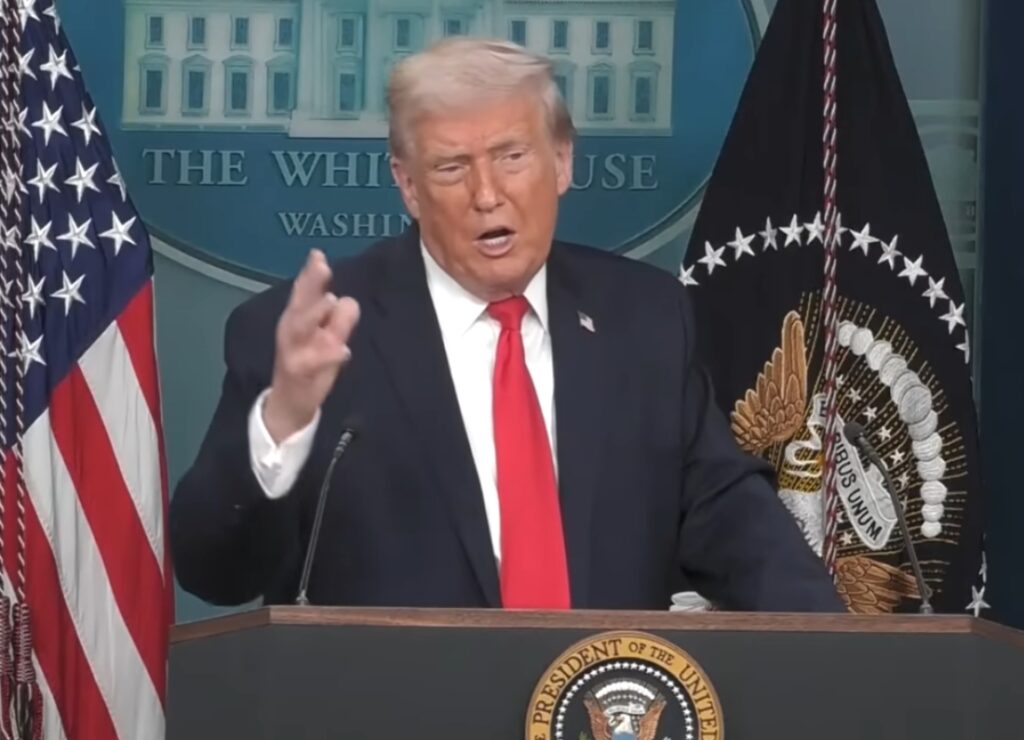
But the refusal to rule it out entirely, combined with the automatic registration measure taking effect in December, has generated considerable anxiety among American families with sons approaching military age.
Historical context
The United States has not had a military draft since the Vietnam War. Conscription was suspended in 1973 when the US military transitioned to an all-volunteer force – a change driven partly by the political and social upheaval caused by the Vietnam-era draft, which fell disproportionately on lower-income men who lacked the connections, deferments or resources to avoid service.
The all-volunteer military has served the US for more than five decades. Its defenders argue it produces a more professional, motivated fighting force. Its critics have long argued that it allows the political class to wage wars without the electoral consequences that conscription would bring – because the burden of military service is borne by a relatively small segment of the population, concentrated in particular communities, rather than distributed across society as a whole.
The Iran war – launched without a formal declaration of war, justified on contested legal grounds, and now ending on terms that appear to represent a strategic victory for Iran – has reignited those debates in a new form.
What it means for Britain
The draft question has particular resonance in Britain because of the ongoing debate about the UK’s relationship with the Iran war. Starmer has maintained that Britain is not a party to the conflict and is involved only in defensive operations. But the use of British bases – RAF Lakenheath, RAF Fairford and RAF Mildenhall – by American aircraft, and the recent arrests of protesters outside those bases, means Britain is not entirely insulated from the consequences of the war’s escalation or its domestic political fallout in the United States.
If the Iran war were to escalate and the US were to move towards conscription, the political pressure on Britain to either support or distance itself from the American military operation would intensify dramatically. The current ceasefire has created breathing room – but with Strait of Hormuz tolling in Bitcoin, Saudi Arabia’s pipeline struck by drones on the day of the ceasefire announcement, and Iran retaining effective control of the waterway, that breathing room may prove temporary.
The broader picture
The automatic draft registration measure is, in the most immediate sense, a bureaucratic efficiency change. But it arrives in a moment when its symbolic weight is impossible to separate from its administrative purpose.
The United States is engaged in an active military operation in a strategically vital region. The ceasefire is fragile. The White House has explicitly declined to rule out conscription. And from December, every 18-year-old American man will be automatically enrolled in the pool from which a draft would draw.
For the generation of young Americans who have grown up in an era of all-volunteer service, the change is a reminder that the architecture of conscription has never been dismantled – only mothballed. The machinery is still there. The question of whether it will be activated depends on decisions being made, day by day, in the conflict that began when US and Israeli jets took off from bases in Britain, the Gulf and the carrier groups of the Fifth Fleet, on 28 February 2026.









Leave a Reply