

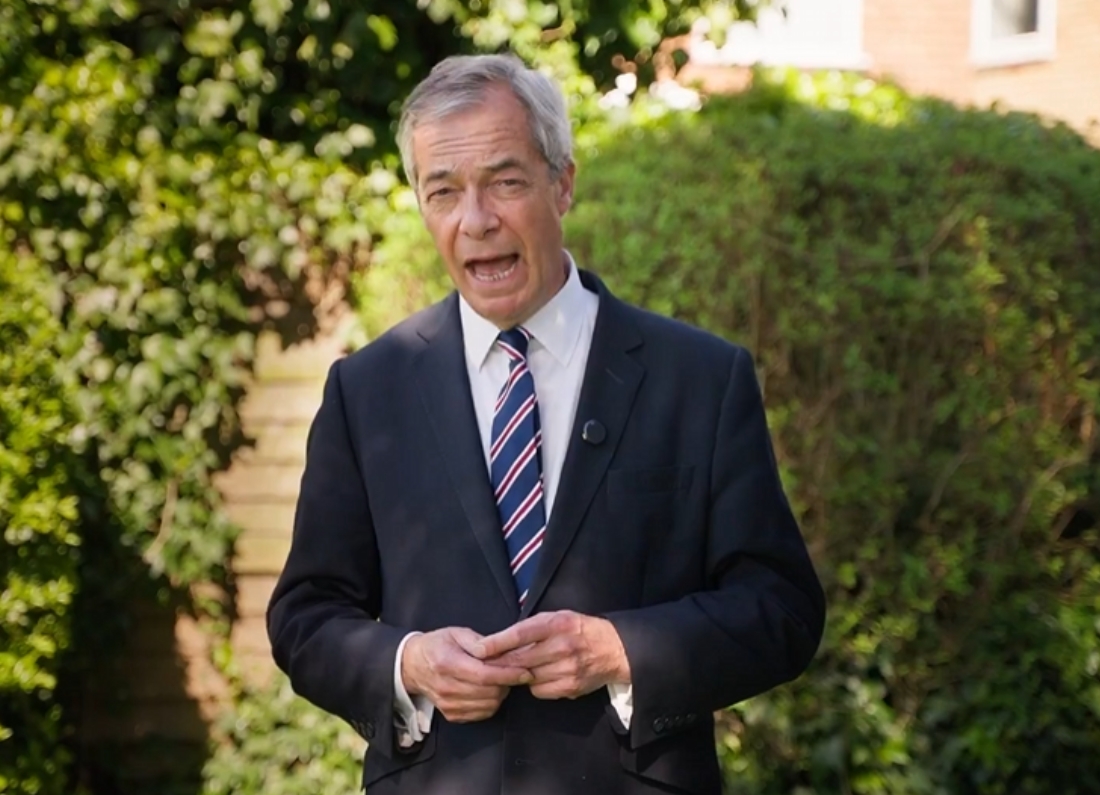
Caribbean and African political leaders have responded defiantly to Reform UK’s threat to ban visas for nationals from any country formally demanding slavery reparations from Britain – insisting they will not be “cowed” by the policy, while former Reform insiders, Labour MPs and trade experts warn it would harm Britain’s economy, isolate the country diplomatically and compound existing skills shortages.
The pushback, which has come from across the Commonwealth and from voices on both sides of the debate within Britain, suggests that Reform’s announcement – designed to signal strength on immigration and national sovereignty – has instead opened a significant political and diplomatic front at a sensitive moment for the party.
The response from the Caribbean
Hilary Beckles, chair of the CARICOM reparations commission, was among the most prominent voices to respond, framing Reform’s proposed policy in deliberately historical terms. “Punishing the victims again is in fact consistent with those people at the time of emancipation who did not wish to see the African people freed,” he said, adding that the “legacy of toxic racism… is still so intense that Black people are deemed undeserving” of reparations.
Calling for “inter-nation dialogue” rather than confrontation, Beckles said the idea that victims of an “enormous crime calling for justice are to be doubly punished is tragic” – and expressed confidence that the British parliament and British public would ultimately come to recognise the need for engagement: “I have no doubt in time the British people and the British government will come to realise dialogue is what is required.”
Arley Gill, head of the Grenada Reparations Commission, was more blunt. “It is not funny that they think after years of invading and colonising a people that they think a British visa for those same people is a privilege,” he said, describing Reform’s position as showing a “terrible lack of knowledge” of the issues – and highlighting that when slavery was abolished in 1833, British taxpayers compensated the slave owners to the tune of £20 million. The enslaved received nothing.
Ralph Gonsalves, opposition leader and former prime minister of St Vincent and Grenadines, accused Farage of “doing an imitative Trump” and pursuing “another cultural wedge issue” that “will certainly isolate Britain further.” He dismissed any suggestion that reparations advocates would retreat: “None of us in the Caribbean who are advocating reparations would be cowed by that sort of talk.”
The Reform insider who disagrees
One of the most striking criticisms came not from a political opponent but from within Reform’s own recent history. Neville Watson was Reform UK’s only Black branch chair until he left the party last year – having himself called for reparations.
Watson, now standing as the Christian People’s Alliance candidate for the 2028 London mayoral elections, said Reform’s visa policy would “punish nations for raising legitimate historical claims” and would compound the UK’s existing skills shortages. Pointing to the recently announced £746 million UK-Nigeria trade deal – which includes a £70 million contract for British Steel in Lincolnshire – he described the Reform policy as a threat to the “very fabric of trade and diplomacy.”
“Our prosperity is seated in partnership,” Watson said, warning that the visa ban would damage the very Commonwealth relationships that Britain has been leaning on more heavily since Brexit to compensate for its exit from EU trade structures.
The wider political voices
The response from within British politics was also pointed. Bell Ribeiro-Addy, Labour MP and chair of the all-party parliamentary group on Afrikan Reparations, described Reform’s policy as a “ridiculous provocation” and challenged the framing of the debate entirely: “Reparatory justice was never simply about money. The demand is for acknowledgment, truth-telling and structural repair. Reform have either failed to grasp that, or chosen to ignore it. What they are effectively doing is threatening the descendants of the enslaved for insisting the transatlantic slave trade be recognised as a crime against humanity.”
Labour MP Clive Lewis added a wider historical perspective: “The total death toll of slavery may exceed 20 million. We confront that history honestly not as an act of self-flagellation but because the alternative – the insistence that power never has to account for itself – is exactly the logic that makes atrocities possible in every generation.”
The Green Party’s reparations officer, Antoinette Fernandez, challenged Reform’s central historical claim directly: “Britain outlawed slavery because consistent slave uprisings made it no longer profitable. Reparative justice is about correcting not just the wrongs of the past but the ongoing exploitation of African countries – a large majority of which still provide natural resources and goods to Europe for which they are consistently shortchanged.”
The irony of Zia Yusuf
The announcement carries a particular irony that has not gone unnoticed. Zia Yusuf – the man delivering Reform’s “Britain is not an ATM for ethnic grievances” message – is himself the son of Sri Lankan Muslim immigrants who came to the UK in the early 1980s and worked for the NHS. Sri Lanka is among the countries that have sought colonial redress from Britain.
Yusuf has previously spoken about his own background in the context of British values and cultural integration. The spectacle of a first-generation British-Sri Lankan son of NHS workers announcing a policy that would have denied visas to people from his parents’ country of origin has drawn considerable comment.
The practical and economic dimensions
Reform’s announcement has also been scrutinised for its practical implications, particularly given the degree to which Britain has relied on Commonwealth migration to address skills shortages since Brexit.
Since leaving the EU, the UK has actively recruited from former African, Caribbean and Asian colonies to fill gaps in teaching, healthcare, social care and the Prison Service. A blanket visa ban affecting countries including Nigeria, Ghana, Jamaica and Kenya – each of which is a significant source of skilled workers for British public services – would create immediate operational pressures in sectors already under strain.
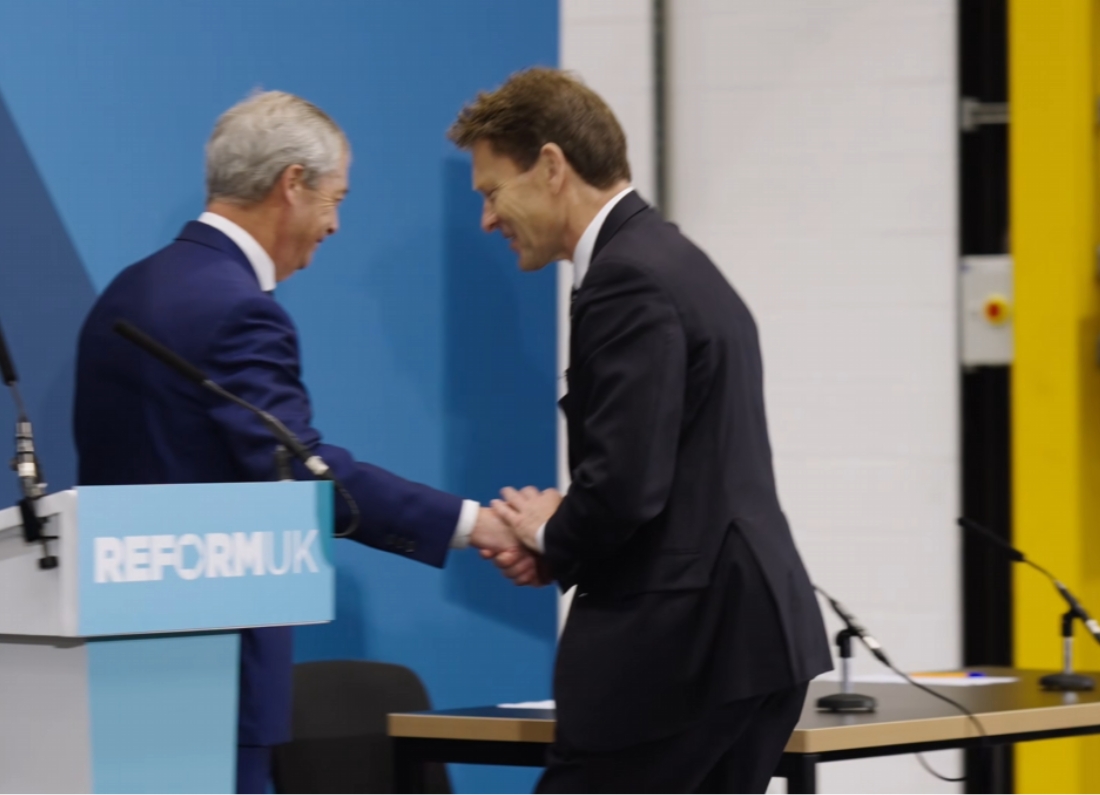
When asked at a press conference on Tuesday whether Reform had done any modelling on the cost and impact on UK employers, Farage declined to provide figures. He did say the visa block would not be backdated.
The UK’s own position was clarified by a Foreign Office spokesperson: “The UK’s position on reparations is clear – we will not pay them. The transatlantic slave trade was abhorrent. We are committed to deepening respectful, long-term partnerships with African countries, rooted in mutual respect.” That careful formulation – rejecting financial reparations while maintaining diplomatic relationships – is precisely the middle ground that Reform’s policy abandons.
What Reform actually says
Farage, speaking on Tuesday, defended the policy in characteristically sweeping historical terms, claiming the UK had spent “four decades on the high seas driving slavery off the world’s oceans.” He did not address the more complex historical picture – including the compensation paid to slave owners, the degree to which British capital and British markets drove the trade for centuries, or the lasting economic consequences for the countries from which enslaved people were taken.
Britain transported an estimated three million African people across the Atlantic before abolishing the practice in the early 1800s. The resolution passed by the UN General Assembly last month – which the UK abstained from rather than supported – described this as “the gravest crime against humanity” and called for reparations as “a concrete step towards remedying historical wrongs against Africans and people of African descent.” It passed by 123 votes to three.
Whether Reform’s policy will prove politically popular domestically – playing to a constituency that is resistant to reparations demands – or diplomatically damaging internationally – alienating Commonwealth partners at a moment when Britain needs them more than ever – is a question that will shape the debate in the weeks and months ahead.
You may also like: Reform UK caught cold calling strangers to stand as paper candidates in May local elections







Leave a Reply