

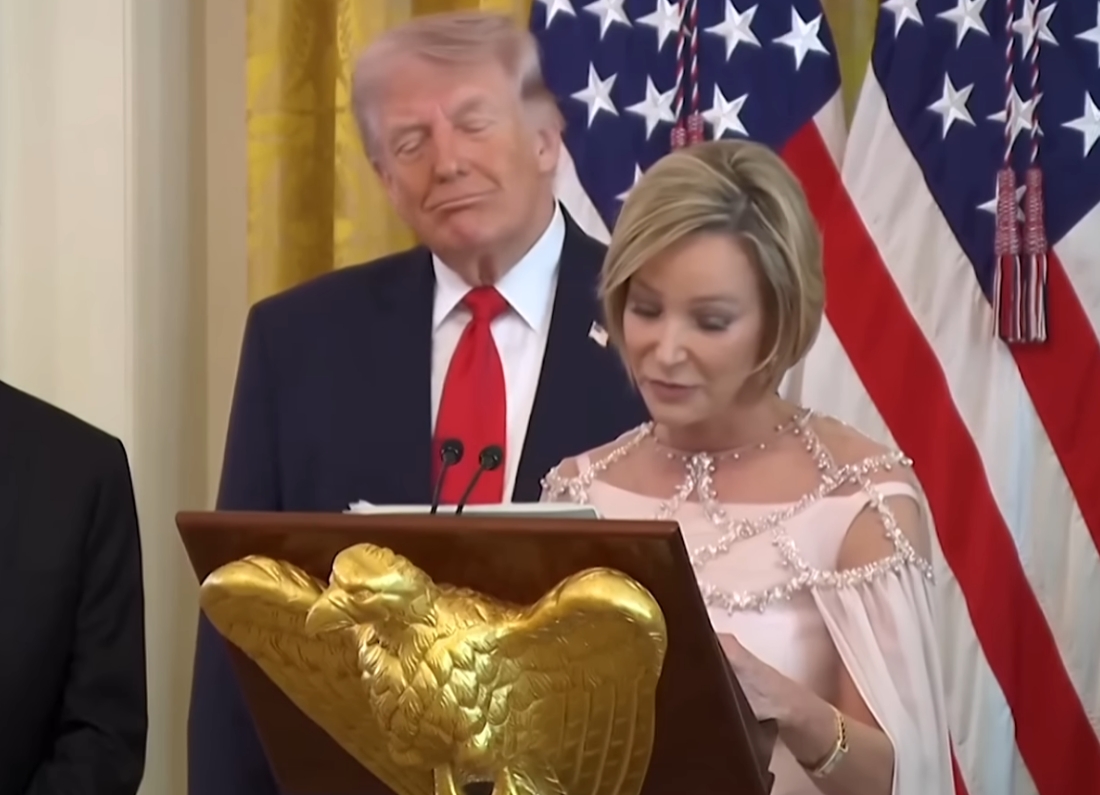
Donald Trump’s spiritual advisor Paula White-Cain has caused a storm of condemnation – from Christians, theologians and even some of Trump’s own supporters – after comparing the US President to Jesus Christ during a private Easter lunch at the White House, drawing explicit parallels between the crucifixion and Trump’s legal and political tribulations.
The remarks, delivered in the East Room on 1 April before more than 100 faith leaders gathered to mark Holy Week, were not supposed to be made public. The event had been billed as closed to the press. But the White House mistakenly uploaded video footage to YouTube before realising the error and removing it – by which point clips had already spread widely across social media and been picked up by news organisations around the world.
What White-Cain said
White-Cain, who serves as senior adviser in the White House Faith Office and has been Trump’s personal spiritual advisor since his 2016 campaign, opened with remarks on the Christian significance of Easter – before pivoting to a direct address to the President that drew gasps and condemnation across the religious spectrum.
“Jesus taught so many lessons through his death, burial and resurrection. He showed us great leadership – great transformation requires great sacrifice,” she said, with Trump standing just behind her.
“And Mr President, no one has paid the price like you have paid the price. It almost cost you your life.”
She then delivered the line that set the internet alight: “You were betrayed and arrested and falsely accused. It’s a familiar pattern that our Lord and Saviour showed us. But it didn’t end there for him, and it didn’t end there for you.”
She continued: “God always had a plan. On the third day, he rose, he defeated evil, he conquered death, hell and the grave. And because he rose, we all know that we can rise. And sir, because of his resurrection, you rose up.”
She concluded by telling Trump: “I believe that the Lord said to tell you this – because of his victory, you will be victorious in all you put your hands to.”
Trump, who stood silently throughout the speech, quietly said “thank you” as the room applauded. The pastor of First Baptist Dallas, Robert Jeffress, who was standing beside Trump, patted his arm and said “Amen, that is so true.”
The video – and its disappearance
The event had been scheduled as closed to the press, with a tight guest list of MAGA-aligned faith leaders and evangelical and Catholic figures. But the White House accidentally posted the footage to YouTube before recognising the error and making the link private. By that point the damage was done – clips had been shared millions of times.
The footage also revealed other notable moments from the event. Trump appeared to joke about his own status, referencing Jesus’s entry into Jerusalem on Palm Sunday: “They call me king now, can you believe it?” He also complained about being unable to get a proposed $400 million ballroom at the White House approved. And in separate remarks he admitted that the Iran war had left no money for healthcare or childcare, suggesting states would need to raise their own taxes to fund those services.
The backlash – from all sides
The reaction to White-Cain’s speech was immediate and fierce – and notably came from Christians across the political spectrum, not just from Trump’s critics.
Catholic theologian Rich Raho condemned the remarks as “blasphemous” and expressed particular concern at the presence of Catholic Bishop Robert Barron of the Diocese of Winona-Rochester, who was standing onstage not far from Trump as the comparison was made. “It’s stunning to see a US Bishop standing right there on the stage while Paula White compares Trump to Jesus Christ,” Raho said.
Jesuit priest Father James Martin drew a careful theological line: “Asking God, in a public prayer, to help a political leader make wise decisions, care for the poor, seek peace, foster harmony, and try to include all those who feel excluded? Yes. Comparing a political leader, in a public prayer, to the sinless Son of God during Holy Week? No.”
The Reverend Benjamin Cremer described the remarks as “blasphemy,” adding that it was “what it sounds like to take Jesus’ name in vain.”
Conservative Catholic commentator Taylor Marshall called it “insanity,” while Christian cultural commentator Jon Root said: “Heretic and leader of the White House Faith Office, Paula White, compared President Trump’s political persecution to the persecution of our Lord and Saviour Jesus Christ. Insanity.”
The backlash was notably not confined to the left. Some of Trump’s most loyal evangelical supporters expressed discomfort. Conservative commentator Erick Erickson pointed out the irony of pastors who preach against women in the pulpit applauding White-Cain’s address. Others pointed to a double standard – noting that the same communities would have been outraged if a Democratic president had received equivalent treatment at a public faith event.
Who is Paula White-Cain?
White-Cain is the founder and senior pastor of City of Destiny church in Florida, and one of the most prominent figures in the American prosperity gospel movement – a branch of Christianity which teaches that faith, positive thinking and tithing lead to material and financial blessing from God.
She has been closely associated with Trump since before his first election campaign, praying at his 2017 inauguration and maintaining a formal White House role since the start of his second term. She has previously described the White House as “holy ground” and stated that “to say no to President Trump would be saying no to God.”
White-Cain has also recently faced internal White House controversy, including allegations of involvement in the removal of MAGA influencer Carrie Prejean Boller from Trump’s Religious Liberty Commission – an episode that prompted at least one resignation from the commission and fuelled wider tensions within the faith community around the White House.
Trump’s own remarks
Trump himself appeared comfortable with the framing. Before White-Cain took to the podium, Trump discussed Palm Sunday and Jesus being welcomed as a king, then quipped: “They call me king now, can you believe it?” – before turning the joke into a complaint about his White House ballroom plans.
He also told the assembled faith leaders: “We know the feeling” – appearing to reference the theme of betrayal that White-Cain subsequently developed in her comparison to the crucifixion.
The broader context
The episode is the latest flashpoint in an ongoing debate about the relationship between evangelical Christianity and American political power – a relationship that has intensified dramatically since Trump’s first term and which critics argue has crossed into a form of political idolatry that distorts both faith and democracy.
For British audiences, the event lands in a week when Trump’s behaviour has already been widely discussed – from his suggestion that King Charles would have “stood by him” over Iran, to his threats to abandon NATO, to ongoing questions about the special relationship. White-Cain’s Easter address adds a further dimension to the portrait of an American presidency that is operating in ways that feel, to many international observers, increasingly disconnected from conventional democratic and religious norms.
That the White House sought to delete the footage rather than defend it suggests that even within the administration, someone recognised that comparing the President to the Son of God – during Holy Week – was a step beyond what could be publicly defended.
You may also like: Trump says King Charles would have ‘stood by’ him over Iran and taken a ‘different stand’ to Starmer





Leave a Reply