

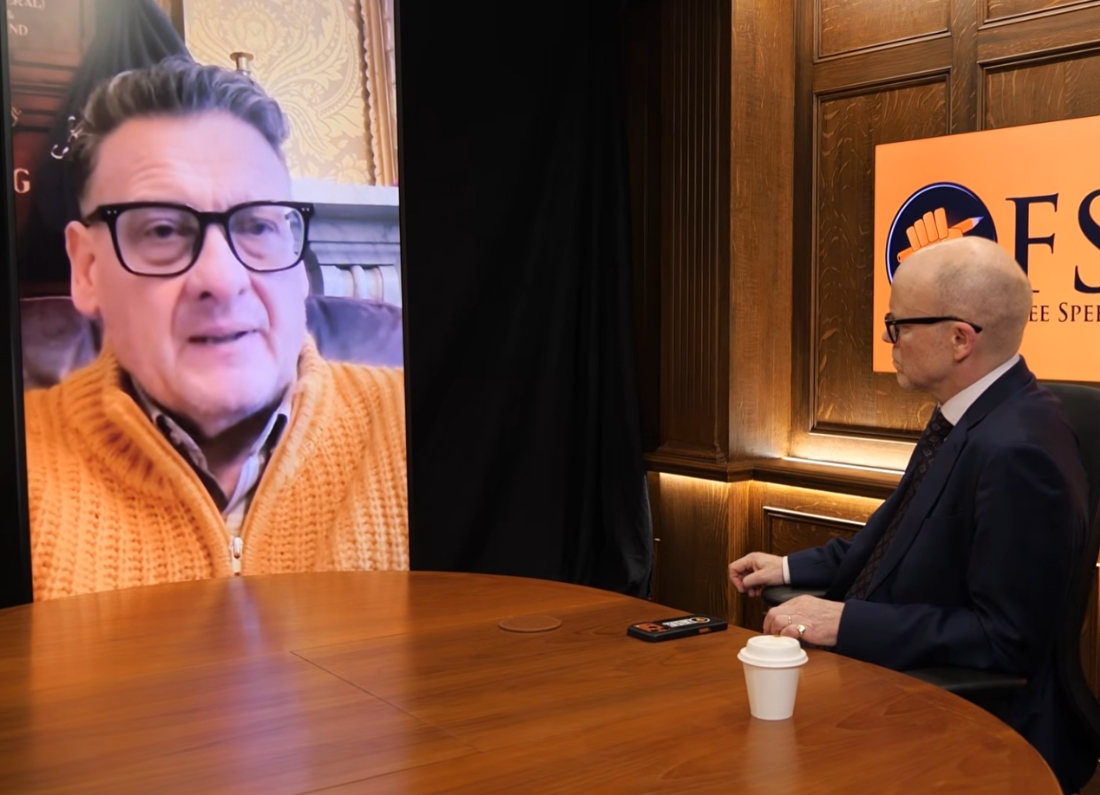
Karl Turner, the Labour MP for Kingston upon Hull East and the most prominent backbench critic of the government’s plans to curtail jury trials, has had the Labour whip suspended – finding out about his removal from the parliamentary party through the media before receiving any formal notification from the party itself.
Turner was informed by chief whip Jonathan Reynolds that the whip was being suspended “following his recent conduct,” with the decision to be reviewed at a later date. But in a post on X that quickly went viral, the MP made clear he had been kept in the dark about his own suspension: “I am being told that I have had the whip suspended but I have not had any notification from the whips about this. It seems journalists have been told but I have not.”
He will now sit as an independent MP, continuing to represent his Hull East constituents but without the Labour whip.
Who is Karl Turner?
Turner is a barrister by training and has been the Labour MP for Kingston upon Hull East since 2010. He served in the shadow cabinet under Jeremy Corbyn, including as shadow attorney general and shadow solicitor general, and was also part of the whips’ office in opposition. Despite Labour’s landslide victory in 2024, he was not offered a government post under Keir Starmer – and has spent much of the past 18 months as one of the most outspoken critics on the Labour benches.
He was re-elected in 2024 with a vote share of 43.8% and a majority of 3,920, with Reform UK’s candidate finishing in second place. That relatively narrow margin – and the strength of Reform in his constituency – is part of the political backdrop to his willingness to rebel openly against the government.
The jury trial row
The immediate context for Turner’s suspension is his sustained, very public campaign against the government’s plans to reform jury trials in England and Wales.
The Ministry of Justice’s proposals, announced in December 2025, would create judge-only “Swift Courts” for cases where the likely sentence is three years or less, retain juries only for the most serious indictable offences, and raise magistrates’ sentencing powers. The government argues the reforms are necessary to tackle a Crown Court backlog that is projected to approach 100,000 cases by 2028, and that they draw on recommendations from Sir Brian Leveson’s independent review of the criminal courts.
Turner has been having none of it. As a former barrister who has appeared in court himself, he describes the right to a jury trial as a fundamental constitutional protection – not an administrative inconvenience to be traded away in the name of efficiency. He has called the plans “unworkable, unpopular, unjust and unnecessary,” accused Justice Secretary David Lammy of being “untruthful” about the reforms’ purpose, and at one point urged him, in a memorable phrase, to “please God, stop what you’re doing.”
He was responsible for coordinating a letter signed by more than 40 Labour MPs, on behalf of the Society of Labour Lawyers – one of the party’s oldest affiliates – expressing deep concern about the plans and demanding the government reconsider.
In January, Turner broke the Labour whip for the first time in his parliamentary career when he voted with the Conservatives on an opposition day motion opposing the reforms. When the legislation had its second reading in the Commons earlier this month, he abstained rather than vote against, saying at the time: “Today isn’t the day to defeat the government, but we will win the argument as the Bill progresses.”
He had also previously threatened to resign his seat entirely and trigger a by-election if the government pressed ahead. He told the parliamentary Labour party: “If my parliamentary Labour party chief, prime minister, leader of the party or whatever else doesn’t want me in the party anymore, fine. I don’t mind walking and causing a by-election.”
More than just jury trials
While the jury trial rebellion has been the most visible flashpoint, the BBC understands Turner’s suspension was specifically triggered not by his policy criticism but by comments about colleagues described as “uncollegiate,” with Labour sources saying there was a “pattern of behaviour” that led to the decision.
One element of that pattern appears to be Turner’s increasingly pointed comments about the theft of Morgan McSweeney’s mobile phone. McSweeney – Starmer’s former chief of staff, who resigned following the Mandelson scandal – had his phone stolen in circumstances that meant he could not hand over messages related to Mandelson’s appointment as US ambassador. Turner made his scepticism about that account publicly explicit on social media, posting: “I don’t believe McSwindle had his iPhone stolen.”
The Guardian also reported that Turner’s suspension was connected to an interview he gave to Jody McIntyre, a campaigner who previously stood against Labour’s Jess Phillips in the 2024 general election – though the precise nature of that connection was not made clear.
It is understood Turner had been given multiple written warnings from the whips’ office before today’s decision was taken. He confirmed as much himself, telling Times Radio earlier this month: “I’m already on a conduct warning for having the audacity to say that these proposals are ludicrous. I’m not going to be bullied around.”
The PLP mood
Turner’s suspension comes at a delicate moment for the government. Less than a fortnight ago, he told HuffPost UK that a “revolt” by Labour MPs was just weeks away unless Starmer turned the government’s fortunes around before the May elections. He voiced support for former deputy prime minister Angela Rayner, who warned the government was “running out of time” to deliver on its promises.
“It is refreshing to see a senior Labour politician come out and speak clearly to the situation we find ourselves in,” he said, adding that there was “a great deal of discontent on the Labour benches.”
The reaction to his suspension within the parliamentary party has been divided. One Labour MP said it was “about time” Turner was suspended, accusing him of “whipping up” criticism of the government on social media. Another MP, described as generally supportive of the prime minister, accused the government of displaying “thin skinned arrogance” by suspending him.
That split captures the difficulty facing the leadership. With May 7 approaching and polling deeply unfavourable, the government is caught between the need to maintain discipline and the risk that heavy-handed treatment of its own MPs fuels the very narrative of internal chaos it is desperate to avoid.
What Turner said about his future
Despite the turbulence, Turner has been consistent on one thing: he is not about to defect. In an interview with LBC just 24 hours before his suspension was announced, he was emphatic. “I’m Labour Party born and bred. I’ll die Labour Party,” he said. “There’s no way I’d go to Reform for all the tea in China.”
He has framed his criticism not as disloyalty but as the opposite – an insistence that Labour govern in line with the values it was elected to represent.
“Stop doing the daft things, get on with the policy that we’re committed to in the manifesto and govern for the country,” he said. “Stop messing around is my message to the PM and I make that message to him every time I get the chance.”
The decision to suspend his whip will be reviewed at a later date. Whether that review results in reinstatement – or a more permanent separation – may depend on the outcome of the May elections and what follows for Starmer’s leadership thereafter.
You may also like: Ministers explore scrapping Palantir’s £330m NHS contract amid growing political pressure




Leave a Reply