

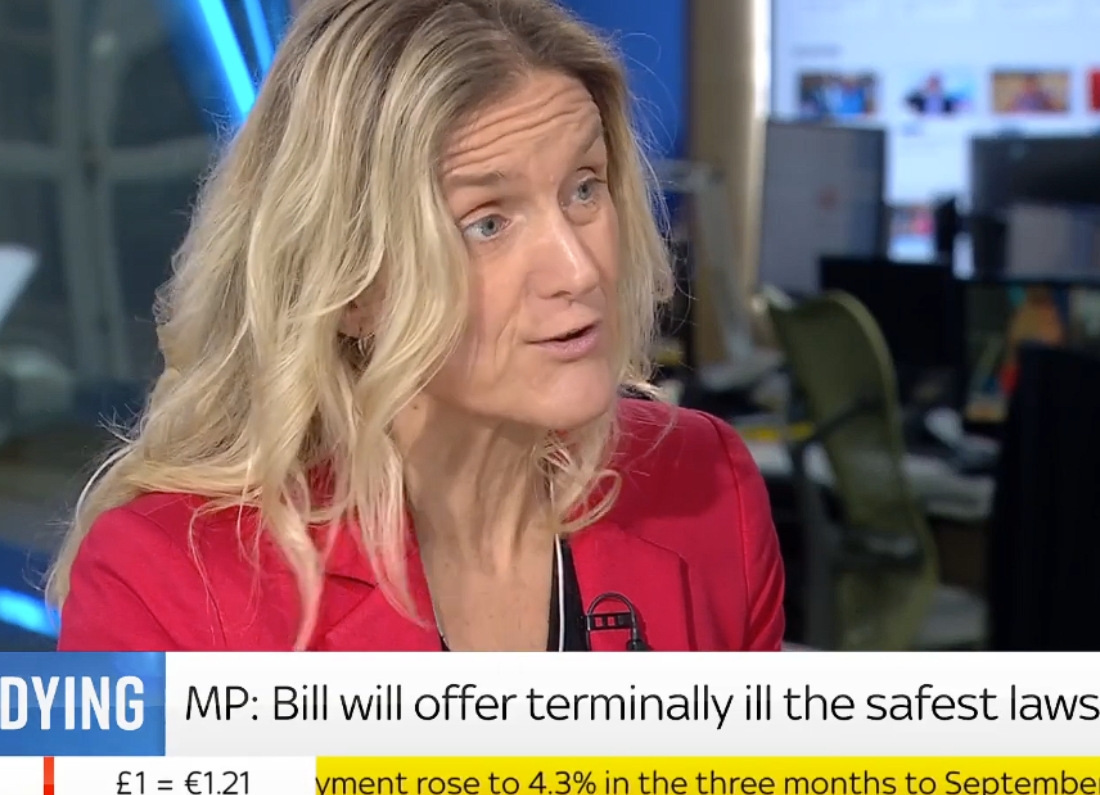
Supporters of the assisted dying bill are preparing to use the Parliament Act as a last-resort route to force the legislation through Parliament if delays in the House of Lords continue, raising the stakes in one of Westminster’s most sensitive and closely watched debates.
Backers say the bill could simply run out of time in the current parliamentary session, which is expected to end in May. Under the normal rules, a private member’s bill that has not completed its stages before the session ends falls, even if it has already been approved by the House of Commons.
The move being discussed is unusual because the Parliament Acts have rarely been used at all and have never been used to enact a private member’s bill. That novelty is exactly why constitutional arguments, parliamentary timing and political will now matter as much as the bill’s substance.
What is happening to the assisted dying bill now
The legislation in question is the Terminally Ill Adults (End of Life) Bill, a private member’s bill associated with Labour MP Kim Leadbeater and backed in the Lords by Lord Charles Falconer. After passing the Commons, it is now being examined in the Lords, where it has entered an amendment-heavy committee stage.
The sheer scale of scrutiny is at the heart of the current dispute. More than 1,000 amendments have been tabled in the Lords, and debate has moved slowly, with peers still working through the earliest clauses. Supporters argue that a small number of opponents are using procedure to drag out debate and prevent a final decision; opponents insist they are carrying out proper line-by-line scrutiny of a complex and consequential bill.
Lord Falconer has warned publicly that the bill is unlikely to become law this year unless the Lords’ approach changes significantly, and he has pointed to the Parliament Act as an option if the legislation cannot be brought to a conclusion in time.
The Parliament Act, in plain English
The Parliament Act 1911 was created to curb the Lords’ ability to block legislation passed by elected MPs, replacing a veto with a power to delay most bills. The Parliament Act 1949 later reduced the maximum delay for most non-money bills to around a year across two sessions.
In practice, the Parliament Acts can allow a bill to become law without the Lords’ consent if strict conditions are met. Those conditions include the requirement that the Lords does not pass the bill in “identical” form in two successive sessions, and that the Commons passes it again in the next session, after the required time has elapsed.
This is not a routine mechanism. Parliament’s own guidance notes that the Lords’ veto was removed for most bills but replaced with a delaying power, while the Hansard Society describes use of the override route as rare.
How rare is “rare”
Section 2 of the Parliament Act process has been used only seven times since 1911, according to the Hansard Society and the Guardian’s explainer, with modern examples including legislation on the age of consent in 2000 and the Hunting Act 2004.
That history matters for two reasons. First, it underlines that using the Parliament Act is politically escalatory: it is usually associated with high-salience issues where governments are willing to spend political capital to force a result. Second, it signals uncertainty: because it is used so infrequently, every new attempt attracts legal and procedural scrutiny.
Can it be used for a private member’s bill
This is the crux. Supporters say they have legal and constitutional advice indicating the Parliament Act route is open, even though no private member’s bill has previously been taken through that way.
However, even if the theory stacks up, the mechanics are awkward. The Parliament Act route depends on the bill being reintroduced and passed again by the Commons in the next session, in the same form as before. That raises immediate practical questions about who “owns” the bill next time around and how parliamentary time is found for it.
The Guardian outlines two broad possibilities discussed by supporters: either a supporter secures a slot through the private member’s bill ballot and reintroduces the bill, or the government provides time for it to return to the Commons even while maintaining an official stance of neutrality. Both routes are politically sensitive, particularly if ministers who oppose the bill argue that “neutrality” should mean not using government time to keep it alive.
The Hansard Society’s analysis of the bill’s timetable has also highlighted the risk of a procedural impasse if the Lords’ committee stage cannot be completed in the available sitting days, which is why options like additional time, procedural changes or fallback routes have become part of the conversation.
Why the May deadline is driving this now
Private member’s bills are especially vulnerable to the parliamentary calendar. Unlike government bills, they do not automatically receive large blocks of time. If the current session ends in May, and the bill has not completed its Lords stages, it falls and would need to start again unless an alternative route is used.
That is why some backers are framing the Parliament Act as a “nuclear option”: not because it is easy, but because it may be the only procedural lever left if the Lords process does not reach a decision in time. Lord Falconer put the political case bluntly, arguing that the issue “will continue to demand parliamentary action until it is resolved,” and warning opponents against assuming delay will make it disappear.
Opponents, for their part, argue that the volume of amendments reflects the seriousness of what is being proposed, and that scrutiny is justified given concerns about safeguards, coercion, and how any new framework would operate in practice. That argument has been visible in Lords committee debate, where peers have raised risks and demanded detail clause by clause.
The political risks for Labour and Downing Street
Even if the bill’s supporters can map a procedural route, politics still decides whether it happens. Prime Minister Keir Starmer has tried to maintain a neutral posture as the bill proceeds, but the moment government time or government machinery is needed, neutrality becomes harder to defend.
If ministers help to facilitate a Parliament Act route, critics are likely to accuse the government of quietly backing the bill. If ministers do nothing and the bill falls for lack of time, supporters may accuse the government of allowing an unelected chamber to frustrate a Commons decision. Either way, it is a trapdoor issue for party management, because views cut across party lines and include senior figures on both sides.
For now, supporters say they still want the Lords to reach a conclusion through the usual stages, with a final vote after scrutiny. The Parliament Act talk is, in their telling, preparation for a scenario where a conclusion never arrives.
You may also like: How the ECHR works and why it matters in Britain








Leave a Reply