

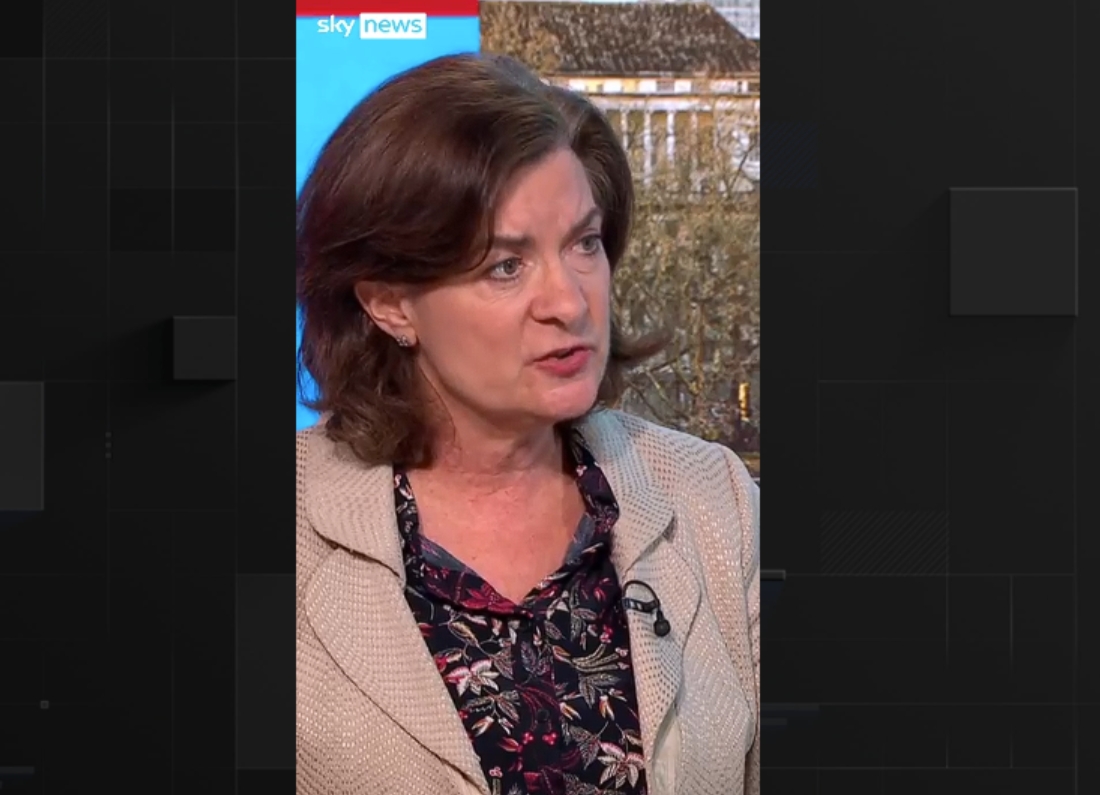
Wales’s First Minister Eluned Morgan has warned that May’s elections could have “profound implications” for the future of the United Kingdom, saying there is “a real possibility” the results could set the country on a path towards fragmentation if nationalist parties end up controlling devolved governments across Scotland, Wales and Northern Ireland.
Speaking on Sky News’ Sunday Morning with Trevor Phillips, the Welsh Labour leader said voters should “wake up” to the risk, arguing that the consequences would extend beyond public services and day-to-day government to the constitutional shape of the UK itself. “The danger is real,” she said.
The comments land as the UK approaches a major set of polls scheduled for Thursday 7 May 2026, when local government elections and mayoral contests will take place in parts of England alongside elections for the Scottish Parliament and Senedd Cymru.
Although the elections are not referendums on independence, they are widely viewed as political tests of momentum, legitimacy and governing credibility within the devolved nations. That makes the outcome potentially significant for the long-running constitutional arguments that have dominated British politics since devolution in 1999, and since the 2014 Scottish referendum on independence.
What is happening in May, and why it matters
May’s elections are unusual in their breadth. In Wales, voters will elect a new Senedd under a reformed system, with the legislature increasing to 96 members and moving to a new voting model. In Scotland, voters will elect all 129 MSPs at Holyrood.
In England, local council and mayoral elections will be held in many areas, though the picture is not uniform. The Guardian has reported that local elections are being delayed in 29 areas as part of local government reorganisation, meaning some voters will not take part on 7 May even as the wider set of contests goes ahead.
Morgan’s warning is rooted in a wider political argument about how these results could reshape the narrative around the Union. Devolution gives Scotland, Wales and Northern Ireland significant control over domestic policy areas, but the UK Parliament remains sovereign and constitutional change still requires complex legal and political steps. Even so, nationalist parties have long treated devolved elections as opportunities to claim democratic mandates for further powers, fresh referendums, or wider constitutional negotiation.
The “nationalist leaders everywhere” scenario
In Northern Ireland, a nationalist party already holds the First Minister position, with Sinn Féin’s Michelle O’Neill taking office in 2024 as part of the power-sharing executive. Morgan’s argument, as presented on Sky News, is that if nationalist parties also secure control in Cardiff and Edinburgh, the UK could enter a period where its devolved governments are led by parties whose long-term objective is to loosen or end the Union.
The claim is political rather than procedural. No single devolved election automatically triggers independence. But it can change the pressure on Westminster, shape intergovernmental relations, and intensify the debate over whether the existing constitutional settlement is sustainable.
Scotland and the referendum roadblock
The Scottish independence debate is likely to be prominent during the campaign. Scotland voted against independence in 2014, with 55.3% voting to remain in the UK and 44.7% voting to leave.
Since then, the legal position has hardened. In 2022, the UK Supreme Court ruled unanimously that the Scottish Parliament does not have the power to legislate for an independence referendum without Westminster’s consent. That means any future referendum would still require cooperation from the UK government, even if pro-independence parties win a strong parliamentary position in Holyrood.
This legal context is central to understanding why nationalist leaders often frame elections as “mandates” rather than direct triggers. Reuters reported last week that Scotland’s First Minister John Swinney said an SNP majority in May would be treated as a “green light” to push for another referendum, while acknowledging the Supreme Court ruling that blocks a unilateral vote.
Wales, the new Senedd, and the independence debate
Wales’s constitutional debate is different from Scotland’s, but the stakes are rising. The 2026 Senedd election will be the first held under a new structure that expands the chamber to 96 members and changes how MSs are elected.
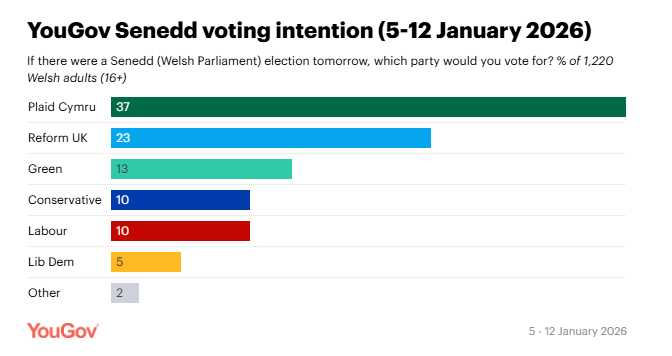
Morgan’s warning comes amid signs that Welsh politics could become far more fragmented. A YouGov poll for ITV Wales published earlier this month put Plaid Cymru in first place on 37% for Senedd voting intention, with Reform UK on 23%, the Greens on 13%, and Welsh Labour on 10%, level with the Conservatives in that poll. ITV Wales reported modelling suggesting the same poll could translate into Plaid becoming the largest party, though the final seat outcome will depend on the new electoral system and local dynamics.
Morgan has argued in other interviews that the May contest should not be treated as a protest vote on Westminster, warning that pro-independence parties could gain power in Cardiff and that the consequences for Welsh public services and the economy would be serious.
Starmer’s position and Labour’s internal nerves
Sky News reported Morgan also agreed the Prime Minister would “inevitably” face pressure if Labour suffers big losses in May, with commentary already focusing on potential leadership turbulence if results are poor. The same report noted that figures such as Wes Streeting and Andy Burnham are among those rumoured as potential challengers in that scenario.
The broader point for Downing Street is that devolved and local election results can shape Westminster authority even when Westminster is not on the ballot paper. Strong performances for nationalist parties in Scotland and Wales would likely intensify constitutional demands, while a poor showing for Labour could encourage internal critics to argue the government has lost its political grip.
Northern Ireland and the question of Irish unity
Northern Ireland’s constitutional pathway is set out differently again. Under the Good Friday Agreement framework and the Northern Ireland Act 1998, a “border poll” on Irish unity can be called by the UK Secretary of State for Northern Ireland, and must be called if it appears likely a majority would vote for a united Ireland.
That does not mean such a poll is imminent, and May’s elections do not directly decide that question. But Morgan’s warning about nationalist leadership across devolved institutions reflects the political reality that constitutional debates often run in parallel, with events in one nation influencing rhetoric and expectations in another.
A warning, and a campaign line
Morgan’s intervention can be read both as a genuine constitutional warning and as a campaign message aimed at Labour voters tempted to stay home or cast protest votes. By framing the May elections as a moment of national consequence, she is trying to raise the political cost of fragmentation and put constitutional stability on the ballot alongside public services, budgets and local delivery.
Whether voters accept that framing will depend on local conditions, trust in devolved administrations, perceptions of Westminster performance, and how effectively rivals make the case for change. What is clear is that May’s elections are shaping up as one of the most significant UK-wide political moments of the current parliament, with outcomes likely to echo well beyond town halls and devolved chambers.
Sky News said Morgan’s full interview will air on Sunday 25 January 2026 from 8.30am on Sunday Morning with Trevor Phillips.
You may also like: UK by-elections explained: what happens when MPs defect





Leave a Reply