

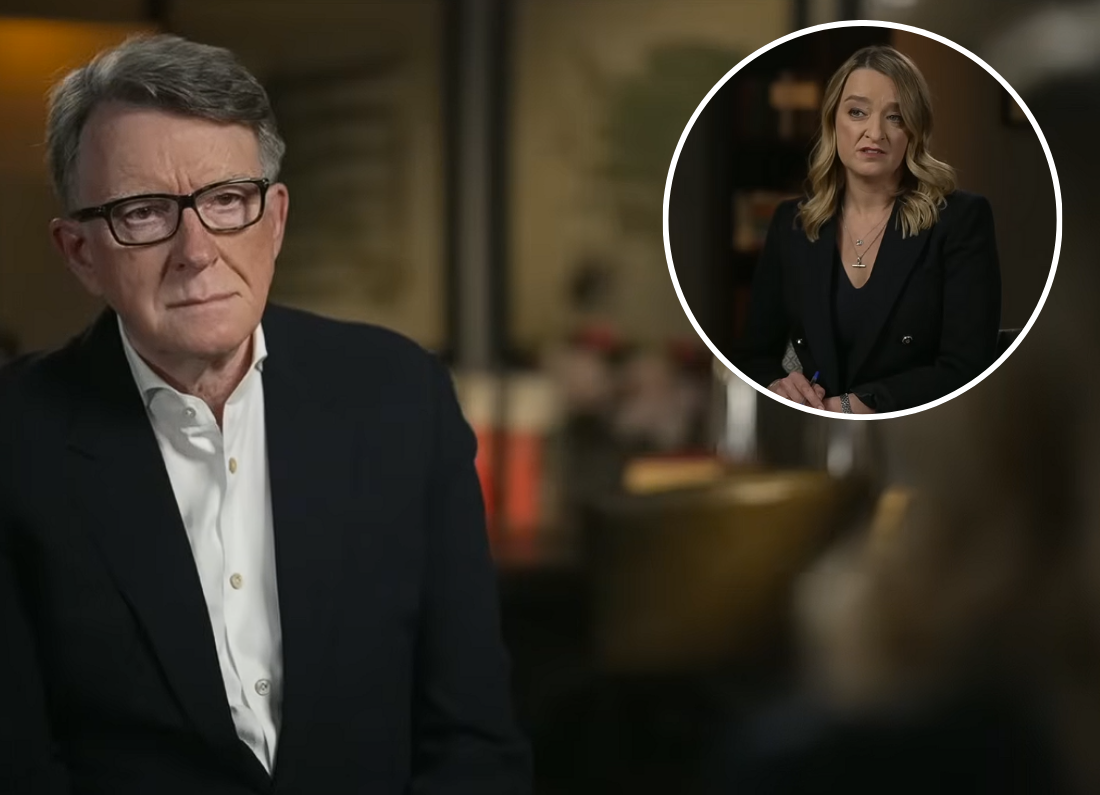
Peter Mandelson has issued an unequivocal apology for his association with convicted sex offender Jeffrey Epstein, reversing comments he made in a BBC interview just a day earlier.
The Labour peer, who was removed from his role as UK ambassador to the United States last year, admitted he was wrong to continue associating with Epstein after his 2008 conviction, saying he should have believed victims rather than the reassurances he was given.
His statement followed widespread backlash to remarks aired on BBC’s Sunday with Laura Kuenssberg, in which Mandelson suggested he had been unaware of Epstein’s crimes and distanced himself from responsibility for maintaining the relationship.
🧾 The apology and what Mandelson said
In a statement released on Monday night, Mandelson said he wanted to apologise “loudly and clearly” for believing Epstein following his conviction and for continuing the relationship afterwards.
“I was wrong to believe him following his conviction and to continue my association with him afterwards,” he said. “I apologise unequivocally for doing so to the women and girls who suffered.”
He added that while he was never complicit in Epstein’s crimes, he now accepted that believing Epstein’s denials and explanations had been a serious error. “His victims did know what he was doing, their voices were not heard and I am truly sorry I was amongst those who believed him over them,” Mandelson said.
📺 Fallout from the BBC interview
The apology marked a sharp change in tone from Mandelson’s interview the previous day, in which he attempted to explain his continued association with Epstein by saying he had been “at the edge of this man’s life”.
View on Threads
He also suggested that being a gay man in Epstein’s social circle meant he was kept separate from the financier’s sexual activities. The comments were widely criticised, with victims’ advocates and politicians arguing they minimised the seriousness of his decision to stand by Epstein after his conviction.
The interview was Mandelson’s first broadcast appearance since his removal as ambassador, and it quickly reignited scrutiny of emails and messages he sent to Epstein over several years.
📧 Emails that reignited the controversy
Among the most damaging revelations were emails sent by Mandelson to Epstein after the latter’s 2008 conviction for soliciting a child for prostitution.
In one message, Mandelson wrote: “I think the world of you and I feel hopeless and furious about what has happened. I can still barely understand it.”
He went on to suggest Epstein should “fight for early release” and described the conviction as something that “just could not happen in Britain”.
The emails also included a handwritten birthday message uncovered later, in which Mandelson referred to Epstein as his “best pal”, further undermining claims that their relationship was distant or incidental.
🏛️ Political consequences and removal as ambassador
Mandelson’s association with Epstein was known when Keir Starmer appointed him as UK ambassador to Washington, but Downing Street later said it had been unaware of the full extent of his communications with Epstein.
He was removed from the role in September after the emails became public, with No.10 acknowledging that Mandelson’s continued support for Epstein after his conviction made his position untenable.
The episode has raised broader questions about vetting, political judgment and accountability at senior levels of government.
View on Threads
⚖️ A belated reckoning
In his apology, Mandelson described his actions as a result of “misplaced loyalty” and “a most terrible mistake”, accepting that his trust in Epstein had been fundamentally wrong.
While stressing that he was never involved in Epstein’s crimes, Mandelson acknowledged that believing Epstein’s version of events meant failing to stand with victims at a critical moment.
The U-turn has been welcomed by some as overdue, but critics argue it comes only after intense public pressure and political consequences, leaving lasting damage to Mandelson’s reputation and to the government that appointed him.





Leave a Reply