

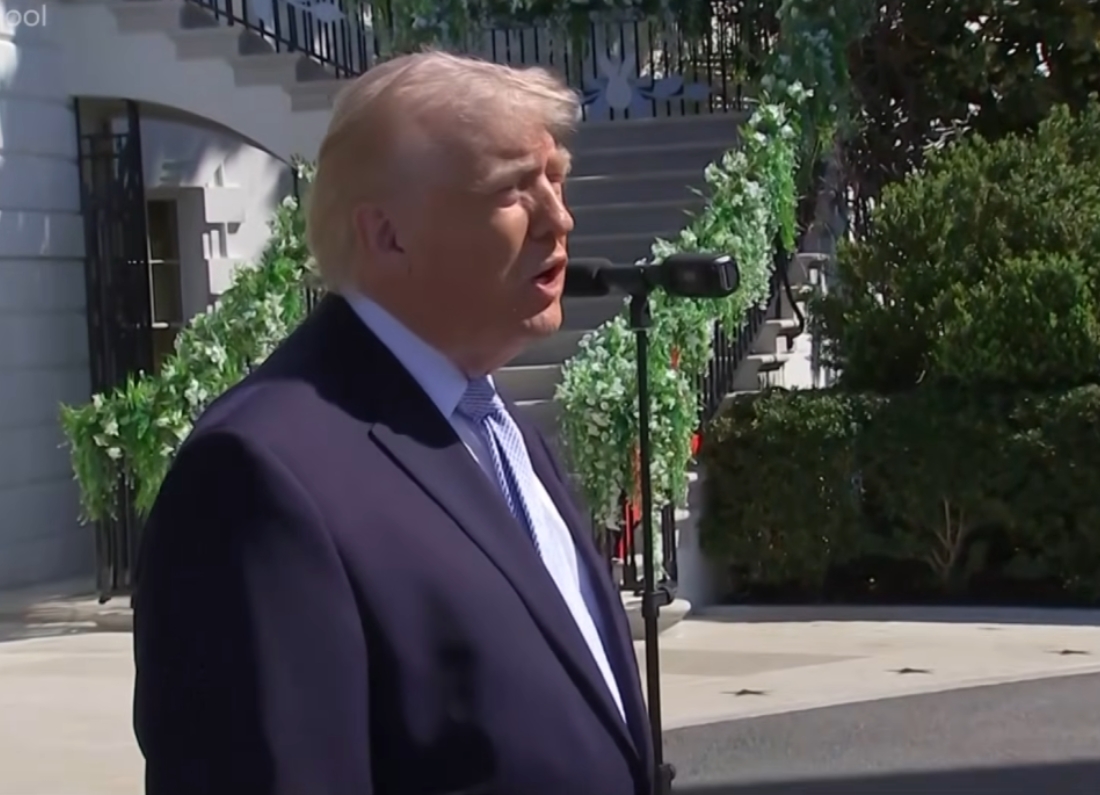
Donald Trump has escalated his public campaign against Keir Starmer to a new level, appearing to compare the British Prime Minister to Neville Chamberlain – the Conservative leader whose policy of appeasing Adolf Hitler in the 1930s became a byword for catastrophic misjudgement – during remarks at a White House Easter event on Monday.
The comparison, delivered at the same gathering where Trump’s spiritual advisor compared him to Jesus Christ, came as the US President also threatened to bomb Iran’s civilian infrastructure and claimed to have already achieved regime change in Tehran. It represents the most historically charged insult yet in a sustained campaign of personal attacks that has fundamentally damaged the UK-US relationship over the course of the past five weeks.
What Trump said
Speaking to reporters at the White House Easter event, Trump said the UK had “a long way to go” in its response to the Iran war – before adding the Chamberlain comparison.
“We won’t want another Neville Chamberlain, do we agree? We don’t want Neville Chamberlain,” he said.
The remark was characteristically oblique – Trump did not name Starmer directly – but the context was unmistakeable. He had spent weeks attacking the British Prime Minister for refusing to join American offensive operations against Iran, calling him “not Winston Churchill” and dismissing Britain as no longer the “Rolls-Royce of allies.” The Chamberlain reference is the logical escalation of that Churchill comparison: where Churchill is the heroic wartime leader who stood firm, Chamberlain is his opposite – the man who tried to placate a dangerous aggressor and was proved catastrophically wrong.
The same Easter event also saw Trump mock Starmer in a weak voice, apparently imitating the Prime Minister, and describe Britain as “not our best” ally. He repeated his attacks on the Royal Navy, referencing what he described as Britain’s “old” aircraft carriers. Downing Street noted that Trump had never actually asked for those vessels – a detail that has become a recurring source of dispute between the two governments about who said what and when.
Who was Neville Chamberlain – and why does the comparison sting?
Neville Chamberlain served as Conservative Prime Minister from 1937 to 1940. He is principally remembered for the policy of “appeasement” – an attempt to prevent war with Nazi Germany by accommodating Hitler’s territorial demands rather than confronting them directly.
The defining moment came in September 1938 at the Munich Conference, where Chamberlain agreed to allow Germany to annex the Sudetenland region of Czechoslovakia in exchange for what he called a guarantee of peace. Returning to Britain, he waved a piece of paper bearing Hitler’s signature and declared it represented “peace for our time.” Britain declared war on Germany less than a year later.
Chamberlain’s legacy – a well-intentioned man who fundamentally misread the nature of the threat he faced and enabled rather than deterred aggression through weakness – has made his name a political insult invoked whenever a leader is accused of failing to confront evil or standing aside while others act.
Trump’s use of it is pointed. The implicit argument is that Starmer, by refusing to commit British forces to offensive action against Iran, is repeating Chamberlain’s error: mistaking inaction for wisdom, and allowing dangerous actors to operate unchallenged while wrapping diplomatic passivity in the language of legality and prudence.
The government’s response
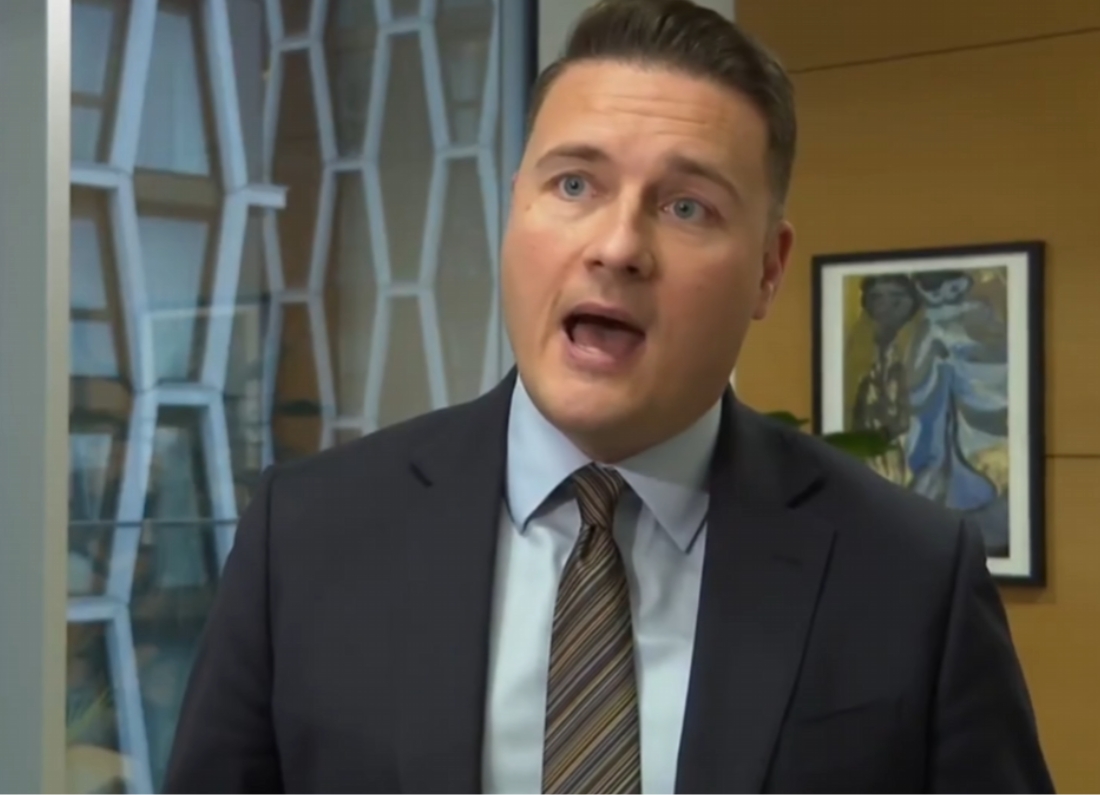
The British government’s response on Monday was notably measured. Education Secretary Bridget Phillipson, asked about Trump’s remarks, declined to engage with the historical comparison directly, instead restating the government’s position on the conflict.
“It is not language or an approach that this Government would be taking,” she said, referring to Trump’s rhetoric. “Our approach as a UK Government, the approach that the Prime Minister Keir Starmer has set out, is that we are not getting involved in offensive action, we won’t be getting involved in offensive action.”
That framing – calm, legal, measured, resistant to provocation – has been the government’s consistent response to each successive wave of Trump attacks. Starmer himself has repeatedly described his approach as acting in the British national interest regardless of “pressure” or “noise” from elsewhere.
Whether that composure is interpreted as dignified statesmanship or as the Chamberlain-style passivity Trump is accusing him of depends entirely on how one views the underlying question: was Starmer right to keep Britain out of the Iran war, or has he misread what the moment required?
The Iran war threats
The same Easter event produced another significant development, as Trump issued what critics described as a threat to commit war crimes. In an expletive-laden Truth Social post on Sunday, he set a deadline – 8pm US time on Tuesday – for Iran to reopen the Strait of Hormuz, threatening to bomb Iran’s civilian infrastructure if the deadline was not met.
The comments sparked accusations that the president was threatening to commit war crimes. Under international humanitarian law, attacks on civilian infrastructure are prohibited unless those facilities constitute legitimate military targets – a threshold that is fiercely contested in the context of energy and power facilities.
Trump also used the Easter event to claim that his military campaign had already achieved “regime change” in Iran, citing the killing of Iran’s previous supreme leader Ayatollah Ali Khamenei. He described the new Iranian leadership as “much more reasonable” and suggested negotiations were progressing. A day earlier, he had referred to the Iranian regime as “crazy bastards” on Truth Social.
The relationship – damage and what comes next
The Chamberlain comparison marks a new low in a relationship that has deteriorated steadily since the Iran war began on 28 February. What started as a dispute over access to Diego Garcia has evolved into a sustained personal campaign against Starmer that has touched on his courage, his judgement, his military assets, his King, his history, and now his place in the pantheon of British political failure.
Diplomatic and political figures have said Starmer is right to brush off the criticism but warned that the relationship is very badly damaged. One senior diplomat suggested Starmer should now focus on building ties with Canada, Australia and mainland Europe, adding it was hard to see how the relationship could recover.
The timing is particularly delicate with King Charles’s state visit to Washington scheduled for later this month. British diplomats have pinned significant hopes on the King’s personal rapport with Trump as a mechanism for repairing some of the damage at the governmental level. Whether a state dinner and a congressional address can achieve what weeks of diplomacy have not – and whether Trump’s affection for the monarchy can be separated from his contempt for the Prime Minister – remains to be seen.
For Starmer, the Chamberlain jibe presents a particular challenge. He cannot easily answer it without either escalating with Trump or appearing to endorse the original insult. The most effective answer is the one he has been making implicitly for weeks: that history may well judge his restraint as wisdom rather than weakness, and that the prime ministers who are actually remembered for disastrous wars tend not to be the ones who declined to start them.
You may also like: Reform UK’s ‘shop window’ council is a ‘horror show’ one year on as DOGE plan backfires





Leave a Reply