

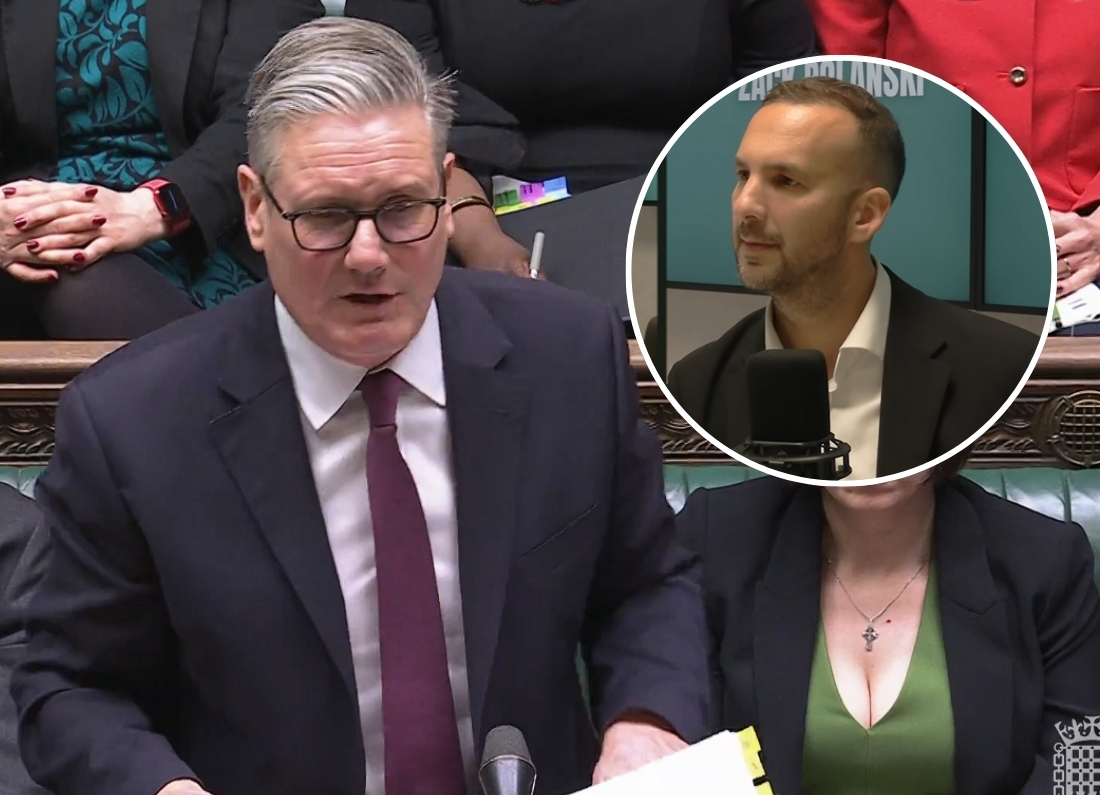
Keir Starmer was pulled up by Commons Speaker Sir Lindsay Hoyle during a tense PMQs exchange after the prime minister turned a question from Green MP Ellie Chowns into an attack on her party leader, Zack Polanski.
The clash came as Polanski’s recent comments about Britain’s defence posture and US military cooperation continue to ripple across Westminster, with Labour keen to portray the Greens as unserious on national security and the Greens accusing Starmer of punching down while ducking bigger geopolitical threats.
🏛️ What happened in the Commons, and why the Speaker intervened
During the session, Starmer used Chowns’ question to challenge what he described as Polanski’s approach to the current global situation, accusing him of wanting Britain to withdraw from NATO, remove the US from bases on UK soil, negotiate with Vladimir Putin and give up the UK’s nuclear deterrent. Starmer then added that the position was “as reckless and irresponsible” as what he called the Greens’ plan to legalise heroin and crack cocaine.
After Starmer’s remarks, Hoyle intervened to remind him of Commons practice, telling the prime minister: “we don’t ask the opposition questions”, as MPs come to the PM rather than the other way round.
🌍 The Polanski row that set this off
Polanski has been pushing a broader argument that the UK needs to reduce its reliance on the United States, warning that British security policy risks being shaped by the mood of Donald Trump. In an interview, he said the UK should be “reviewing US bases on UK soil” and looking at a “genuine strategic defence review”, while also backing leaving NATO as part of a wider shift away from US-led defence dependence.
Those comments landed as the government tries to keep transatlantic relationships stable while tensions around Greenland and Arctic security dominate diplomatic conversations. Labour’s line is that this is exactly the wrong moment to weaken alliances. The Greens argue it is precisely the moment to rethink them.
🇬🇧 What “US bases in the UK” actually means in practice
The US does not “own” British bases, but American forces operate from a number of UK sites under long-standing defence agreements. Some locations are widely known because they host major US activity, including RAF Lakenheath and RAF Mildenhall in Suffolk, RAF Menwith Hill in North Yorkshire and RAF Croughton in Northamptonshire.
The UK government also publishes lists of sites affected by special legal arrangements linked to policing and protest rules, which include several locations associated with US operations such as RAF Lakenheath, RAF Mildenhall, RAF Menwith Hill and RAF Croughton.
Supporters of the current arrangement argue it strengthens deterrence, intelligence-sharing and rapid response capability. Critics argue it can reduce UK autonomy, creates community tensions, and ties Britain closer to US foreign policy choices even when UK public opinion diverges.
🔥 A bruising PMQs as tempers fray
The Speaker’s intervention was not the only flashpoint. The same session saw Conservative shadow transport secretary Richard Holden ordered to leave the chamber after repeated interruptions, with Hoyle warning about behaviour and telling him to “go out” after he refused to stop heckling.
That context matters: with party tempers already high, Starmer’s decision to go after Polanski during a question from Chowns helped turn a policy exchange into a wider Westminster drama – the sort of thing Labour says voters are tired of, but which continues to dominate the political weather.
🧭 Why Labour picked this fight now
Labour’s political calculation is straightforward. If the Greens start looking like a credible national alternative to disillusioned progressive voters, Labour wants the dividing line to be “serious government” versus “protest politics”. Defence is an easy battleground for that contrast, because it allows Starmer to frame Green positions as risky at a moment of heightened international tension.
Polanski, for his part, is trying to turn the argument back on Labour: that it is reckless to remain structurally dependent on a US president who openly uses tariffs, leverage and threats as tools of statecraft, and that a defence policy built around permanent US basing is not a sustainable long-term bet.
🗳️ What happens next
The row is unlikely to disappear quickly. Polanski has already elevated the subject into a wider campaign message about independence from US influence, while Labour appears determined to keep the spotlight on the most controversial parts of his pitch – leaving NATO and reassessing US access – rather than allowing the Greens to keep the conversation on domestic issues where Labour is more exposed.
And inside the Commons, the Speaker’s warning is a reminder that even in a hyper-partisan moment, procedure still matters – and that PMQs theatrics can still backfire when they look like point-scoring over answers.
You may also like: Greens take Derbyshire by-election seat from Reform in Horsley upset




Leave a Reply