

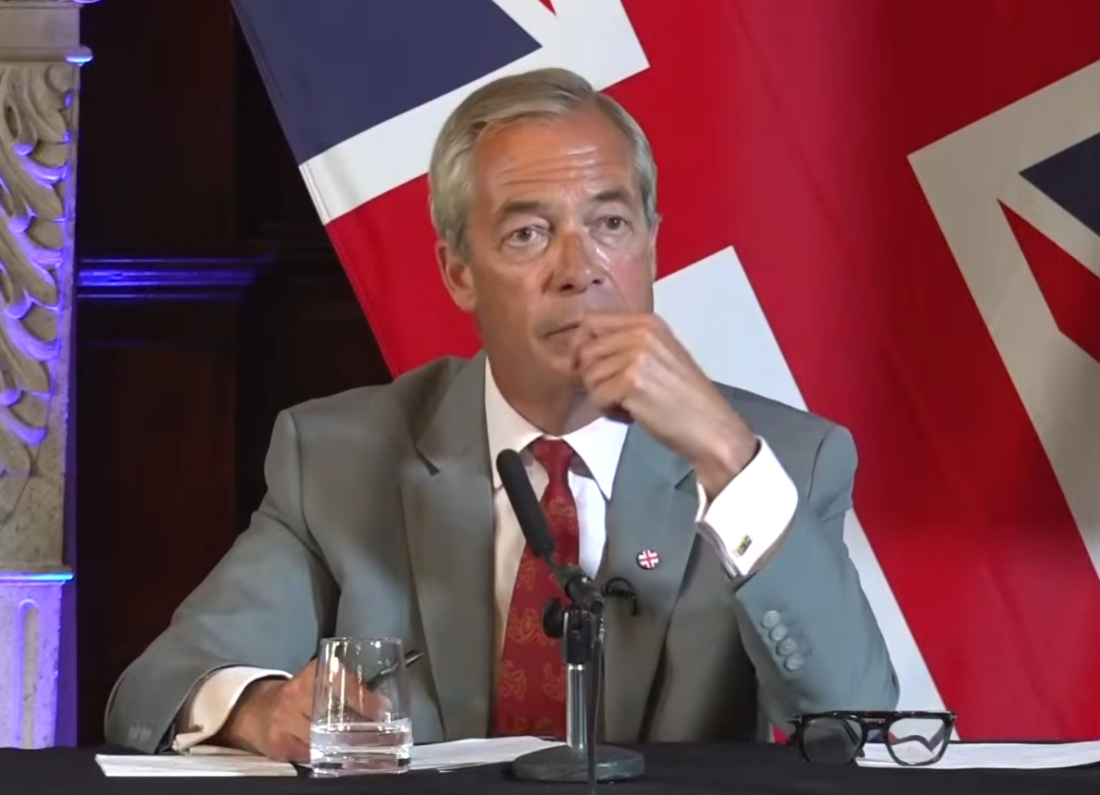
One of the countries Farage named as a possible destination for British prisoners has already ruled itself out.
Reform unveiled its prison policy on Monday, promising to remove foreign nationals from British jails and make them serve sentences either back home or in prisons rented elsewhere. Farage named El Salvador and Kosovo as possible destinations, and referred to Estonia and Lithuania as “Baltic state options.” Estonia’s answer came within hours: a government spokesperson told Metro the country was “not considering any additional prison rental cooperation agreements with other governments.” That doesn’t sink the whole plan, but it does remove one of the options Farage floated while announcing it.
What Reform is actually proposing
The policy document promises 22,000 new prison places by 2031. Around 12,000 would come from modular “Nightingale prisons” built on Ministry of Defence land. The remaining 10,000 would supposedly come from transferring every foreign national currently in British prisons overseas.
“We will deport all foreign nationals from our jails,” Farage said at the launch. “If their home countries won’t take them back, we will send them to serve their sentences in countries like El Salvador and Kosovo.” Zia Yusuf said the programme would free space and let Reform end early release for serious offenders. The party claims the Nightingale prisons could open within 18 months, at a construction cost of roughly £5bn. Farage said Reform had held preliminary talks with El Salvador and that party chairman Lee Anderson would visit for further discussions. No agreement’s been published. No price per prisoner, no criteria for who’d be eligible for transfer, no legal framework for their detention.
The 10,000 figure doesn’t quite add up
Ministry of Justice figures show 10,134 foreign nationals in custody on 30 June 2026, 12% of the prison population. That’s not 10,134 convicted prisoners ready for immediate transfer, though. Of that total, 3,283 were on remand, not yet sentenced. A further 420 were classified as non-criminal prisoners. Only 6,431 were actually serving sentences. Reform’s promise of 10,000 freed places counts thousands of people who are either awaiting trial or aren’t serving a criminal sentence at all, and sending someone accused of a crime abroad before a British court has even ruled on their case is a very different thing from transferring a convicted prisoner. The policy doesn’t explain how remand prisoners would be handled, despite including them in the headline total.
Estonia already has a customer, just not Reform
Estonia isn’t opposed to overseas prison arrangements generally, it recently agreed a deal letting Sweden use 400 cells at Tartu Prison for up to 600 inmates, with Sweden paying at least €30.6m a year to maintain 300 places, after negotiation and parliamentary approval. More than 250 staff are being recruited and trained before it’s fully operational. That deal proves renting cells abroad is possible. It also shows exactly how much negotiation, legislation, staffing and money it takes to actually get there.
Estonia’s refusal wasn’t really a surprise either. Justice Minister Liisa-Ly Pakosta said back in February the government would honour the Sweden agreement but wasn’t planning similar deals with anyone else. Farage named Estonia as an option anyway.
Deportation and prisoner transfer aren’t the same thing
Britain already has 110 prisoner-transfer agreements, some compulsory, some requiring the prisoner’s consent, letting foreign nationals convicted here serve the rest of their sentence in their home country. Reform’s proposing something different: sending people to a third country they may have no connection to at all. That needs the receiving government’s agreement, a legal framework for enforcing British sentences, and rules on security, healthcare, family contact, release dates and post-sentence responsibility. Britain would also remain responsible for ensuring prisoners aren’t subjected to torture or inhuman treatment.
Amnesty International has specifically criticised including El Salvador, whose CECOT prison is notorious for severe conditions and detaining people without conventional judicial safeguards. Reform says prisoners would be treated lawfully and anyone transferred would be banned from returning to Britain. The published document offers little detail on how either promise would actually be enforced.
Labour calls it unworkable
“This isn’t a serious prison plan,” a Labour spokesperson said. “Nigel Farage knows full well that renting prison places overseas would take years to arrange and does nothing to tackle the pressures we face now.” The government’s already expanded early removal of eligible foreign offenders, deporting them before their sentence ends, a separate programme from what Reform’s proposing here.
The pressure on British jails is genuinely real, years of underinvestment, closures and delayed construction have left the estate running with almost no spare capacity. Reform’s plan tries to address that with modular construction and overseas transfers. Its first problem is that a country it publicly named as a potential partner said no on the same day.
Estonia’s refusal doesn’t stop Reform pursuing deals with El Salvador, Kosovo, Lithuania or anyone else. It does show that naming a country at a press conference is considerably easier than actually getting it to take thousands of Britain’s prisoners. Right now Reform has a policy document, a planned Lee Anderson visit, and a list of possible destinations. It doesn’t have a signed agreement with any of them.












Leave a Reply