

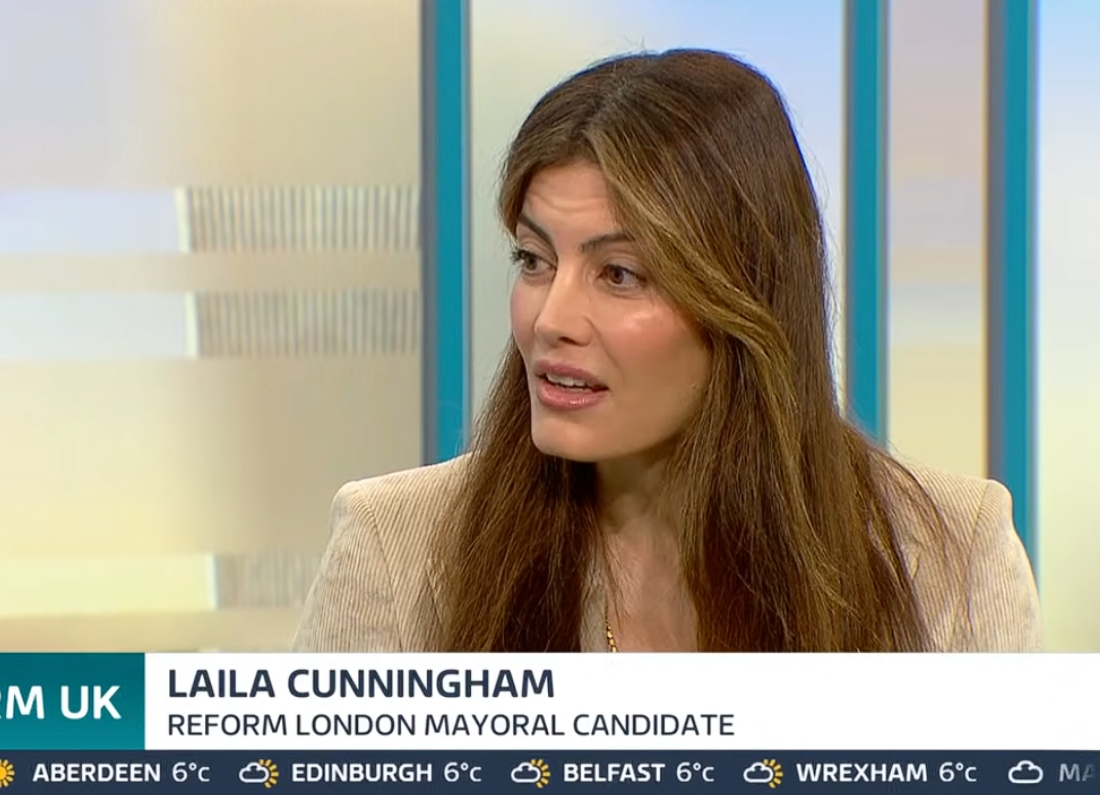
Not everyone in Reform UK is celebrating the arrival of Robert Jenrick, with the party’s London mayoral candidate publicly criticising his record and questioning whether he belongs in a movement that claims to be anti-establishment.
While Reform leader Nigel Farage unveiled Jenrick as his latest high-profile recruit just hours after the former Conservative minister was sacked from the shadow cabinet, comments made days earlier by Reform’s London mayoral candidate Laila Cunningham suggest unease within the party over welcoming another senior Tory figure.
Jenrick’s defection came after Conservative leader Kemi Badenoch said she had uncovered “clear, irrefutable evidence” that he was planning to leave the party in a way designed to damage colleagues. Yet within Reform itself, questions are already being raised about whether Jenrick represents renewal or repetition.
🗣️ Reform’s London candidate criticises Jenrick record
Less than a fortnight before Jenrick formally joined Reform, Laila Cunningham told The Telegraph’s podcast that she blamed him for failures in the Conservative government’s handling of asylum accommodation.
“It was under him that the hotel migrant situation flourished,” Cunningham said, referring to Jenrick’s time as immigration minister. “We had a peak amount of hotels.”
Her remarks were notable because they echoed criticisms long made by Reform itself, accusing successive Conservative governments of losing control of migration policy while relying heavily on hotels to house asylum seekers.
Cunningham also suggested that former Conservative ministers had failed to take responsibility for their time in office, saying she did not believe the party had properly atoned for its record in government.
🔄 ‘Anti-establishment’ claims under strain
Reform has repeatedly presented itself as an insurgent alternative to the political mainstream, attacking what it describes as a closed Westminster system dominated by career politicians. However, Jenrick’s arrival means the party has now accepted more than 20 former Conservative MPs or senior figures since the last general election.
That pattern has prompted criticism from opponents who argue that Reform is recycling figures associated with policies it once condemned. Cunningham’s comments highlight that this concern is not confined to rival parties but exists within Reform’s own ranks.
Farage has defended his recruitment strategy by arguing that senior Conservatives are defecting because they recognise Reform as the future of the right. But the contrast between that argument and Cunningham’s assessment of Jenrick’s record exposes a potential fault line.
📄 Turmoil surrounding Jenrick’s exit
Jenrick’s defection followed a dramatic day for the Conservatives, with Badenoch announcing his dismissal after discovering evidence of his plans. One shadow cabinet minister later claimed Jenrick had left a printed copy of his resignation speech in his office, describing the episode as “like something from The Thick of It”.
At a press conference with Farage in central London, Jenrick praised the Reform leader for standing “for the real change we need” and urged voters to back the party. He said both Labour and the Conservatives had “forfeited the right to govern”.
The display of unity contrasted sharply with the public hostility the two men had shown towards each other in recent years.
🔥 A history that complicates the alliance
Jenrick and Farage have repeatedly questioned each other’s competence and sincerity. As recently as four months ago, Jenrick argued that Farage was not suited to high office, while Farage has long described Jenrick as lacking conviction and labelled him “Robert Generic”.
Those attacks have not been withdrawn, and neither man addressed their past remarks when announcing the defection. Cunningham has also not commented publicly since Jenrick’s formal arrival in Reform.
🧭 Internal tensions or manageable dissent
Whether Cunningham’s criticism develops into a wider internal dispute remains unclear. Reform has historically been tightly controlled by Farage, with limited tolerance for public disagreement. However, as the party expands and attracts more high-profile defectors, managing internal cohesion may become more difficult.
For voters drawn to Reform’s promise of a clean break from Conservative rule, the question is whether figures like Jenrick strengthen that case or undermine it. Cunningham’s remarks suggest that at least some within the party are uneasy about welcoming politicians they once blamed for the very failures Reform claims to oppose.
Neither Cunningham nor Reform UK responded to requests for comment on whether her remarks still reflect her position following Jenrick’s defection.
Related: Badenoch walks out of interview after refusing to call Jenrick a traitor





G Anstee
Spot on article
Farage making big mistakes in taking on these failed grifters
Undermines the fundamental reason why I (as I have no doubt many others) moved allegiance from Con to Reform.
The promise was NEW in all respects & now same old I fear
I have cancelled my Reform membership
Where do I go from here? Who knows, as very disappointed in my hopes being dashed!?