

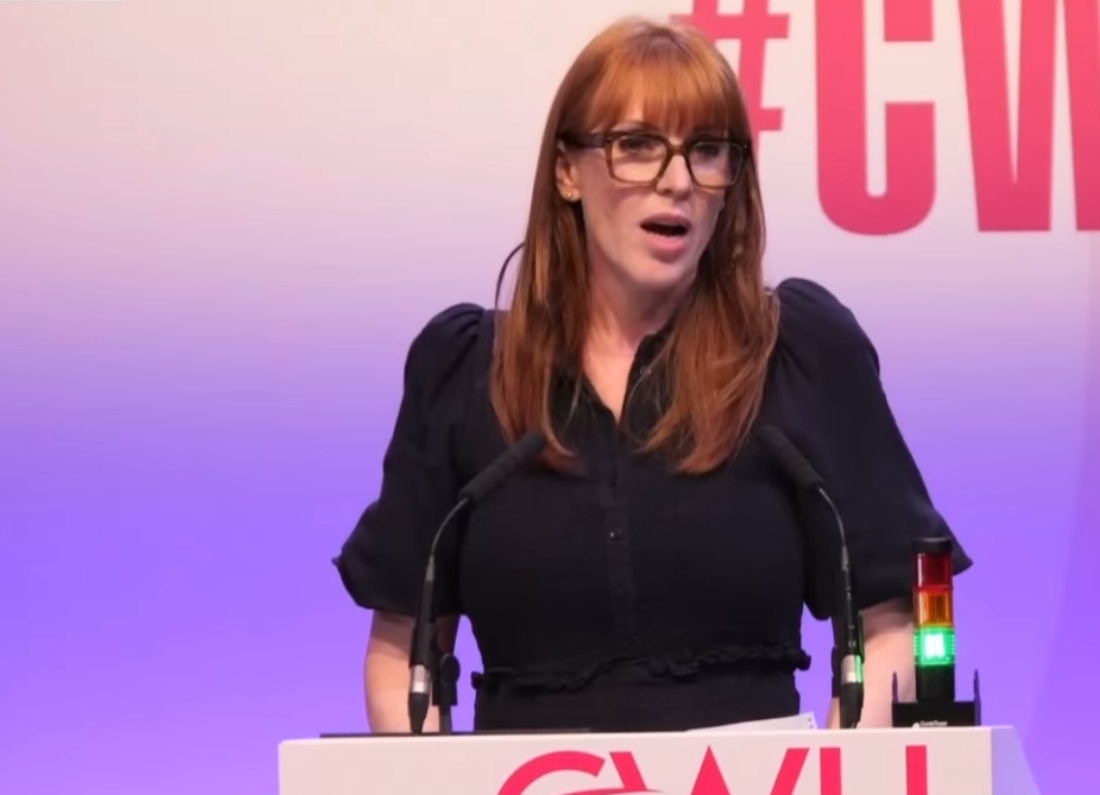
Angela Rayner has accused Nigel Farage of offering voters “same old Thatcher” politics as Reform UK tries to present itself as a party for working people.
The former deputy prime minister dismissed Reform’s recent attempts to build links with trade unions, saying the party should focus first on its own record on workers’ rights.
“They need to start looking after the workers first,” Rayner told the Mirror. She said Farage’s politics were rooted in “vested interests, privatisation, insecure work” rather than support for ordinary working-class people.
Her intervention comes as Reform attempts to widen its appeal beyond its traditional anti-immigration and anti-establishment message. Farage has recently spoken about building a “sensible relationship” with trade unions, while his party has tried to present itself as a new home for voters who feel Labour no longer represents them.
But unions have pushed back hard. The TUC and several major unions accused Reform of “cosplaying” as a champion of workers while backing policies they say would weaken job security, sick pay and protections against insecure work.
Rayner’s argument is that Reform cannot claim to be on the side of workers while promising to scrap Labour’s employment reforms. Those reforms, passed through the Employment Rights Act 2025, include changes to statutory sick pay, day-one family leave, protections for pregnant workers, restrictions on exploitative zero-hours contracts and stronger rules around fire and rehire. The government has described the law as the biggest upgrade to workers’ rights in a generation.
Reform has taken a very different view. Earlier this year, Richard Tice announced plans for what the party called a “Great Repeal Act”, aimed at scrapping Labour’s worker and renter protections. The Guardian reported that Reform wanted to repeal the Employment Rights Act and the Renters’ Rights Act, arguing that the measures would hold back business and job creation.
That is the political gap Rayner is trying to expose.
“I just see Farage as same old Thatcher,” she said. “Vested interests, privatisation, insecure work, standing up for vested interests as opposed to standing up for the ordinary working class people of this country.”
It is not a subtle comparison, but it is a deliberate one. Labour still sees Thatcherism as one of the clearest dividing lines in British politics, especially in former industrial areas where memories of deindustrialisation, union defeats and cuts to public services still carry weight.
Rayner said she worries about what a Reform government would mean for people who already feel politics is failing them.
“They’re proving that they’re not here for bringing back industry into the UK,” she said. “They’re not here for making sure that work pays for people, that they have that secure employment, and not here for really delivering the housing that people need in this country.”
Her warning was blunt. “We saw what Thatcherism did to this country, and to working class people, to the industries, it gutted it out.”
The problem for Labour is that Reform is not trying to win over trade union leaders. It is trying to win over workers who may once have voted Labour, but now feel the party has become too cautious, too managerial or too distant from their everyday lives. That is why Farage’s pitch to unions matters even if union leaders reject it. He is trying to say Reform understands the frustrations of the workplace better than Labour does.
Rayner’s answer is that Reform’s policies tell a different story.
The battle over workers’ rights is now becoming one of the sharper dividing lines between Labour and Reform. Farage can talk about working-class anger, but Labour wants to make him defend the practical consequences of repealing employment protections. Would sick pay be weaker? Would parental leave rights be rolled back? Would employers have more freedom to fire and rehire staff? Would insecure work become easier rather than harder?
Those are the questions Labour believes can cut through with voters who may like Farage’s style, but do not necessarily want weaker rights at work.
The timing also matters because Reform is under pressure in the Makerfield by-election, where its candidate Robert Kenyon has faced sustained criticism over past online posts about women. The Guardian reported that Carol Vorderman demanded an apology from Kenyon over offensive social media posts, while ITV reported that Reform backed him and said it had no plans to investigate.
The Independent reported that Rayner criticised Kenyon after resurfaced posts included a suggestion that women cannot “ref, drive or give directions”. Kenyon has faced a backlash over the posts, some of which were deleted, and the row has become part of the wider argument about Reform’s attitude to women and equality.
Rayner said she accepts people can change their views or regret things said in the past, but argued that Kenyon’s refusal to apologise made the situation worse.
“I don’t want a representative who thinks it’s okay to make sexist, misogynistic jokes and then double down on them,” she said.
That line feeds into Labour’s broader attack. It wants to present Reform not as a fresh working-class movement, but as an old right-wing project in new clothes: hostile to unions, weak on workers’ rights, dismissive of equality law and too willing to excuse candidates who say offensive things.
Reform’s counter-argument is that Labour has lost touch with working people and that voters care more about immigration, public services, housing, wages and the cost of living than Westminster rows over old social media posts. That is why the party has been able to take votes from both Labour and the Conservatives in parts of the country where traditional party loyalties have weakened.
But Rayner’s attack shows how Labour intends to fight back. It will not simply call Reform extreme. It will try to make Farage own the consequences of his economic and employment policies.
The Thatcher comparison is part of that strategy. Labour wants voters to hear Farage talk about ordinary workers and then look at what his party proposes to do to employment law. It wants to argue that Reform’s pro-worker language does not match its programme.
Rayner put it more directly.
“If we have more of that, it is not going to help rebuild our country,” she said. “It’s going to damage our country.”
The challenge for Labour is whether that warning still lands with voters who have already decided the old political arguments have failed them. The challenge for Reform is whether it can keep presenting itself as the party of workers while pledging to undo many of the rights unions fought for.
That is the fight now taking shape. Farage wants to raid Labour’s working-class vote. Rayner is trying to remind those voters what, in her view, Reform would actually do once the slogans stopped and the legislation began.









Leave a Reply