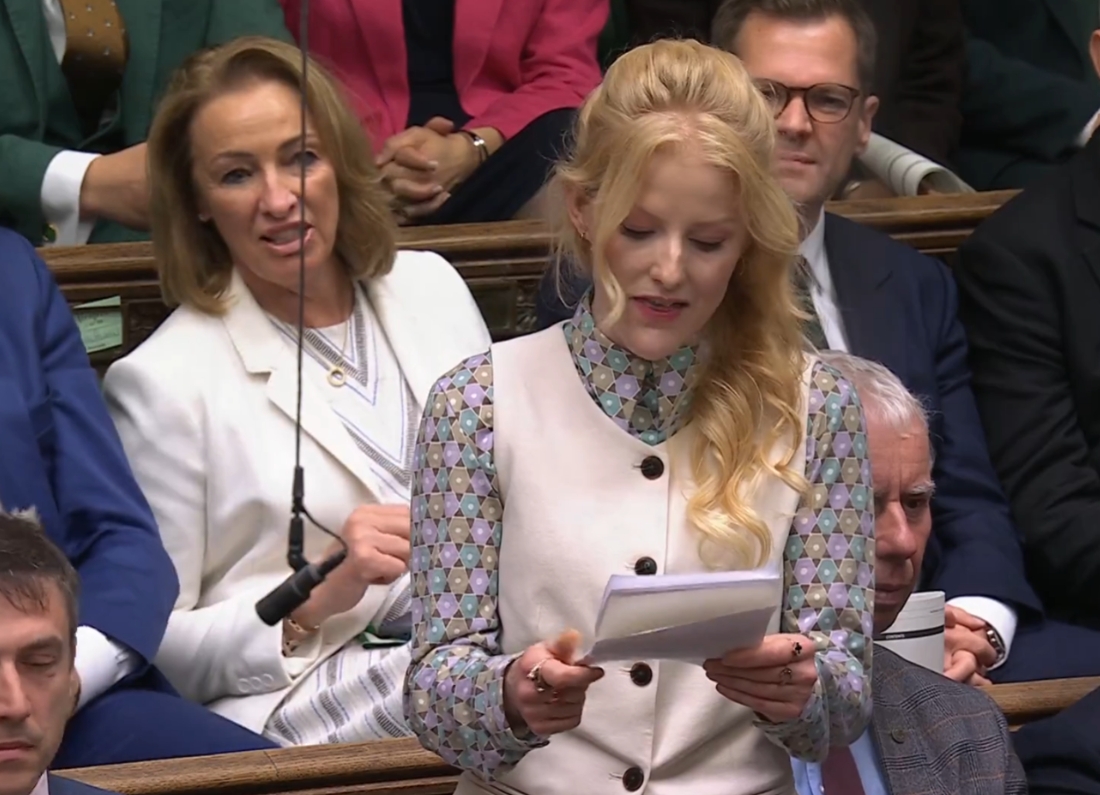
A petition demanding the House of Commons ban the sale and consumption of alcohol in all parliamentary venues has launched after weeks of public debate about MPs drinking before votes – and needs 10,000 signatures for a government response and 100,000 to be considered for a full parliamentary debate. It arrives after Green MP Hannah Spencer raised the culture at PMQs, the chamber responded by shouting “get a life” at her, and the Treasury Secretary defended Commons drinking by saying MPs are “not conducting open heart surgery.”
The petition was created by Iwan ap Dafydd and closes on 26 November 2026. It states: “I believe drinking is incompatible in the modern workplace. MPs have a crucial role in passing laws which impacts the lives of the citizens of the UK. I believe that the consumption of alcohol, whilst making important decisions that can have far reaching consequences, is clearly not in the national interest.”
It has collected 878 signatures since its publication on 26 May 2026.
You can sign the petition here: petition.parliament.uk/petitions/768417
What Hannah Spencer said – and how the chamber responded
The petition comes directly in the wake of Hannah Spencer’s PMQs intervention, which sparked the most visible public debate about parliamentary drinking culture in years. As we reported in our full PMQs piece, Spencer – Green MP for Gorton and Denton, who won the seat in a byelection in February – used her first ever PMQs question to ask whether it was appropriate for MPs to drink before voting on legislation affecting child poverty, disabled rights, housing and the climate crisis.

The response from fellow MPs was immediate and revealing. “Get a life” and “sort your policies out” came from the benches. The chamber, which earlier that same session had voted on measures affecting the lives of millions of people, was apparently unwilling to sit with the question Spencer had put.
Spencer had previously told PoliticsJoe she felt “really uneasy” about parliamentary drinking culture and that she could “smell the alcohol when people are in between votes.” The distinction she was making was not about a glass of wine with dinner at 11pm on a late sitting night. It was about drinking before afternoon votes on legislation with real consequences.
What the Treasury Secretary said – and what he missed
The government’s public defence came from Chief Secretary to the Treasury Darren Jones, who told LBC that MPs are “office workers, not conducting open heart surgery.” As we reported in our Darren Jones piece, Jones acknowledged he does not personally frequent the Commons bars and was defending the behaviour of colleagues he does not share.

The specific analogy he chose to use undermined his own argument. He mentioned call centres as an example of a workplace where people working late are allowed to eat. Call centre employees are not permitted to drink alcohol during their shifts. He also mentioned banking, legal services and insurance. None of those workplaces permit drinking during working hours.
The “not conducting open heart surgery” formulation was always going to generate a list of other occupations that are also not open heart surgery and also cannot involve drinking at work: bus drivers, pilots, train drivers, teachers, nurses, care workers, construction workers, scaffolders. The bar for alcohol-free working is not set by the proximity of your job to a scalpel. It is set by whether your decisions affect other people’s safety, wellbeing and lives.
MPs’ votes on child poverty, housing, welfare reform and climate legislation affect millions of people’s lives. The standard they are held to for sobriety during those votes is, on the evidence of the Commons bars, lower than that applied to a call centre worker taking customer complaints.
The numbers that frame the debate
Parliamentary bars cost taxpayers an estimated £7.4 million annually. A pint is sold at £5.45 – nearly £2 below the going rate at the pub directly opposite the Houses of Parliament across the Thames. Despite this subsidy, the bars still run at a £56,000 annual loss because they pay no rent on the publicly owned estate.
YouGov polling found that 76% of Britons consider it unacceptable for MPs to drink before votes. 52% consider it completely unacceptable. These were not figures generated by Spencer’s intervention – they reflect longstanding public opinion that has simply not had a political vehicle until now.
The 76% figure is worth sitting with. It is a larger majority than the one that elected the current government. It is larger than any hypothetical poll on the Labour leadership. It represents near-consensus across party lines, age groups and regions. The British public, in overwhelming numbers, believes that MPs should not drink before they vote on other people’s lives. The British parliament, in its immediate response to Spencer, said “get a life.”
How the petition process works
Under the UK petition system, if this petition reaches 10,000 signatures the government is required to formally respond. At 100,000 signatures it is considered for a full parliamentary debate. The Petitions Committee decides whether to schedule the debate, but a six-figure petition commands genuine institutional attention.
The petition closes on 26 November 2026. That gives six months for the 10,000 target to be reached. Given that 76% of Britons already agree with its central proposition, the petition’s success is primarily a question of reach rather than persuasion.
It should also be noted that Spencer’s intervention has already produced an unexpected result: public discourse about a democratic institution’s basic conduct that the institution itself has not produced. The petition is the next step in that conversation becoming formal.
Sign the petition
The petition is at: petition.parliament.uk/petitions/768417
It costs nothing to sign, takes thirty seconds and requires confirmation via email. It currently has 878 signatures. It needs 10,000 for the government to have to respond to it.
Whether MPs conducting the business of the nation should be permitted to drink while doing so is not a complex question. 76% of the public already have an answer. The petition is a way of making sure the government has to articulate one too.