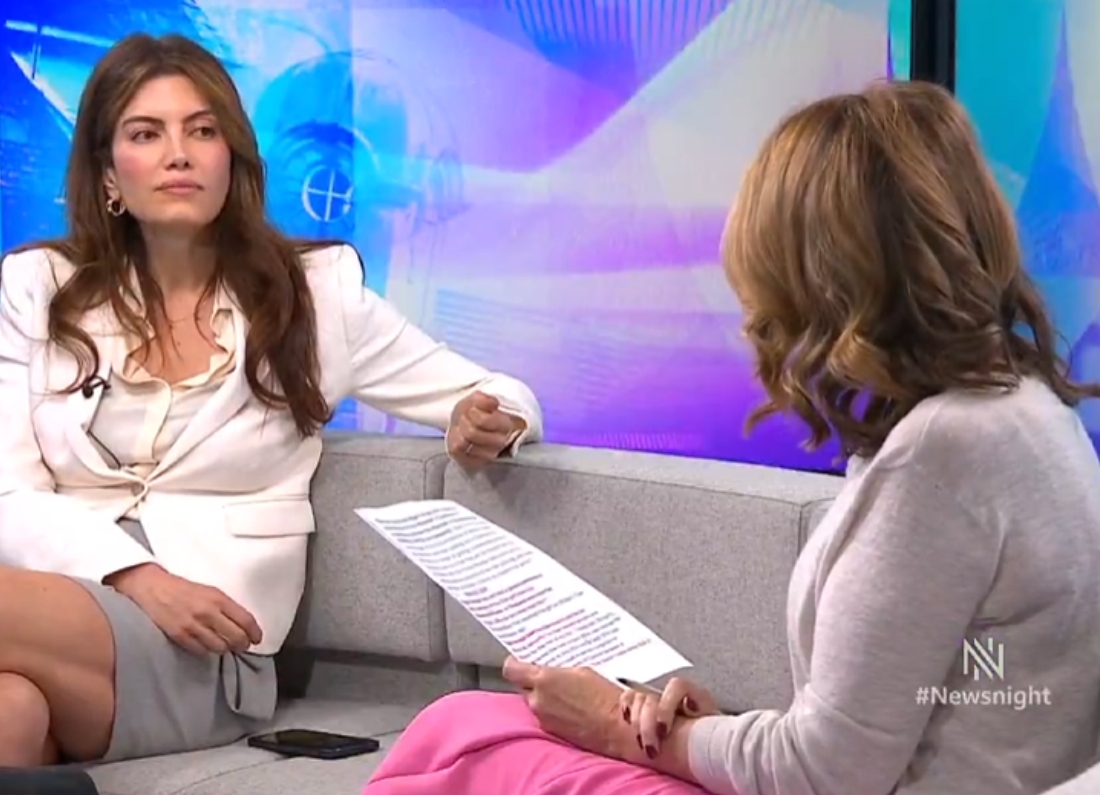
Olly Robbins, the former Foreign Office permanent secretary sacked by Keir Starmer last week, has delivered explosive evidence to the Foreign Affairs Select Committee, claiming that Downing Street had a “genuinely dismissive attitude” to Peter Mandelson’s security vetting, pushed to get him into post before Donald Trump’s inauguration regardless of the outcome, and that the due diligence process which raised serious reputational warnings “should have coloured the prime minister’s judgement.”
The testimony – described by political journalists as “utterly devastating” – significantly complicated the government’s preferred narrative that the Mandelson scandal was primarily a failure of civil servants to pass information upward. In Robbins’ account, the problem ran in both directions: civil servants who did not inform ministers of the full vetting picture, and a Downing Street that showed little interest in the answer.
‘Never an interest in whether – only when’
The most damaging single line of Robbins’ evidence concerned the nature of the pressure he received from No 10 throughout the vetting process.
He told the committee there had been a “very, very strong expectation” from Downing Street that Mandelson needed to be “in post and in America as quickly as humanly possible,” with the No 10 private office wanting the vetting completed before Trump’s inauguration. Robbins described “constant chasing” from No 10 about the process, with a letter asking the Foreign Office to take its considerations “at pace.”
The crucial line: No 10 “never had an interest in whether, only an interest in when” the vetting would be signed off.
That single observation cuts to the heart of the political scandal. A Downing Street solely interested in the speed of a clearance rather than whether it would succeed is a Downing Street that has, in effect, already decided the outcome. It suggests the vetting was not being treated as a genuine gatekeeping exercise but as an administrative formality to be cleared as quickly as possible.
Robbins added that at the point of Mandelson’s initial appointment, and “for days thereafter,” it was not actually a given that vetting would take place at all. “I don’t think at the point of his appointment and for days thereafter it was actually a given he would be vetted,” he said, noting that the announcement of Mandelson’s role on 20 December made no mention of the position being “subject to vetting.”
The borderline case – and what Robbins says he was told
Robbins told the committee he was briefed that UKSV – the government body that conducts security vetting – considered Mandelson a “borderline case” and was “leaning towards recommending that clearance be denied.” He said the Foreign Office decided that the risks identified could be “managed or mitigated,” and on that basis granted him clearance.
However, Robbins said he was not given the full picture. The government has published a template of the vetting form, which includes green, amber and red boxes indicating the vetting team’s recommendation. Robbins said he did not recall the UKSV findings being “presented to me as being that definitive” – adding that he was told it was “borderline” rather than a clear red-box denial.
This raises a further question buried within the scandal: whether Robbins himself was given the correct information by other officials in his department, and whether the prime minister was fully aware of what Robbins had and had not seen when he decided to sack him.
The direct criticism of Starmer’s judgement
For the first time, Robbins offered a direct personal criticism of the Prime Minister’s decision-making – not about the vetting process, but about what preceded it.
Before vetting takes place, there is a separate due diligence process that examines publicly available material about a candidate’s background. That process raised “serious reputational risks” about Mandelson before his appointment was announced – including his links to China and to Jeffrey Epstein.
“I regret that the due diligence process, which threw up, as I understand it, serious reputational risks, didn’t colour the prime minister’s judgement,” Robbins told the committee.
That is a clear statement that in Robbins’ view, Starmer should have decided against giving Mandelson the job before the vetting process even began. It directly echoes the argument made by Trevor Phillips, Diane Abbott and John McDonnell in recent days – that the fundamental failure was the appointment decision, not the bureaucratic process that followed it.
The Matthew Doyle bombshell
Robbins also revealed a separate and explosive detail: in March 2025, he was asked by No 10 to “potentially” find a job as an ambassador for Matthew Doyle – at that time the prime minister’s director of communications.
Doyle was subsequently given a peerage, an appointment that descended into scandal over his own relationship with a convicted sex offender.
Robbins told the committee he was asked by No 10 not to discuss the prospect of a diplomatic appointment for Doyle with David Lammy, then the foreign secretary. “The No 10 private office were clear ‘this was so sensitive’ that ‘I should keep it to myself for now,'” he told MPs.
BBC political editor Chris Mason noted that the opening 40 minutes of the evidence session painted “a picture of Downing Street being desperate to get Lord Mandelson to Washington as soon as possible” – and that Robbins described a government “keen to crack on quickly” and “never [having] an interest in whether, only an interest in when” the clearance would come through.
The fundamental disagreement
At the core of the session was a direct and unresolved disagreement between Robbins and Downing Street about how the vetting system should have worked.
Robbins insisted he would “absolutely not” have considered telling anyone in No 10 about the vetting team’s concerns surrounding Mandelson. He argued that any such disclosure would have eroded the principle of “vetting in confidence” – that the system only works if candidates understand their vetting is an “entirely different category of protection.” He added that telling No 10 about concerns would have amounted to “trying to shift responsibility on to others.”
No 10 has taken the opposite view: that Robbins should have informed ministers about the security concerns, and that his failure to do so was the reason he was dismissed.
Robbins told the committee he was “desperately sad” about his current circumstances – that he had loved the job, was “proud” to have served, and found himself wondering whether the public spectacle of the evidence session was helping anyone, including colleagues overseas working under “incredible pressure.”
He also revealed that after Mandelson was sacked as ambassador in September, Robbins had asked to see the full UKSV vetting documents himself – and was refused access by the Cabinet Office. That detail suggests awareness at multiple levels of government that the vetting file contained material that warranted close attention, even after the fact – and before the Guardian’s investigation made it front-page news.
You may also like: Five excruciating moments as MPs grilled Starmer over the Mandelson vetting scandal