


Jeremy Clarkson has delivered a fresh broadside against Reform UK, warning that voters hoping Nigel Farage can “fix” Britain are likely to end up frustrated – not because the public’s concerns are imaginary, but because running a country is harder than slogans make it look.
In a column for The Sun, Clarkson argues that many people backing Reform are doing so primarily on immigration, while having little clarity about what the party would actually do across the rest of government. The point is less about whether those voters are “right” or “wrong”, he suggests, and more about what happens when expectations collide with the reality of policy trade-offs.
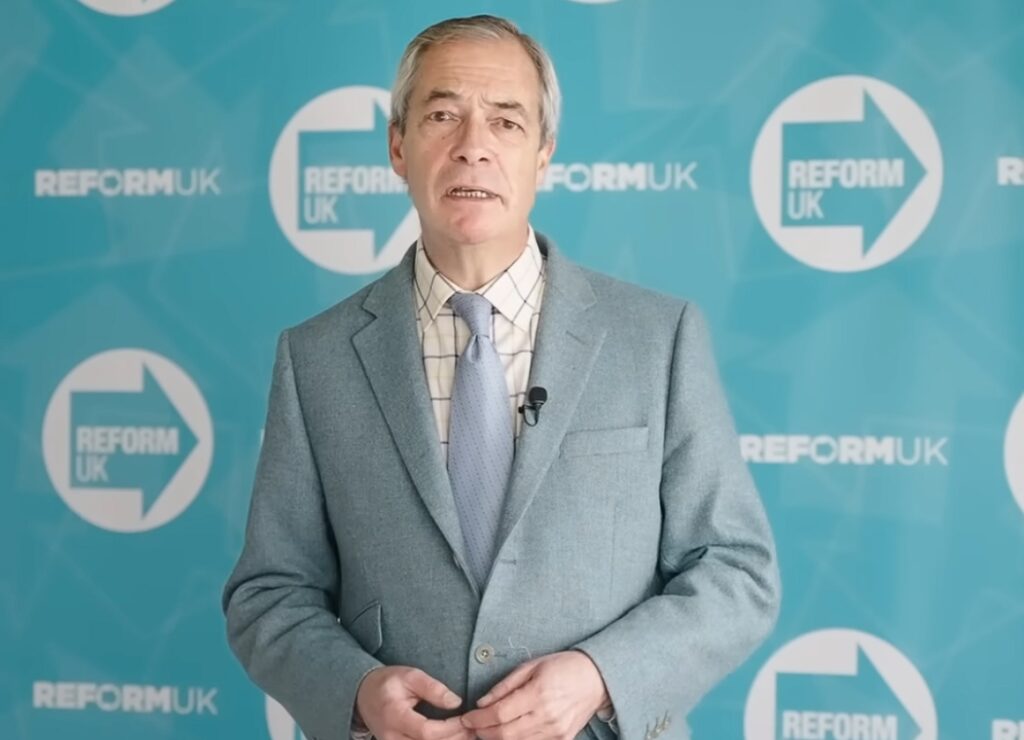
The argument lands at a politically awkward moment for Reform, which has been buoyed by defections and consistently strong polling – but is also vulnerable to the charge that it can’t be a “party of change” if it becomes a landing pad for familiar faces from elsewhere. Recent polling and modelling continues to show significant volatility across the party system, with different firms producing different league tables, but a common picture of fragmentation and soft loyalties.
Clarkson’s critique: “show me the plan”
Clarkson’s central complaint is straightforward: he says he doesn’t really know what Reform’s policies are in key areas, and he doubts many supporters do either. In his telling, that vacuum is masked by a sense that the “big” issue – particularly immigration – is so dominant that everything else becomes secondary.
That is a familiar dynamic in British politics: parties can surge when they are seen as the loudest voice on a single defining issue. But Clarkson’s warning is that this can produce an “overnight miracle” expectation, where voters assume a new government can quickly restore a lost version of the country. In his column, he jokes about people imagining something like an idealised children’s storybook Britain, before insisting the hard problems would still be there the next morning.
He also argues that immigration enforcement and border policy are messier than campaign rhetoric suggests, and that actions have legal, diplomatic and human consequences. That matters for an AdSense-safe newsroom reader because it’s a reminder of why governments get judged on delivery, not vibes: courts, treaties, budgets, staffing, and international cooperation all constrain what can be done.
Why the “Trump connection” keeps coming up
Clarkson’s intervention doesn’t exist in a vacuum. A wider strand of UK political commentary has focused on whether Reform can be framed – fairly or not – as Britain’s version of the Trump-era Republican style: populist, combative, and culturally polarising.
That framing shows up repeatedly in public research and political analysis. More in Common published modelling in early January suggesting Reform could be highly competitive under certain electoral assumptions, while also highlighting how voters are sorting into new blocs and identities. Separate polling releases from Survation have also pointed to significant movement, including Labour weakness and a tightening contest among the main opposition forces depending on the week and methodology.
Meanwhile, the political risk for Reform is that UK voters may like the idea of shaking up Westminster, but dislike the style they associate with American culture-war politics. That risk can be hard to quantify, but it is consistently discussed by commentators as a potential drag on Reform’s “ceiling” – particularly among groups that may be open to switching but don’t want heightened political temperature.
Polling context: big leads, but still a soft landscape
It’s worth being careful with polling claims. Different firms are measuring different things (headline voting intention vs seat models, GB-only vs UK-wide, and different turnout assumptions). But two points are relevant to the “Clarkson warning”.
First, there is evidence of continued churn. Survation’s latest Westminster voting intention release this week showed Labour in third on their numbers, with the Conservatives ahead and the Greens rising, underscoring how quickly the picture can shift. Second, the January modelling from More in Common suggested Reform could translate votes into seats efficiently in some scenarios, but that still depends on how opposition votes split and how tactical behaviour develops.
Media reporting on the Clarkson column has also referenced a BMG Research survey carried for The i Paper, described as putting Reform on 32%, Labour on 20% and the Conservatives on 17% at the time of publication.
What Clarkson’s warning means in practice
Clarkson’s column isn’t a manifesto, and it’s not pretending to be. But there is a practical takeaway that lands beyond party tribalism: if voters want change, they should interrogate the full governing offer – not just the headline message.
That applies to Reform, Labour, the Conservatives, the Greens and everyone else. It means asking:
What would a party do on tax and spending? How would it legislate? How would it handle courts and international obligations? What would it do when policies collide – for example, promising lower taxes while expanding services, or promising enforcement while needing skilled workers?
Clarkson’s warning is that if a political movement builds a coalition mostly on anger at the status quo, it risks disappointment if it can’t convert that anger into detailed, workable choices. And if disappointment becomes the dominant emotion, the public mood can curdle into a belief that “nothing works” – which is the space where politics becomes more volatile, not less.
For Reform specifically, the challenge is to persuade voters that it is more than a protest vehicle: that it has a credible governing programme, credible people, and a credible route through Parliament. Clarkson is effectively saying: if the party wants to be treated as a government-in-waiting, it has to show its workings.
You may also like: UK by-elections explained: what happens when MPs defect









Leave a Reply