Senior Green Party figures have issued a joint statement promising the party will remain “anti-racist in every way” after members voted to adopt a controversial motion declaring Zionism a form of racism.
The motion passed at the party’s conference in Brighton by 1,022 votes to 813, despite opposition from four of the Greens’ five MPs and one of its two deputy leaders. It formally establishes the Green Party as anti-Zionist and backs the creation of a single democratic Palestinian state across historic Palestine.
The vote exposed one of the sharpest internal divisions the party has faced since its rapid expansion under Zack Polanski, with senior figures taking markedly different positions before members made their decision.
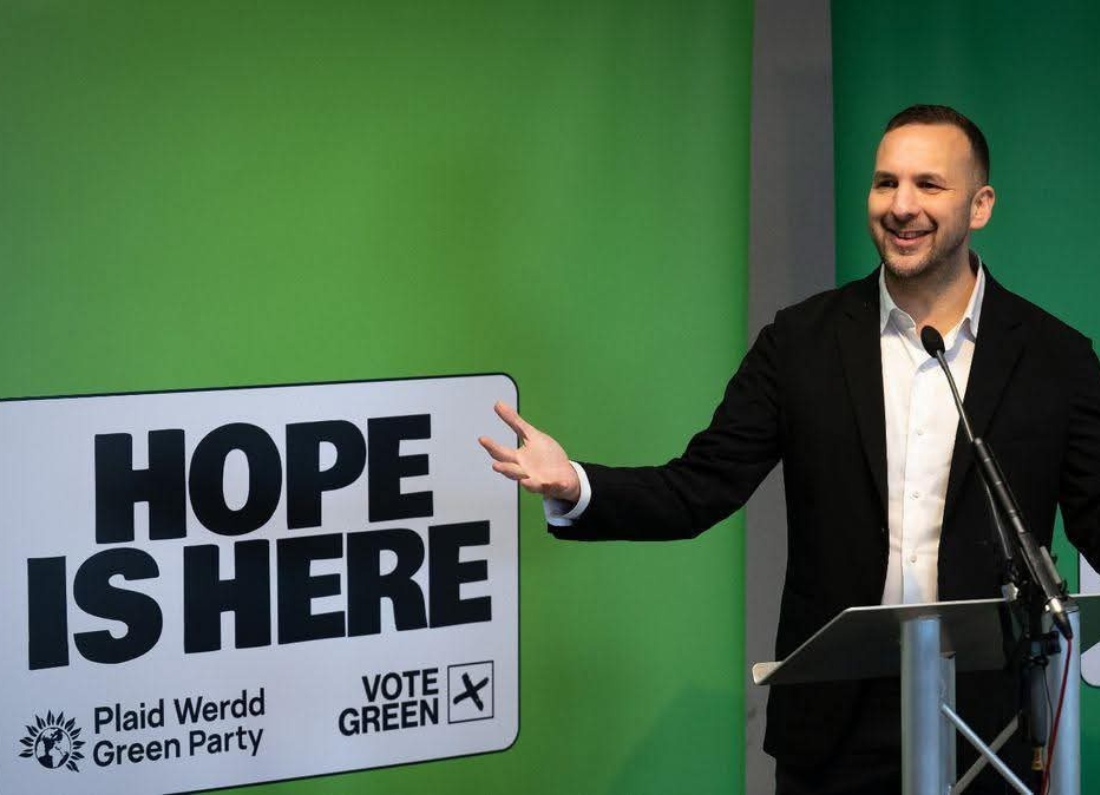
Afterwards, the Greens’ five MPs, Polanski and co-deputy leaders Mothin Ali and Rachel Millward put their names to the same statement.
It said:
“As Green Party leaders and MPs, we will always uphold universal human rights.
We will never tolerate any form of discrimination or harassment.
We will continue to stand in opposition to genocide, ethnic cleansing, apartheid and the illegal occupation.
We will continue to call out the heinous crimes of the Netanyahu government.
And we will continue to work to ensure that the Green Party is an anti-racist party in every way.
We know there is no conflict between supporting the rights of Palestinians and the rights of Jewish people.”
Following the vote on the anti-Zionist policy at Green Party Conference, the 5 Green MPs, the Leader and Co-Deputy Leaders have issued a joint statement pic.twitter.com/NcB2aljsTK
The statement does not reverse the conference decision or distance the party from the new policy. Instead, it appears designed to reassure members concerned about antisemitism while keeping the leadership united after a vote on which they had been deeply divided.
What did Green members actually vote for?
The motion defines Zionism as a political ideology supporting what it calls an “ethnonationalist Jewish State” in historic Palestine at the expense of the non-Jewish population.
It argues that the practical consequences of Zionism have included Palestinian “dehumanisation, displacement, dispossession, disenfranchisement and destruction”, and says the party should oppose Zionism as it would other forms of racism.
The Green Party’s own account of the decision says the policy also reaffirms support for Palestinian liberation, the right of return, Boycott, Divestment and Sanctions, a full arms embargo against Israel and a single democratic state across historic Palestine.
Supporters argue that the motion is directed at Zionism as a political ideology rather than Jewish people or Judaism, and rejects attempts to automatically equate anti-Zionism with antisemitism.
Opponents say the definition is too broad and could result in Jewish members who understand Zionism simply as support for Jewish self-determination being labelled racist.
That argument has been running inside the party for months.
Four Green MPs opposed it
The vote was especially striking because most of the Greens’ parliamentary group had already made clear they would not support the motion.
Sky News reported that four of the party’s five MPs opposed it before the vote, while fifth MP Hannah Spencer had not publicly declared a position.
Former co-leaders Carla Denyer and Adrian Ramsay were among those who publicly said they would vote against it.
Polanski did not vote, having left the conference to campaign in the Holborn and St Pancras by-election.
That left the membership passing a major policy against the stated position of most of the party’s MPs.
The disagreement also ran directly through the leadership team.
Deputy leaders ended up on opposite sides
Co-deputy leader Mothin Ali backed the motion.
Rachel Millward did not.
Millward described the wording as “problematic” and said Zionism meant different things to different people, regardless of the definition contained in the motion.
She said:
“I know that ‘Zionism’ will mean different things to different people (regardless of how it is defined within the motion), so I personally do not think the policy helps us do the work we all want to do.”
Ali supported the motion and has been one of the party’s strongest voices on Palestine.
Only a day earlier, however, his conference speech had also stressed the need to protect Jewish people from intimidation and argued that disagreement inside the Greens should not turn people into enemies.
He told members:
“Whether you’re a Black boy sitting in a park, a Jewish family going to synagogue, a Muslim praying in a mosque, or someone seeking safety from war and persecution, there should be no street, no neighbourhood and no place in this country where you can’t live your life in peace.”
Despite voting differently on the motion, Ali and Millward both signed Sunday’s joint leadership statement.
Jewish Greens themselves were divided
The row cannot neatly be divided into Jewish members on one side and pro-Palestinian activists on the other.
Jewish Greens conducted a survey shortly before conference which found its own membership deeply split.
Among 108 respondents, 81% said they did not identify as Zionist, while 70 described themselves as anti-Zionist and 70 as non-Zionist, with substantial overlap between the two groups.
At the same time, opinions on the motion itself remained divided enough that Jewish Greens declined to take an official collective position.
The survey found 53% agreed that passing the motion could make discrimination against Jewish people within the Green Party more likely, while 47% disagreed.
It also found strong support for several parts of the Greens’ wider Palestine policy, including de-proscribing Palestine Action and opposing the argument that anti-Zionism is inherently antisemitic.
That split has become even more visible since the result.
Vivien Lichtenstein, chair of Jewish Greens, has now said she may leave the party following the vote. She described the policy as unhelpful and said she was taking time to discuss her future with colleagues.
Critics say the motion risks making Jewish members feel unwelcome
The motion has drawn criticism from Jewish organisations and political parties across Westminster.
Critics argue that Zionism has several meanings and that for many Jewish people it simply describes support for Jewish self-determination or the continued existence of Israel, rather than support for the policies of Benjamin Netanyahu’s government.
The phrase “Zionism is racism” also has a long and highly contested history.
A 1975 United Nations General Assembly resolution declared Zionism to be a form of racism and racial discrimination, but that resolution was revoked in 1991.
Supporters of the Green motion argue that the version of Zionism they are condemning is an ethnonationalist political project which has produced Palestinian dispossession and unequal rights.
The argument over whether those two definitions can be cleanly separated is now playing out inside the party itself.
Israel condemns vote
Israel’s government responded angrily to the decision and described it as a “stain on the history of the UK”.
The row has also raised questions over Polanski’s position.
He had sought amendments designed to protect Jewish members but did not cast a vote on the final motion, and critics inside and outside the party have accused him of avoiding a decision on one of the most contentious issues at conference.
Polanski has now signed the joint statement promising that the Greens will oppose discrimination and protect both Palestinian and Jewish rights.
The policy itself, however, remains.
Conference has adopted it, and the Green Party’s own website now formally describes the party as anti-Zionist.
The leadership’s task is now to make that policy work alongside its promise that Jewish members who disagree with it will continue to feel welcome in the party.
Jordon Scott is a digital media specialist and editor at The Daily Britain. He focuses on political coverage, platform strategy, and ensuring journalism remains accessible without compromising editorial standards.
He oversees publication structure, reach, and transparency across the site.








Leave a Reply