

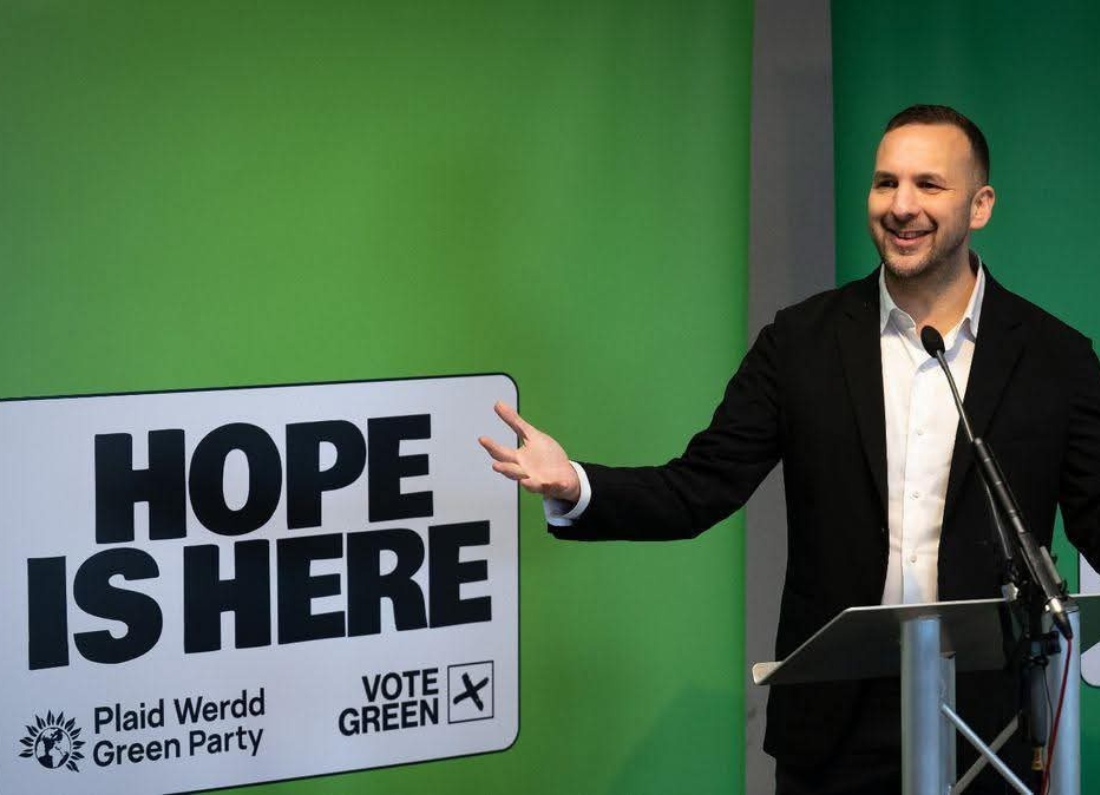
The Green Party has reached joint first place in a major national opinion poll for the first time in its history, tied with both Reform UK and the Conservatives on 21% in the latest survey by Lord Ashcroft – with Labour trailing badly on 17% in a result that would have been almost impossible to imagine when the party won its landslide majority less than two years ago.
The poll, which surveyed more than 5,000 respondents between 26 and 30 March, was published in the Mail on Sunday and has sent a shockwave through British politics. The three-way tie at the top – between a far-right populist party, a traditional centre-right Conservative party, and a left-wing environmentalist party – reflects the extraordinary fragmentation that has overtaken the British political system in the period since the 2024 general election.
Zack Polanski, the Green Party leader, greeted the findings with characteristic directness, posting on X: “Remarkable poll this evening from Lord Ashcroft. The Greens in joint 1st place. We are replacing Labour and ready to take on Reform in the local elections on 7 May.”
The numbers – and how they got here
The trajectory that produced this result is worth tracking. Lord Ashcroft’s own polling tells the story. In December 2025, Reform led on 25%, with the Conservatives on 22% and the Greens on 19%. By late February 2026, Reform had fallen to 22%, with the Conservatives on 20% and the Greens rising to 19% – polling conducted before the Greens’ historic by-election win in Gorton and Denton.
The latest survey represents a significant further shift: Reform down another percentage point to 21%, the Greens up two points to match them, and the Conservatives also on 21%. The combined Conservative and Labour vote share is now just 37.1% – a dramatic fall from the 57.4% the two parties combined to win at the 2024 general election, itself a record low at the time.
The Liberal Democrats, meanwhile, have continued to struggle nationally, recording just 9% in the latest Ashcroft survey – a reflection of their relatively weak position in Westminster polling even as they make gains in local elections.
What is driving the Green surge
Lord Ashcroft himself has been candid about what his polling reveals is behind the Green Party’s rise. In his analysis published alongside the survey, he highlighted specific policy positions as central to Polanski’s appeal.
“The Greens are enjoying something of a moment. However the numbers are calculated, there is no denying the remarkable progress they have made under Zack Polanski,” Ashcroft wrote. “I found big majorities in favour of a wealth tax, higher taxes on energy companies and a £15 an hour minimum wage.”
Those three policies form the core of what Polanski has described as “eco-populism” – an attempt to blend environmental politics with a direct economic appeal to working people who are being squeezed by the cost of living crisis. The message is resonating in a way that Green Party policies rarely have in Britain’s political history.
Ashcroft also pointed to global events as a factor in Reform’s relative decline. He noted that Reform’s seemingly inexorable rise had “abated, at least for now,” and suggested that “global events might be part of the reason, especially over the last month, and not just because of Nigel Farage’s friendship with President Trump.” The perceived appeal of Trump’s approach – moving fast and breaking things – had been popular with some British voters early in Trump’s second term, but Ashcroft noted that “the idea is less appealing when breaking things becomes literal rather than metaphorical.”
Reform’s enthusiastic initial support for Trump’s war on Iran – with Farage calling for Britain to back the US military strikes – may have cost them as the conflict dragged on, energy prices soared and public opinion hardened against involvement.
The seat projections – and why they are extraordinary
The headline voting intention figures are striking enough. The seat projections derived from them are even more so.
Using a general election model, the Lord Ashcroft survey data produces the following projected Westminster seat totals: Reform UK on 174, Conservatives on 168, Greens on 119, the SNP on 47, Labour on just 31, and the Liberal Democrats on 29.
That would mean Labour – currently governing with one of the largest parliamentary majorities in modern British history, having won 411 seats in 2024 – reduced to just 31 seats. It would mean the SNP winning more Westminster seats than the party of government. It would mean the Green Party, which currently has five MPs, returning 119.
These projections should be treated with appropriate caution. First-past-the-post is brutal to parties whose support is geographically dispersed – as the Greens’ is – and polling at this stage of a parliament is notoriously unreliable as a predictor of election outcomes. Lord Ashcroft also uses a different methodology from most pollsters, asking respondents how likely they are to vote for each party on a scale of zero to one hundred, rather than simply asking who they would vote for. This tends to produce somewhat different results from standard voting intention polls.
But even allowing for all of those caveats, the direction of travel is unmistakeable.
Reform’s waning momentum
One of the more politically significant aspects of the Ashcroft polling is what it reveals about Reform’s trajectory. The party spent much of 2025 in a position of apparently unstoppable momentum – topping every major poll, winning control of ten councils in last year’s local elections, and positioning itself as the natural home of Britain’s anti-establishment vote.
That narrative has now become more complicated. The Electoral Reform Society noted in its March polling breakdown that the Green Party’s vote share had reached its highest monthly average since the party’s formation, with one YouGov poll placing the Greens in joint second place behind Reform.
Reform’s waning support appears to reflect a combination of factors: the Iran war has made Trump – and by extension his British admirers – less fashionable; Farage’s failed Maldives trip generated more mockery than momentum; the party’s housing spokesperson sparked a Grenfell scandal; and the Greens have successfully positioned themselves as an alternative protest vehicle for voters who want to shake up the political system but are not drawn to Reform’s specific brand of politics.
The Scotland dimension
The implications of the Ashcroft polling extend beyond England. In Scotland, a separate Norstat poll showed Reform’s support falling to 15% in both constituencies and the regional list – down four points in each – with the party slipping to third place behind both the SNP and Labour in Holyrood polling. The forthcoming Scottish Parliament elections on 7 May have already emerged as a potential disaster for Labour north of the border.
What happens next
With the May 7 local elections now just over a month away, the Ashcroft poll adds fuel to what is already an extraordinary political moment. The Greens are expected to make significant gains in London and in cities across England. If those gains materialise and are accompanied by continued strong national polling, the narrative of a party genuinely capable of challenging for power – rather than merely registering protest – will become very difficult to resist.
For Labour, a party that won 411 seats just two years ago, the position described by this polling is genuinely alarming. A party on 17% nationally, trailing the Greens, the Conservatives and Reform simultaneously, facing projected losses of hundreds of council seats in May, and – in this poll’s modelling – reduced to fewer Westminster seats than the SNP, does not look like a party that has simply experienced a normal mid-term dip. It looks like a party in structural crisis.
Lord Ashcroft’s own conclusion was measured but pointed: “One thing voters won’t tolerate – politicians who deliberately make things worse.”
In the current political environment, that observation applies to parties across the spectrum. But it is Labour that currently has the most to lose from it.
You may also like: Nearly two thirds of Brits would vote to rejoin the EU in new referendum, poll shows








Leave a Reply