

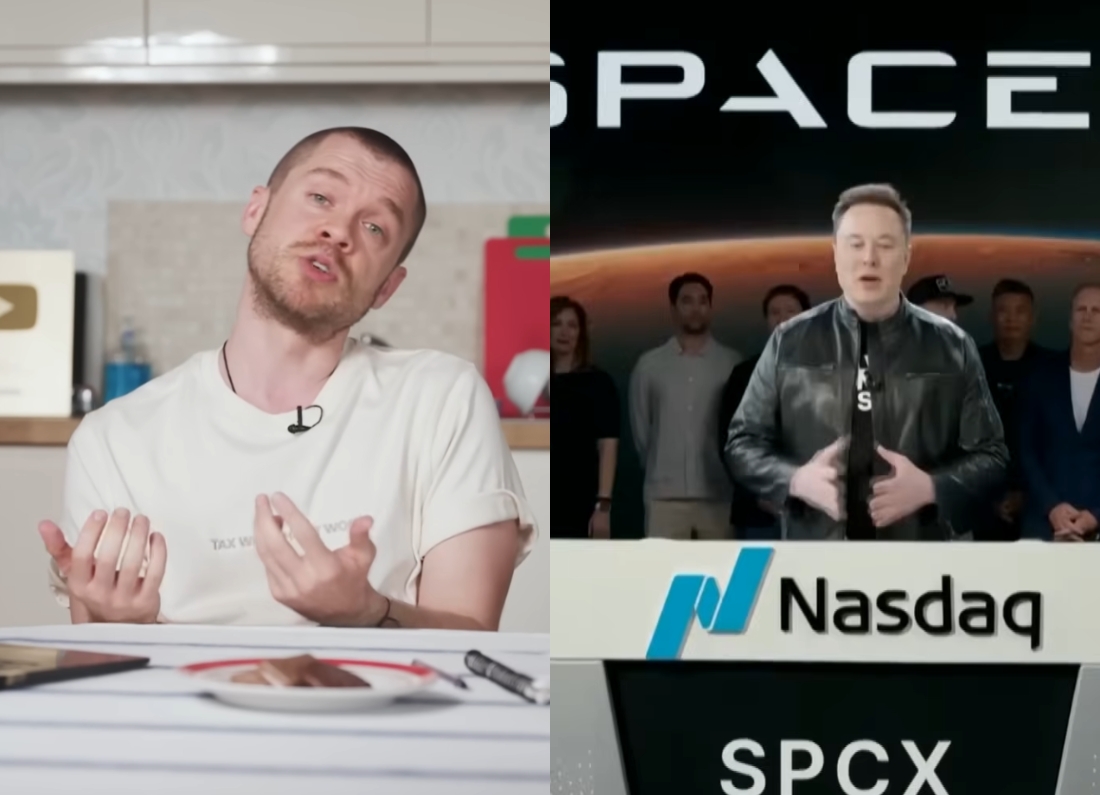
Elon Musk became the world’s first trillionaire last week. The number is so large it barely registers. But economist and former City trader Gary Stevenson – who runs the YouTube channel Gary’s Economics – has spent 40 minutes explaining exactly what it means for ordinary people. The short version: a great deal.
Stevenson is not an academic making abstract points. He made millions as one of the most successful traders at Citibank, where he bet consistently on rising inequality – and won. His argument is not that Musk becoming a trillionaire is a symbol of something worrying. It is that it is the mechanism by which ordinary people are already losing their homes, their children’s futures and their access to public services. Here is his case, laid out plainly.
First: what is a trillion?
The human brain is not built to understand these numbers, but Stevenson has a useful way in. A million seconds is about a week and a half. A billion seconds is 32 years. A trillion seconds is 32,000 years. That is the difference between a million and a trillion. It is not a bigger version of the same thing. It is a completely different order of magnitude.
In practical terms: someone worth a trillion dollars, earning 5% passive income annually, makes $137 million every single day. That is $5.7 million an hour. Around $1,600 every second – not from working, but simply from owning things. Musk does not need to get out of bed. His assets are earning him more money per second than most British households earn in a month.
And critically, those assets are not just cash. SpaceX’s IPO last week revealed the company to be worth around $2 trillion. Musk owns roughly half of it. SpaceX owns satellites used in weather forecasting and military operations. Governments will need to pay him to use them. That is what a trillion dollars of real physical infrastructure actually means.
The maths that should worry you
Six years ago, when Stevenson started his channel, he described the then-staggering figure of £300 billion – the amount the UK government spent during Covid. At the time, that was three times the net worth of the world’s richest man, Jeff Bezos. Today, £300 billion is less than a third of Musk’s wealth. In six years, the world’s richest person has gone from being worth £100 billion to over a trillion dollars. That is roughly 40% annual wealth growth, in economies growing at around 1% a year.
Where does that 39-point gap come from? Stevenson’s answer is direct: it comes from you. When billionaires grow their wealth at 40% annually and the economy grows at 1%, the difference is not conjured from thin air. It is transferred – from governments, from the middle class, from ordinary asset owners – to the billionaire class. Britain’s 157 billionaires now own wealth equal to 22% of GDP – up from 5% in 1990. That is not an accident of history. It is the predictable result of allowing an untaxed billionaire class to compound its wealth unchecked.
Why your house going up in value does not protect you
Stevenson addresses a common objection from people who feel comfortable: asset owners who think rising property prices are good for them. His answer is that this misses the point entirely. As the billionaire class generates more and more passive income, they buy more assets. That pushes asset prices up. So far so good, you might think – your house is worth more.
But at the same time, the ultra-rich are consuming the things ordinary people need – housing in cities, university places, dental care, healthcare – and driving the price of those things up beyond what most people can afford. Stevenson’s friends who became dentists are no longer seeing NHS patients. They are doing cosmetic procedures for rich clients. LSE has expanded massively since he attended – but most of the A-level economics students he met at his old school have given up on university as unaffordable. The supply has grown. Ordinary people have been priced out anyway.
The endpoint, in his framing, is that eventually the only way for an ordinary family to maintain a decent standard of living is to sell their assets to the rich. The house goes up – and then it goes to them.
A new feudalism
Stevenson draws a direct comparison to the feudal pyramid of medieval Europe – with one key difference. The feudal system took centuries to build. This one is being constructed in real time. The economist Gabriel Zucman, who Stevenson credits as doing the most rigorous work on this, has set out exactly how a wealth tax could interrupt the transfer – and what it would raise. The political will to implement it is the missing ingredient.
Stevenson also draws a historical parallel that is uncomfortable but instructive. The last time wealth concentrated this rapidly was during the colonial era and the Industrial Revolution. European elites grew their wealth exponentially, and eventually used that wealth to out-compete and then dominate the rest of the world – including China and India, which assumed their own size and power made them immune. They were not. Stevenson’s warning is that the same logic applies now. You cannot simply decide not to engage with the fact that someone is accumulating wealth and power at an exponential rate. Eventually it reaches you.
What governments can actually do
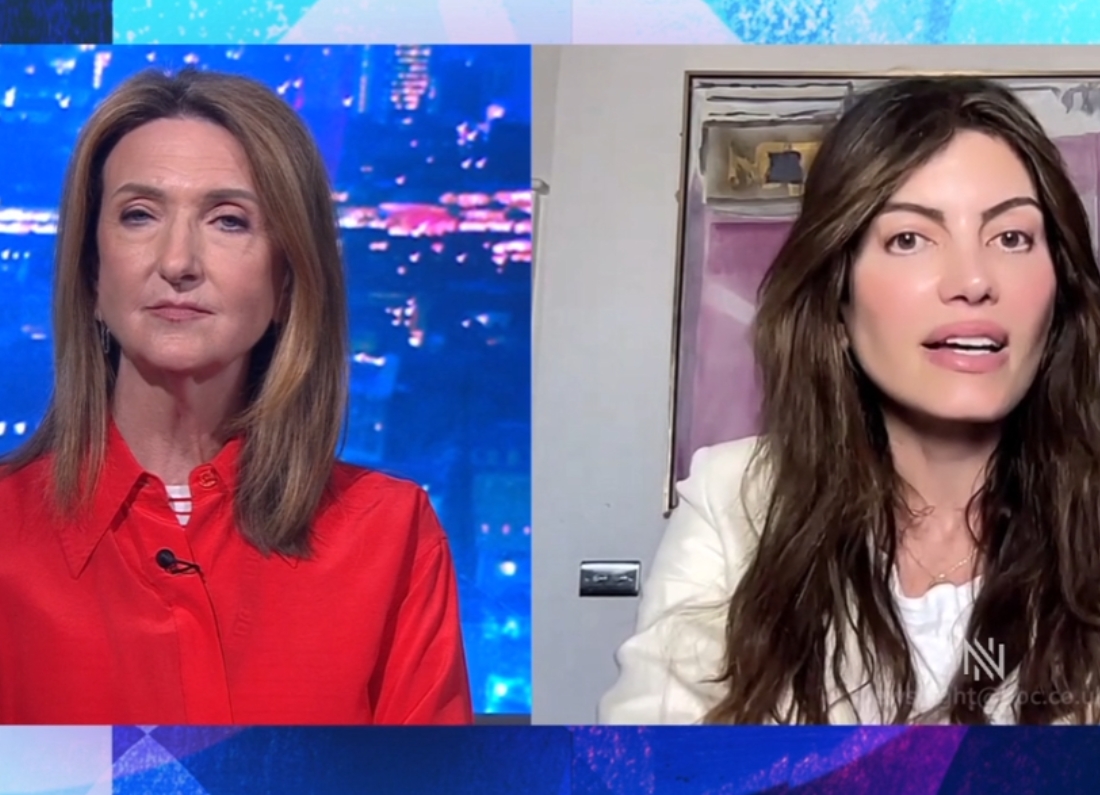
Governments, Stevenson argues, now face only three options. Tax the very rich. Tax workers and the middle class more. Or dismantle the welfare state. Those are the choices, and they are not equally available indefinitely – because as the billionaire class grows, so does its political influence. We have already seen Musk’s direct interventions in British politics. Mehdi Hasan has argued on Newsnight that Musk is actively pursuing a racist political agenda in the UK. The window for democratic intervention closes a little more each year.
Stevenson’s final point is the one he returns to most urgently. The choice facing society is not left versus right. It is not Labour versus Reform. It is a much simpler question: do you want your children to own things? Because you cannot have an untaxed trillionaire class and widespread asset ownership at the same time. The maths does not allow it. One of those things will win. At $137 million a day in passive income, it is not hard to guess which one is currently winning.
You can watch Gary Stevenson’s full breakdown below:







Leave a Reply