

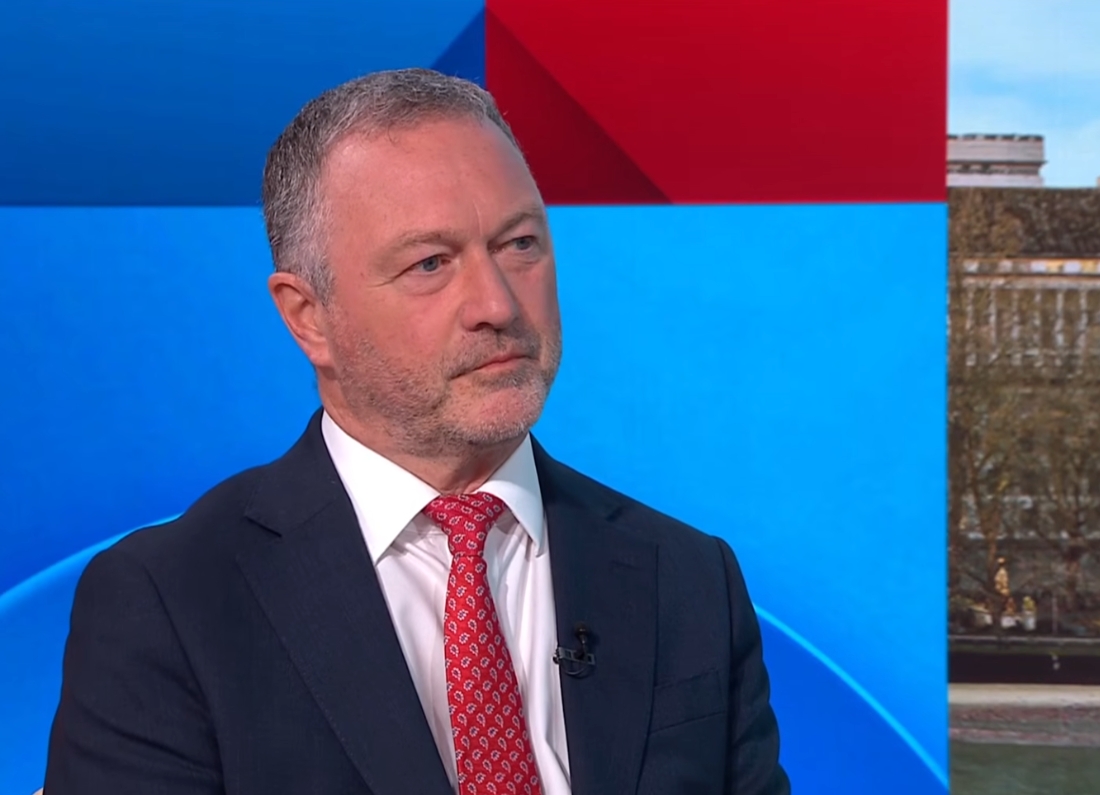
A government minister has told Sky News that the public “do not want a general election” when Andy Burnham becomes prime minister – even as polling published this week shows almost half of Britons disagree.
Housing minister Steve Reed, speaking on Sunday, said the transition in Downing Street should be “orderly” and that there was no appetite among voters for a snap election. “The public do not want a general election, and that’s not just my instinct. You can look at the polls that tell us the vast majority do not. They want us to get on with the job.”
The difficulty is that the polls he appears to be referencing do not quite say that.
What the polls actually show
A recent YouGov survey found that 48% of Britons believe there should be a general election once Burnham is confirmed as Labour leader – against 35% who do not. That is not, as Reed suggested, evidence that the “vast majority” oppose an election. It is evidence that the public are narrowly in favour of one.
A separate Ipsos poll of 1,131 voters, carried out in the days before Starmer confirmed his resignation, is even more striking. Only 13% said they were in favour of a “coronation” – Burnham entering Downing Street without a public vote. 39% preferred a Labour leadership contest. The combined picture is one of a public that, when asked, would prefer some form of democratic mandate beyond Makerfield.
YouGov had previously found 53% of Britons wanted a snap election if Starmer was ousted – a figure that predated the Makerfield result and the consolidation of support around Burnham, but which establishes the baseline sentiment.
The Labour internal argument
Reed’s comments represent the dominant view inside the Labour parliamentary party – but not a unanimous one. Labour minister Mike Tapp has publicly called for legislation requiring a general election whenever a party changes leader in government, drawing mockery from Labour MPs who noted that this was, as one put it, “a pretty clear indication that he does not fully understand how parliamentary democracy works.” One of Burnham’s own backers has privately warned: “We will be trapped with the empty 2024 manifesto if he doesn’t go to the country.”
On the other side, Labour MPs with small majorities are pleading with Burnham not to take the risk. Liverpool Riverside MP Kim Johnson warned bluntly: “We’d get battered if he did.” Rachael Maskell said there was “no need for a general election.” The party’s calculation – with the next election not required until 2029 – is that a premature contest risks handing seats to Reform UK or the Greens before Burnham has had time to establish himself.
Burnham has so far indicated he will not call for a national contest. Reform UK’s Nigel Farage called for one immediately after Starmer’s resignation, as did shadow housing secretary Sir James Cleverly. Both are motivated by the same calculation: that a general election sooner would be in their interest.
The legitimacy question
The deeper issue is one of mandate. Burnham will enter Downing Street having been elected as Makerfield’s MP just weeks ago, with no national vote behind him and no manifesto beyond Labour’s 2024 document – one that senior figures in his own camp describe as inadequate for what the country now faces.
Reed acknowledged this indirectly, saying Burnham was “committed” to the manifesto but “will want to change some things,” including on devolution, and that there would be “changes of emphasis” while the “fundamentals” would remain, including the fiscal rules. Asked whether Burnham would scrap the triple lock, he declined to commit.
The comparison Reed drew with the Tory leadership changes – arguing the Labour transition was “very, very different” – may not land with voters who watched Gordon Brown, Theresa May, Boris Johnson, Liz Truss and Rishi Sunak all enter Downing Street without a fresh mandate and who now face the same situation again, this time under a different party.
Piers Morgan, earlier on the same programme, said the first thing Burnham should do was call an election – and predicted Labour would win it. The polling suggests that calculation may be right, with Labour now a point ahead of Reform under Burnham and Burnham beating Farage 62-38 as preferred prime minister. But the MPs with small majorities looking nervously at Reform in their constituencies are less confident – and they are the ones with the most direct personal stake in the decision.
Whether Burnham calls a general election will be one of the defining early signals of his premiership. The minister insisting the public don’t want one is telling a partial story. The polls suggest the public are more divided on the question than Reed’s framing implies – and that almost half of them think the country deserves to be asked.
You can watch the video below:




Leave a Reply