A Question Time exchange from last year has started doing the rounds again after Billy Bragg took apart one of Nigel Farage’s stranger arguments in little more than a minute.
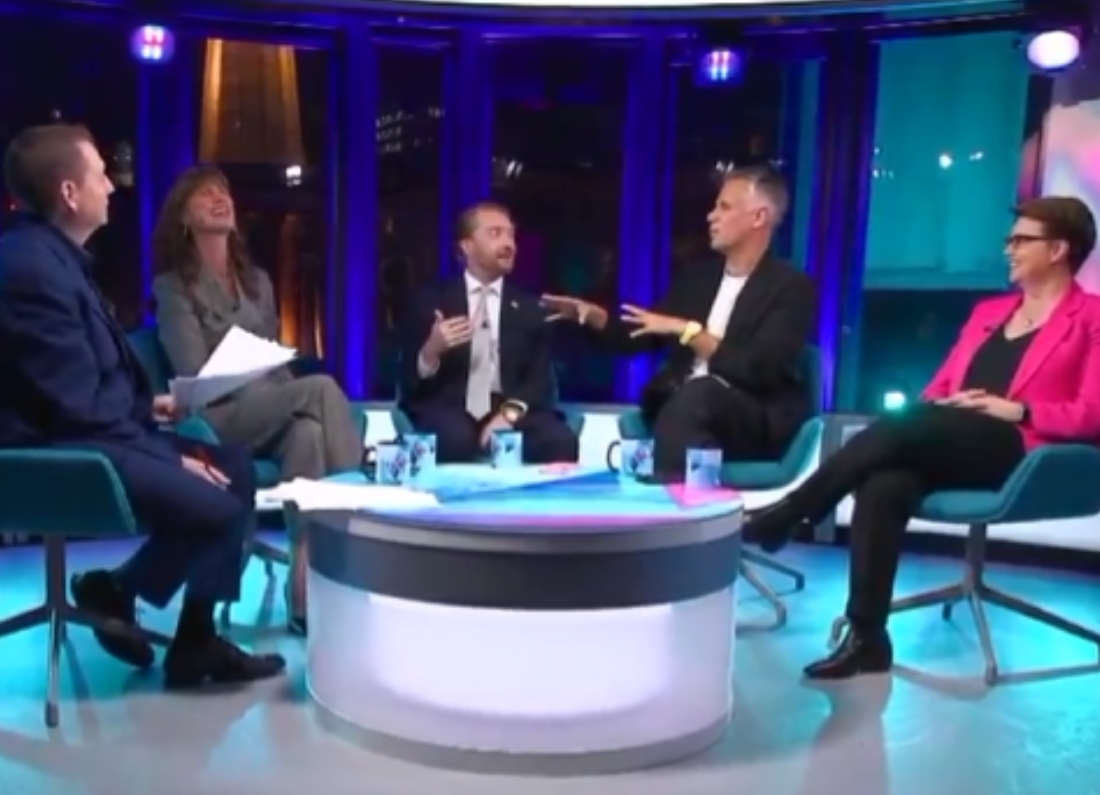
The singer-songwriter was appearing on the BBC programme in September 2025 alongside Reform UK deputy leader Richard Tice when the discussion turned to comments Farage had made during an LBC interview the previous day.
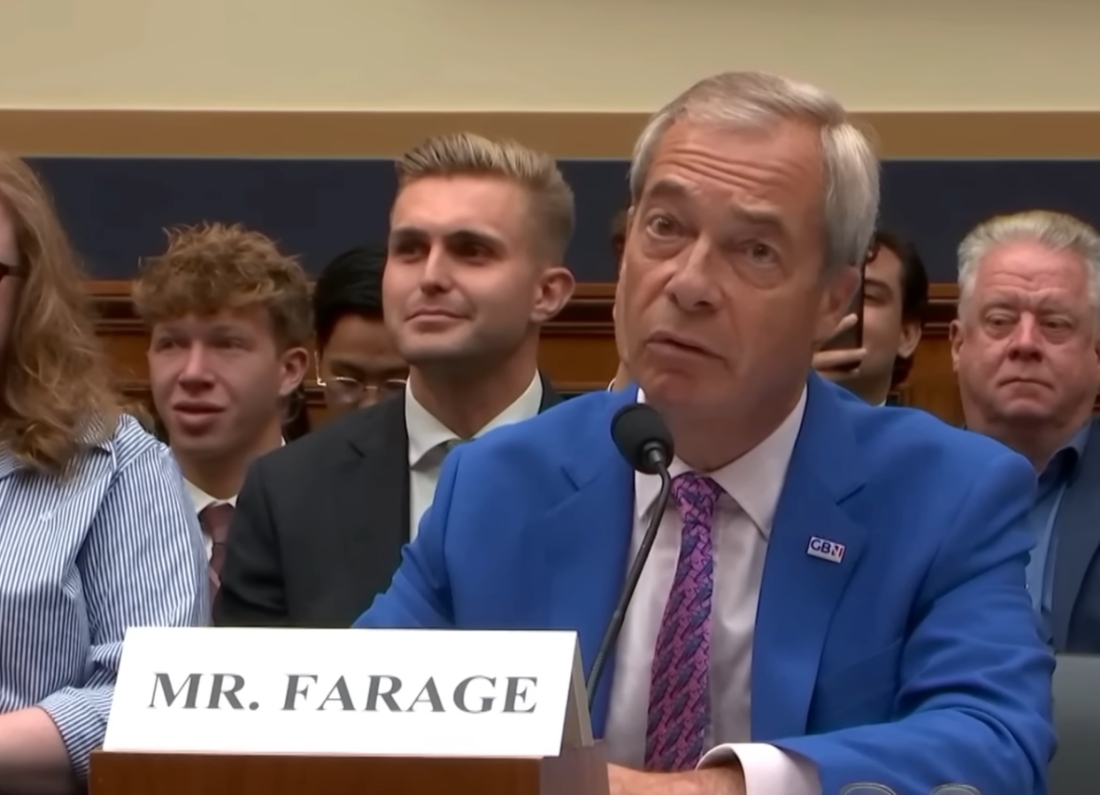
Farage had been pressed by Nick Ferrari over Donald Trump’s claim that taking paracetamol during pregnancy could be linked to autism. UK medical experts had rejected the claim, but Farage declined to side with them, telling Ferrari that he had “no idea” whether Trump was right and adding that “science is never settled”.
Bragg noticed something rather odd about that scepticism.
Farage had been reluctant to trust the scientific establishment on one subject, but during the very same LBC appearance he had also relied on something a taxi driver told him as evidence for his fears about Sharia law in Britain.
Bragg put the contradiction directly to Tice.
“Nigel Farage also said in the interview, giving the impression that he doesn’t trust scientists.”
He continued:
“He later said in the interview why he believed Sharia law was coming to Britain, he said he’d been told by a taxi driver.”
Then came the line that drew applause from the Question Time audience:
“So Nigel Farage was willing to believe a Muslim taxi driver in Buckinghamshire rather than believe the scientific establishment. This guy wants to be prime minister? You must be joking.”
The clip, filmed during Question Time’s 25 September 2025 edition in Bedworth, has now resurfaced as Farage remains at the centre of British politics and continues to present Reform as a potential government in waiting.
Richard Tice tried to push back
Tice responded by telling Bragg that there were more than 80 Sharia councils or courts operating in Britain and asked whether he was aware of them.
Bragg did not dispute that religious arbitration bodies existed. Instead, he pointed out that Jewish religious courts also operate in Britain and argued that the existence of religious tribunals was not evidence that Sharia law was somehow replacing British law.
His reply was:
“Yeah I am, but there are also Jewish courts and that is part of their religion and we, as a tolerant nation, accept that.”
He then told Tice:
“To demonise, particularly the Muslims, this is the sort of thing why we worry about Reform.”
That distinction is important. Sharia councils do exist in Britain, usually dealing with religious matters such as Islamic divorce, but they do not replace UK law and cannot override decisions made by British courts. Jewish Beth Din courts also operate in Britain, while arbitration based on religious rules can be recognised in limited civil matters where both parties consent, provided the outcome complies with UK law.
So the argument was not really over whether religious councils existed. It was over what their existence proved.
Farage had invoked a taxi driver’s warning while suggesting Britain was moving towards Sharia law more broadly. Bragg’s criticism was that this was an extraordinarily weak evidential standard for someone who had been unwilling, only moments earlier, to defer to scientists on a medical question.
Farage had just refused to back medical experts over Trump
The exchange makes more sense when you look at the LBC interview that prompted it.
Trump had claimed there was a connection between paracetamol use during pregnancy and autism, despite medical bodies and researchers saying the evidence did not support such a conclusion.
Asked by Ferrari whether Trump was right, Farage replied:
“I have no idea… you know, we were told thalidomide was a very safe drug and it wasn’t. Who knows, Nick, I don’t know, you don’t know.”
When Ferrari asked whether he would side with medical experts warning against Trump’s claim, Farage said:
“I wouldn’t, when it comes to science, I don’t side with anybody.”
He also argued that “science is never settled”.
There is nothing unreasonable about saying scientific knowledge can change. It does, and medicine has plenty of examples where accepted practice was later revised.
The problem was that Farage used that uncertainty to refuse to reject a claim that medical experts said was unsupported, while appearing considerably less demanding about the evidence behind his warnings over Sharia law.
That was the contradiction Bragg seized on.
The paracetamol claim had already been rejected by British scientists
At the time, British medical experts were unusually clear about Trump’s comments.
Researchers pointed to studies which controlled for genetic and family factors and found no causal link between paracetamol taken during pregnancy and autism. Professor Bryony Dean Franklin of UCL’s School of Pharmacy said studies taking family effects into account showed “there is no link” and that apparent associations were more likely explained by genetics and other family factors.
Farage was criticised across British politics for refusing to challenge Trump, but he defended his position by arguing that he was simply unwilling to declare scientific questions closed.
His supporters could reasonably argue that scepticism and questioning experts are legitimate parts of public debate. Bragg’s point, however, was not that politicians should accept every scientific claim without question. It was that standards of evidence should be applied consistently.
If expert consensus is not enough to persuade you on medicine, a conversation with a taxi driver is an unusual place to set the bar on constitutional and religious change.
The clip landed because Reform was talking about becoming the government
That final line, “This guy wants to be prime minister? You must be joking”, sounded very different in September 2025 from the way it does now.
At the time Reform was already performing strongly, but the prospect of Farage reaching Downing Street still felt distant to many voters. Since then, the party has become deeply embedded in the national political conversation, raised huge sums of money and repeatedly presented itself as capable of replacing the Conservatives as the main party of the right.
Farage’s personal ambition has become harder to dismiss as theatre.
That is why a year-old clip about evidence, judgement and the standards expected of a potential prime minister has suddenly acquired another life online.
People enjoyed it just as much the second time
The original clip attracted a huge reaction when it aired, particularly because Tice was sitting beside Bragg while much of the criticism was aimed directly at his party leader.
@stuzi_pants wrote:
“Billy Bragg with Nigel Farage’s Reform Party on toast
Richard Tice has his piss weak argument over Shariah courts batted back to him by the ever on point Bragg as he factually establishes there are also numerous Jewish courts across Britain #bbcqt”
Billy Bragg with Nigel Farage’s Reform Party on toast
Richard Tice has his piss weak argument over Shariah courts batted back to him by the ever on point Bragg as he factually establishes there are also numerous Jewish courts across Britain #bbcqt
“Farrige gives the impression he doesn’t trust scientists, but was willing to believe a taxi driver in Buckinghamshire, that Sharia Law is coming to Britain.
This guy wants to be PM?! You must be joking!
Nice one @billybragg 👏 #bbcqt”
And @aust1816 said:
“Rice always sits there smirking when anyone is talking. He’s repulsive. And please note he totally avoided the point Bragg made about Farage not believing scientists but basing things on what a cab driver told him. Just dismissed that altogether.”
It wasn’t Bragg’s only memorable exchange with Tice that night
The same Question Time episode produced another moment that went viral when Tice defended the importance of patriotism and wearing the national flag.
Tice told the audience:
“I think it’s great to be patriotic, to fly the flag. I wear the flag pretty much every day.”
Bragg then pointed out that the Union flag badge Tice was wearing appeared to be upside down.
Bragg later posted a close-up of the badge and the orientation confirmed his point, producing another round of jokes at Tice’s expense.
Jordon Scott is a digital media specialist and editor at The Daily Britain. He focuses on political coverage, platform strategy, and ensuring journalism remains accessible without compromising editorial standards.
He oversees publication structure, reach, and transparency across the site.






Leave a Reply