

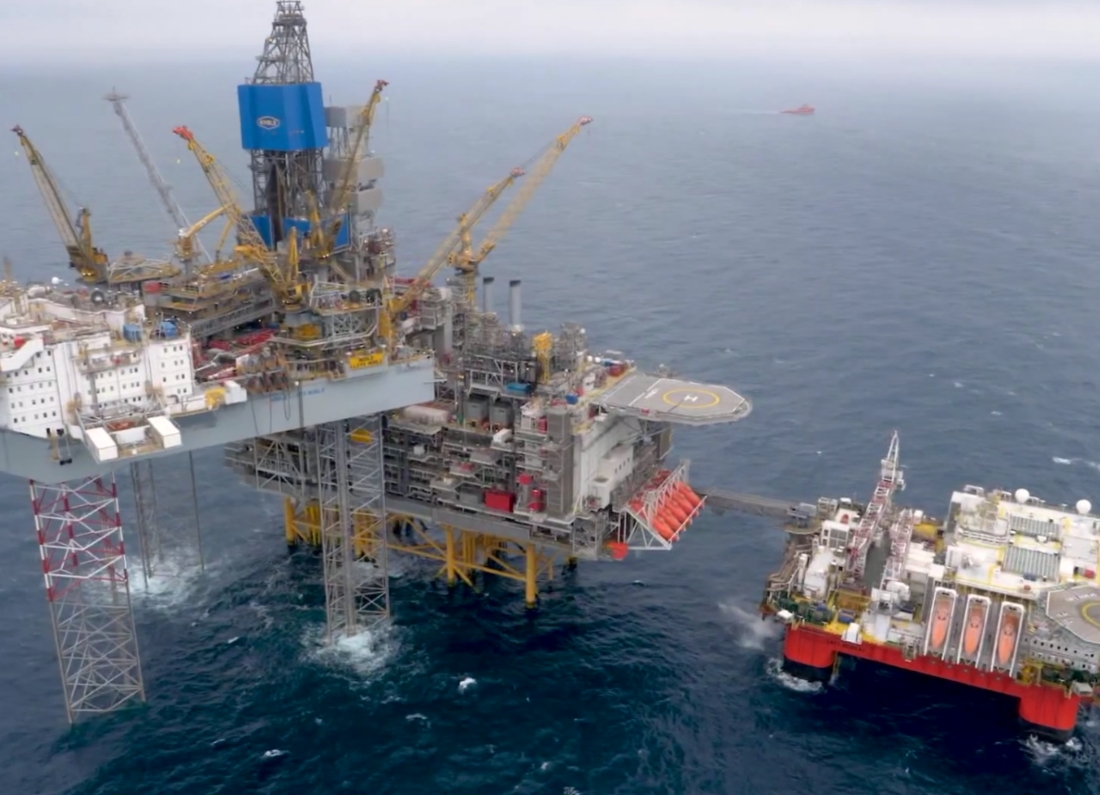
Ten trade unions representing millions of workers have urged Andy Burnham’s government to reject the controversial Rosebank oil field, opening up a fresh battle inside the labour movement over climate policy, North Sea jobs and Britain’s future energy supply.
The intervention comes as ministers prepare decisions on two of the biggest unresolved offshore projects in British waters: Rosebank, west of Shetland, and the Jackdaw gas field in the central North Sea.
Energy Secretary Miatta Fahnbulleh said this week that a decision on Jackdaw was “imminent”, while Rosebank would take longer.
Now a group of unions including UNISON, the National Education Union, PCS, the Fire Brigades Union, Equity and the Communication Workers Union are pressing Burnham to refuse Rosebank permission to proceed.
Their joint message is blunt:
“The Labour Government must do the right thing by the planet, UK communities and workers, and stop Rosebank.”
The intervention is significant because the argument over North Sea drilling is increasingly becoming a dispute inside organised labour itself.
While ten unions are campaigning against Rosebank, Unite and GMB have both argued in favour of continued oil and gas development, warning that an accelerated retreat from the North Sea could cost skilled industrial jobs and leave Britain increasingly dependent on imported energy.
The ten unions opposing Rosebank
The joint intervention has been signed on behalf of UNISON, the National Education Union, PCS, the Communication Workers Union, the University and College Union, Equity, the Fire Brigades Union, the Bakers, Food and Allied Workers Union, the Independent Workers’ Union of Great Britain and United Voices of the World.
More than 1,900 other trade unionists have also backed the wider campaign.
UNISON general secretary Andrea Egan said public service workers were already dealing directly with the consequences of more extreme weather.
She said:
“The more fossil fuels we burn, the more extreme our weather will become.”
Egan argued that UNISON members working across health, local government and other public services were increasingly on the frontline of heatwaves, flooding and other climate-related pressures.
She added:
“The Prime Minister must act in the best interests of the country and reject Rosebank.”
National Education Union president Ed Harlow went even further, arguing that workers in schools, hospitals and other public services had already experienced the effects of extreme heat.
He said:
“There is nothing ‘pragmatic’ in knowingly making these conditions worse, just so a handful of oil and gas firms can keep profiting.
“Approving Rosebank, after the summer we’ve had, would be outright arson.”
Lee Hunter, north-west regional chair of the Fire Brigades Union, made a similar case from the perspective of firefighters dealing with wildfires and flooding.
He said approving Rosebank would “just pour more fuel on the fire”.
Rosebank is the biggest undeveloped field of its kind in UK waters
Rosebank is one of the most politically sensitive energy projects facing the government.
The field lies around 80 miles north-west of Shetland and is considered the largest undeveloped oil and gas field on the UK continental shelf.
Court documents have previously estimated that it contains more than 300 million barrels of recoverable oil equivalent and could operate for around 25 years.
The project is now principally owned by Adura, with Ithaca Energy holding the remaining interest.
Supporters say exploiting a large domestic resource would bring investment, tax revenue and skilled employment while reducing Britain’s exposure to international supply shocks.
A report commissioned for the developers this week argued that approving Rosebank and Jackdaw together could add around £10.8 billion to the UK economy by 2035 and support approximately 3,300 jobs a year.
That case has become more politically potent amid concerns over global energy security and the reliability of imported oil and gas.
Kemi Badenoch has told Burnham to “stop faffing about” and approve further North Sea development.
Unite and GMB take a different view
The trade-union position is far from united.
Unite has repeatedly warned Labour against pursuing climate policies that leave existing oil and gas workers without credible replacement jobs.
The union argues that Britain still needs North Sea production while renewable capacity, grid infrastructure and domestic manufacturing are expanded, and has criticised policies it believes risk replacing British oil and gas with imports produced elsewhere.
GMB has also supported further North Sea development on energy-security and employment grounds.
That gives Burnham a difficult political balance.
Rejecting Rosebank would satisfy much of Labour’s environmental wing and a substantial group of public-sector unions, but would risk accusations from industrial unions that the government is sacrificing well-paid domestic jobs without having replacement industries ready.
Approving it would create the opposite problem, with environmental groups and Labour MPs accusing the government of retreating from its climate commitments.
Rosebank and Jackdaw were previously approved unlawfully
Both Rosebank and Jackdaw were originally approved under the previous Conservative government.
Those decisions were successfully challenged by Greenpeace and campaign group Uplift.
In January 2025, Scotland’s Court of Session ruled that the approvals had been unlawful because the environmental assessments failed to consider the emissions created when the oil and gas produced by the fields was eventually burned.
The court quashed the decisions and required ministers to reconsider the projects using assessments that included those downstream emissions.
Lord Ericht said:
“The public interest in authorities acting lawfully and the private interest of members of the public in climate change outweigh the private interest of the developers.”
The judgment did not permanently prohibit either project.
Instead, it meant that ministers had to make new decisions after considering their full climate impact.
That is the process now approaching its conclusion.
Jackdaw decision expected first
Fahnbulleh told MPs this week that all the information required for a decision on Jackdaw had now been considered.
She said:
“There is a decision that will be imminent. Rosebank will take a little bit longer.”
Jackdaw is primarily a gas development and is expected at peak production to account for around 6.5 per cent of UK gas output.
Rosebank is larger and politically more controversial because most of its reserves are oil and its potential lifetime emissions are substantially greater.
Climate campaigners estimate that burning the oil and gas produced from Rosebank could create around 250 million tonnes of carbon dioxide over the field’s lifetime, roughly equivalent to 70 per cent of the UK’s annual territorial emissions.
Those emissions would not all occur in Britain, because oil is traded internationally and much of the crude could be exported.
That is also one reason opponents dispute claims that Rosebank would substantially lower household energy bills. Oil prices are set on global markets, so increased UK production does not automatically translate into lower prices for British motorists or consumers.
Burnham has promised a ‘pragmatic approach’
Burnham has deliberately avoided ruling Rosebank in or out.
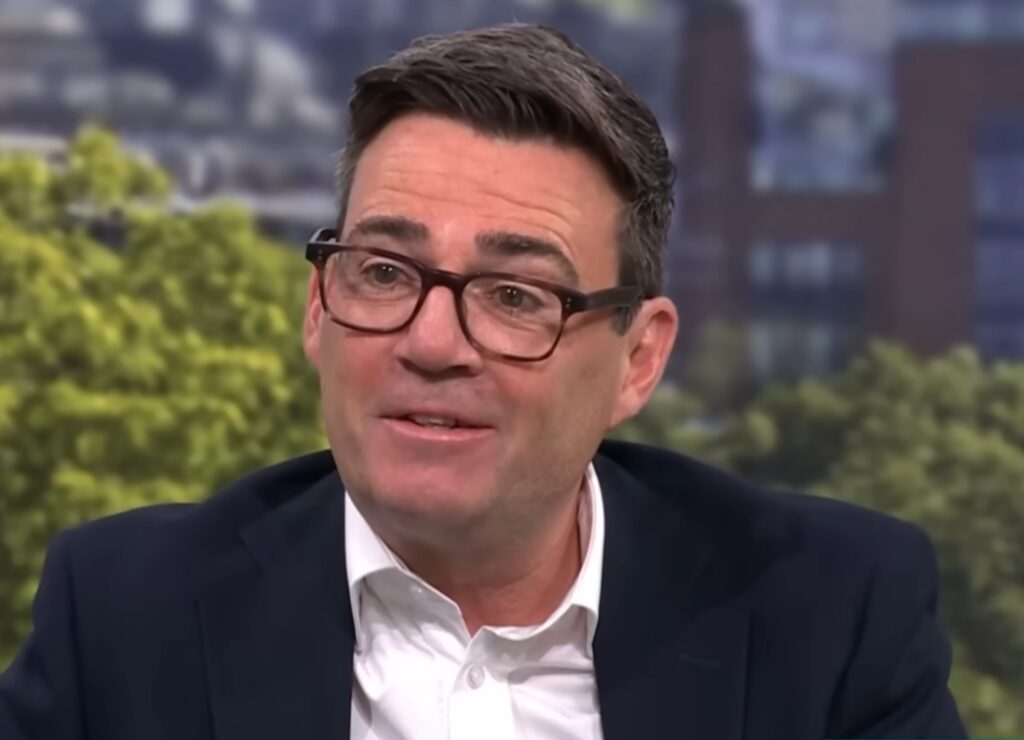
He has described his approach to the North Sea as “pragmatic”, arguing that Britain cannot simply switch off oil and gas production while it remains dependent on fossil fuels.
At the same time, Labour has committed itself to rapid expansion of renewable energy and has previously pledged not to issue new licences for fresh North Sea exploration.
Rosebank and Jackdaw occupy a different category because both already held licences and had previously received development approval before the courts intervened.
The Department for Energy Security and Net Zero said it would not comment on speculation before the formal decisions.
A spokesperson said:
“North Sea oil and gas will continue to play an important role in our energy system for decades to come, alongside transitioning to clean power.”
The department added that ministers would consider all relevant evidence, including environmental assessments and representations submitted during consultation.
For Burnham, Rosebank is becoming more than a straightforward decision about one oil field.
Ten unions are now telling him that rejecting it is necessary to protect workers from climate breakdown, while two of Britain’s largest industrial unions are warning that shutting down new North Sea development threatens workers of a different kind.
Which should carry more weight in the Rosebank decision: climate targets, jobs or energy security?









Leave a Reply