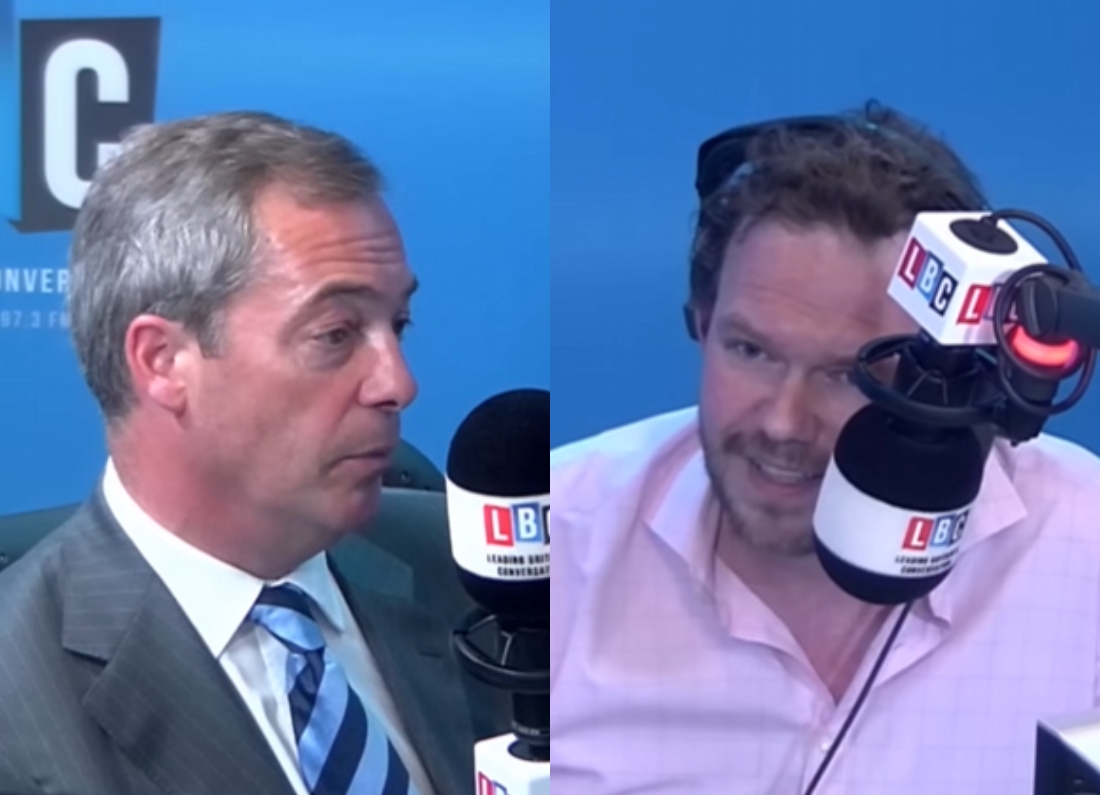
A 2014 interview in which James O’Brien confronted Nigel Farage over his complaints about hearing foreign languages on a train has gone viral again.
The clip was shared on 19 September with the observation that Farage’s wife and children speak German. It was the first and last time Farage faced O’Brien in an interview.
‘Your wife is a German speaker’
Farage appeared on O’Brien’s programme in May 2014, days before the European elections, when he was leader of UKIP.
The presenter raised comments Farage had made about feeling uncomfortable on a train where passengers were speaking foreign languages.
Farage attempted to draw a distinction between objecting to something and feeling uncomfortable about it.
“I didn’t say I objected to it. I felt slightly uncomfortable.”
O’Brien replied:
“Your wife is a German speaker.”
“My children are too,” Farage said.
Asked whether that made him uncomfortable, Farage answered: “No, because they can speak English.”
O’Brien immediately challenged the assumption behind the answer.
“How do you know those people couldn’t?”
Farage conceded that they might have been able to speak English, but said he had the “distinct feeling” that it was not their preferred language.
He then moved to schools in east London, claiming there were schools where most children did not speak English.
O’Brien pointed out that the figures Farage appeared to be citing referred to pupils recorded as having English as an additional language. That category includes bilingual children who can speak English, including Farage’s own daughters.
The presenter returned to the original example.
“You felt uncomfortable about people speaking foreign languages, despite the fact that presumably your own wife does when she phones home to Germany.”
The exchange became one of the most widely remembered moments from the interview. The Guardian’s contemporary report highlighted the same contradiction between Farage’s comments about foreign languages and his own bilingual family.
‘What about if a group of German children did?’
O’Brien then turned to Farage’s comments about being concerned if a group of Romanian men moved in next door.
He asked whether Farage would feel the same way about German children.
“What about if a group of German children did? What’s the difference?”
Farage replied:
“The difference, and you know what the difference is.”
“Honestly, I don’t,” O’Brien said. “This is, I think, where the disconnect is between your position and mine.”
Farage moved away from the comparison and began talking about immigration controls, Roma communities and human trafficking.
O’Brien brought him back to the question.
“I asked you a question about Romanians and you started talking about people traffickers.”
Farage insisted he was not demonising anyone and said he had merely answered a question about Romanian men.
O’Brien’s response went to the central problem with that defence: if the concern was criminality, why identify the hypothetical neighbours by nationality rather than behaviour?
Farage asks: ‘What is racism?’
The interview also included a striking exchange about why some voters regarded UKIP as racist.
Farage began questioning the meaning of the word itself.
“What is racism? Is racism between races? Is race about colour? Is race about race? Is it about nationality?”
O’Brien replied:
“How can you say you’re not something if you don’t know what it is?”
Farage said his comments were intended to address the pace of immigration and social change. O’Brien said the problem was that Farage had specifically described feeling uncomfortable around people speaking foreign languages.
The interview had already covered offensive remarks made by UKIP candidates and Farage’s political alliances in the European Parliament.
O’Brien challenged him over UKIP’s association with Italy’s Lega Nord and comments made by members of the European parliamentary group Farage co-chaired. Farage argued that alliances in the European Parliament required “a degree of compromise”.
The presenter also questioned Farage about a 1997 lunch with BNP activist Mark Deavin, whose writings included material about Jewish influence and non-white immigration. Farage said he had wanted to understand why Deavin was being presented to him as someone capable of making a difference.
UKIP press chief intervenes
The interview ended with questions about Farage’s European parliamentary allowances and whether he would submit them to the same type of audit used by Labour MEPs.
Farage said there were no expenses, only fixed allowances spent according to the rules.
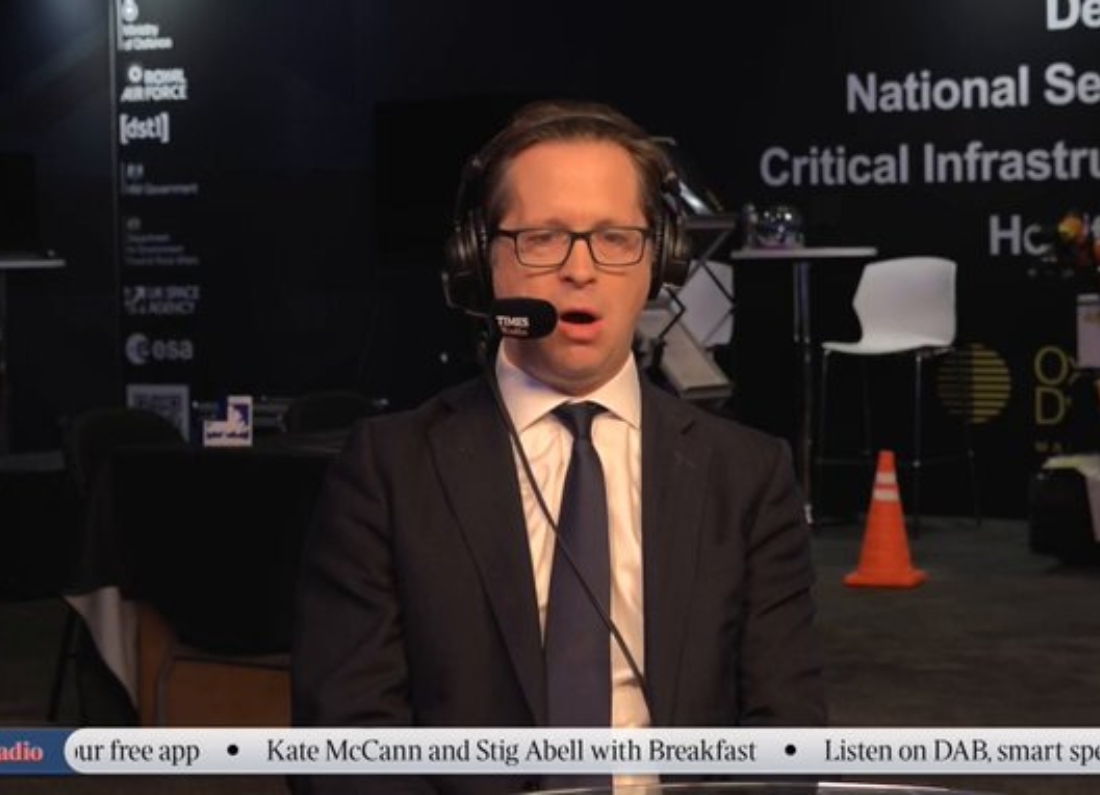
As O’Brien continued, UKIP communications director Patrick O’Flynn interrupted to complain that the interview had “massively” exceeded its agreed time.
O’Brien identified him on air before returning to Farage for a final answer.
The Guardian described the appearance at the time as a “car-crash” interview. LBC later ranked it second in its list of the station’s ten biggest clips of the decade, calling the encounter “brutal” and “forensic”.
One response to “‘Your wife is a German speaker’: Farage’s disastrous James O’Brien interview goes viral again”
Christine Quinn
was this when the term ‘Snake Oil Salesman’ was first muted
Jordon Scott is a digital media specialist and editor at The Daily Britain. He focuses on political coverage, platform strategy, and ensuring journalism remains accessible without compromising editorial standards.
He oversees publication structure, reach, and transparency across the site.







Leave a Reply